Most homeowners never think about the water service line until the pressure drops or a soggy stripe appears across the front lawn in January. It is the pipe running from the county meter, under your yard, into the basement — and in Baltimore County it is the property owner's responsibility from the meter forward.
On older Catonsville properties that line may be galvanized steel installed before the Second World War, undersized three-quarter-inch pipe that has silted and corroded down to a fraction of its original bore, or in some cases legacy materials that a homeowner would rather not have carrying drinking water.
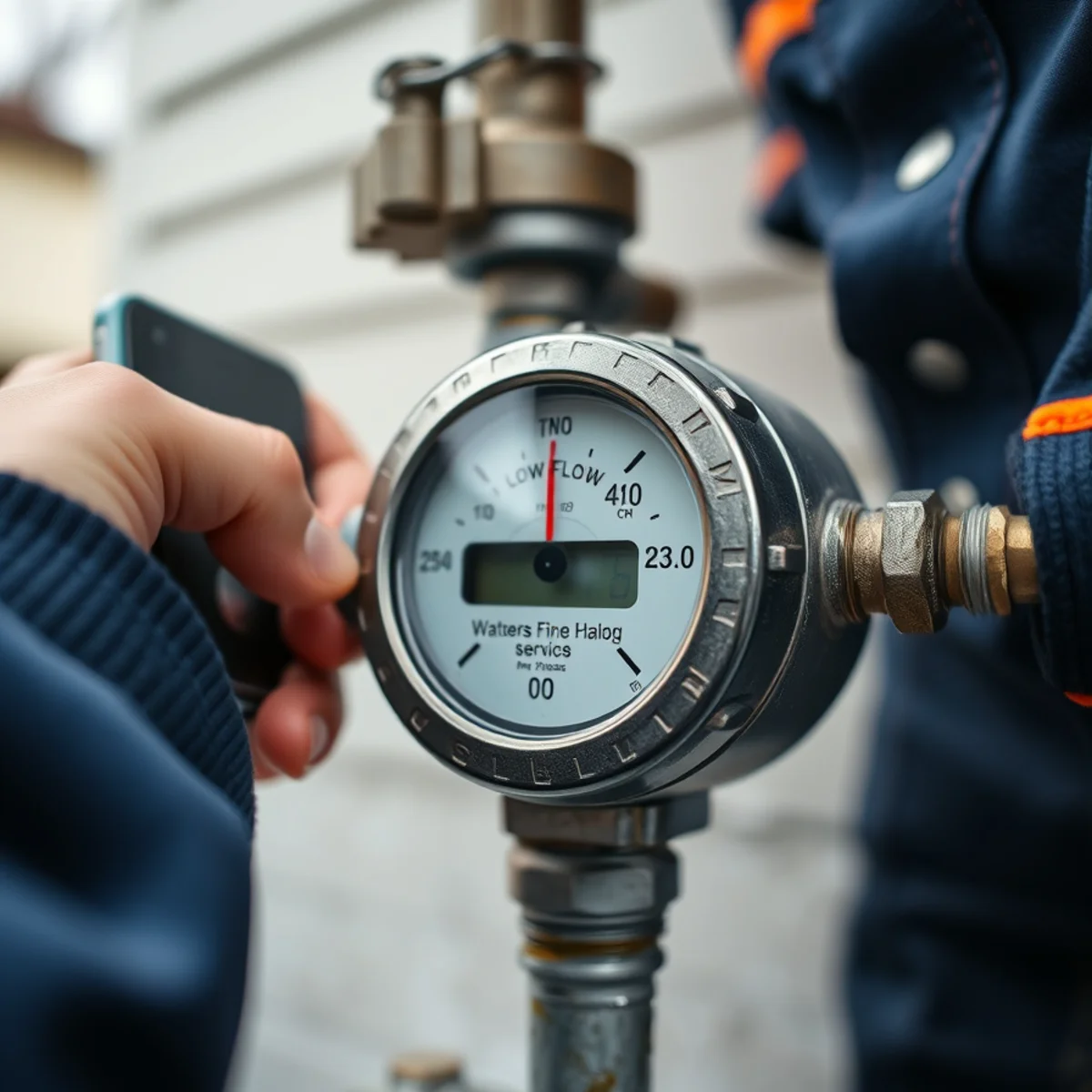
We diagnose the line before recommending anything. Pressure and flow testing at the meter and at the house tells us whether you have a supply problem, an internal piping problem, or a pressure regulator that failed years ago. Those three get confused constantly, and only one of them requires digging up your yard.
Signs you need water line repair
- Water pressure that has dropped gradually over several years
- Pressure that falls sharply when a second fixture is opened
- A wet or unusually green strip across the lawn between the meter and the house
- A water bill that climbed with no change in usage
- Discolored or rusty water at multiple fixtures, especially first thing in the morning
- Audible running water near the meter or where the line enters the basement
- Frost heave or a sinkhole along the service line route
- Known galvanized service piping in a home built before 1960
Low pressure across the whole house usually points at the service line or the pressure regulator. Low pressure at one or two fixtures is almost always internal piping or a fixture-level problem — and far cheaper to solve.
What the job includes
Pressure and flow diagnosis
We measure static pressure and flow at the meter and inside the house. That single comparison separates a supply problem from an internal one, and it is where every honest water line conversation starts.
Service line leak location
Acoustic locating and correlation equipment narrow a buried leak to a small area so an excavation is a targeted pit rather than a trench across the whole yard.
Spot repair
When the line is sound and one section has failed — a frost split, a rock strike, a bad old fitting — we excavate that spot and repair it.
Full service line replacement
New copper or approved PE service line, properly sized for the house, with a new main shutoff and pressure regulator. Correct sizing matters: many older lines are undersized for a modern household with multiple bathrooms.
Trenchless pipe pulling
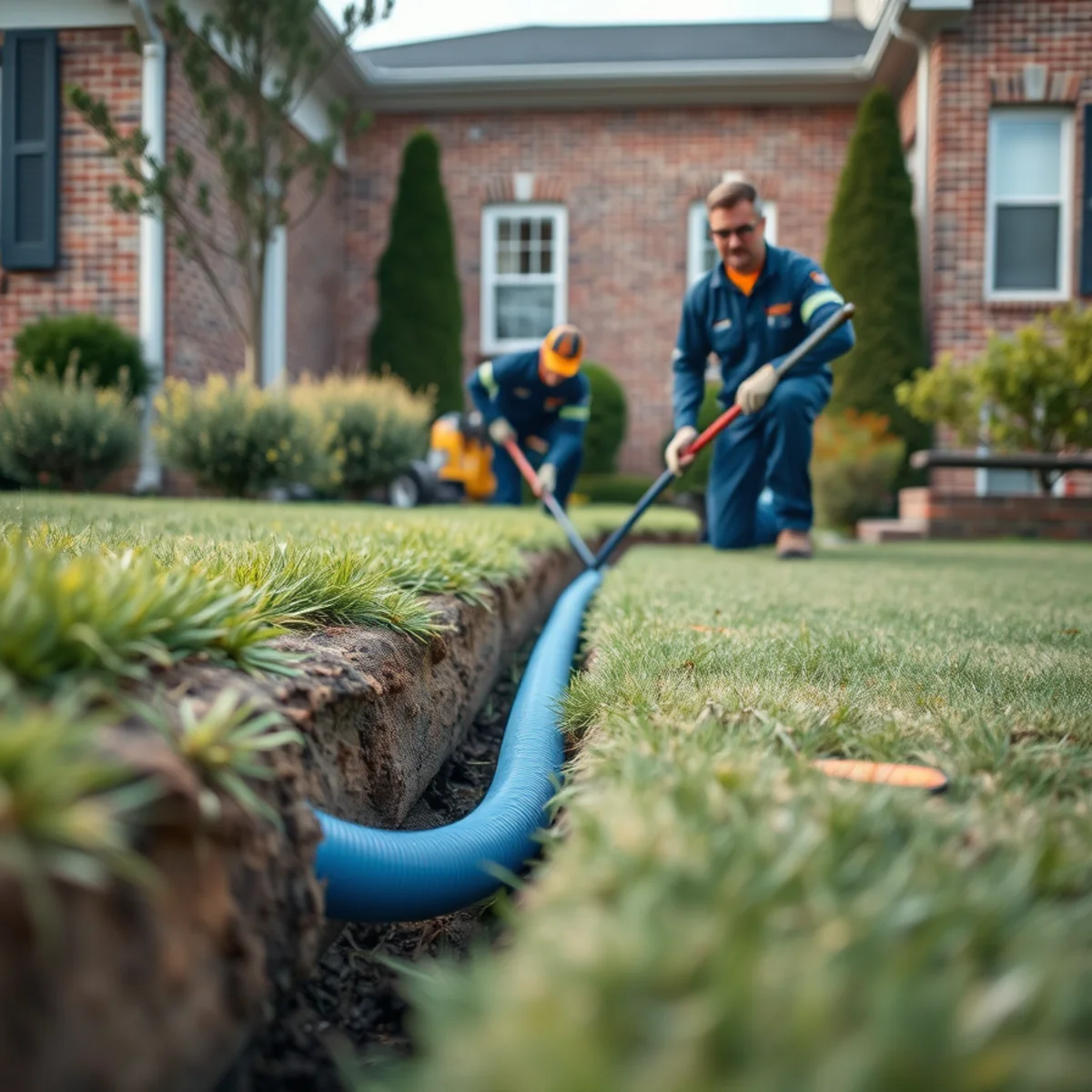
Where conditions allow, the new line can be pulled through the path of the old one from two small pits, sparing driveways, walkways and mature landscaping.
Pressure regulator replacement
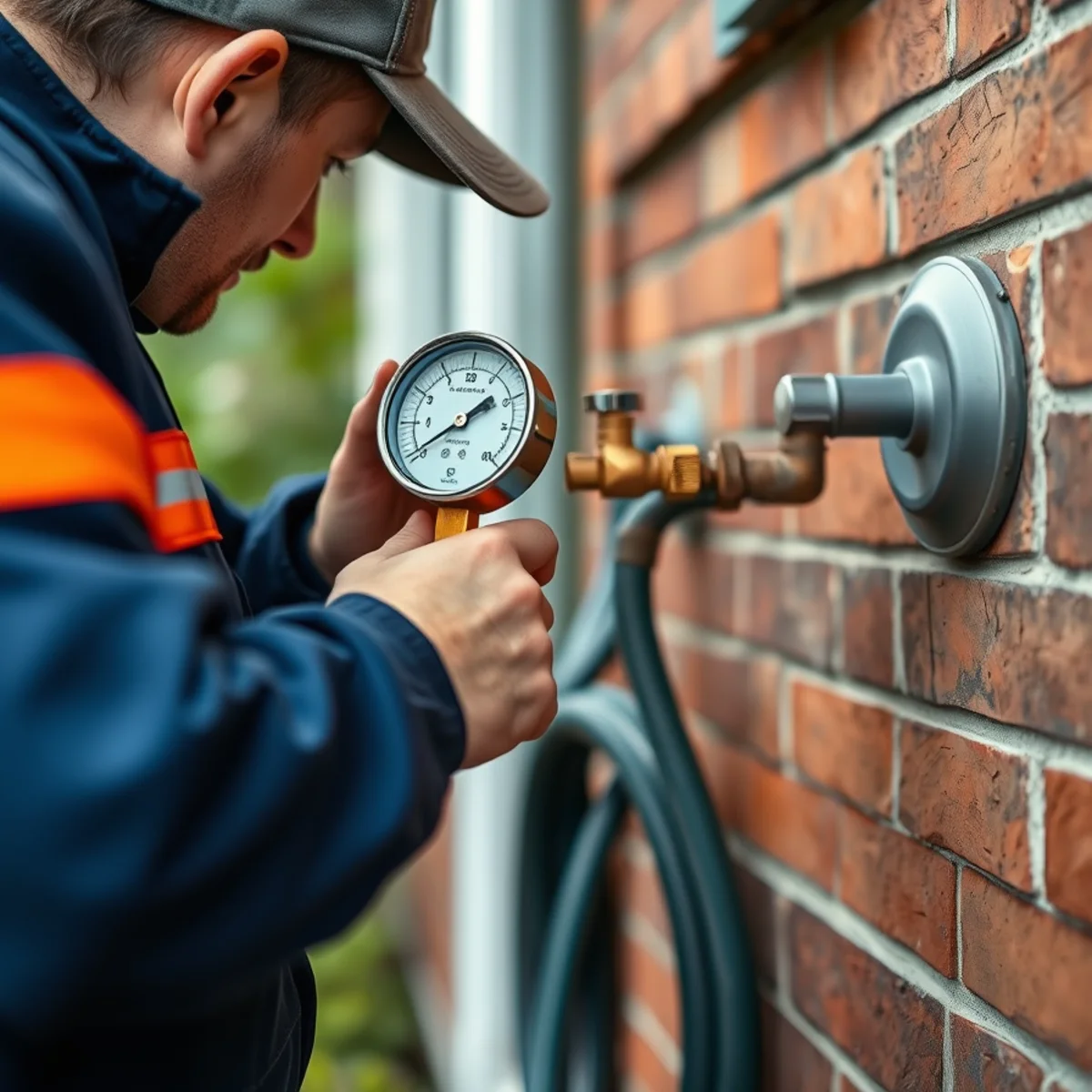
A failed PRV mimics a failing service line exactly. It is a fraction of the cost, and we check it before recommending any excavation.
How we work
1. Test before you dig
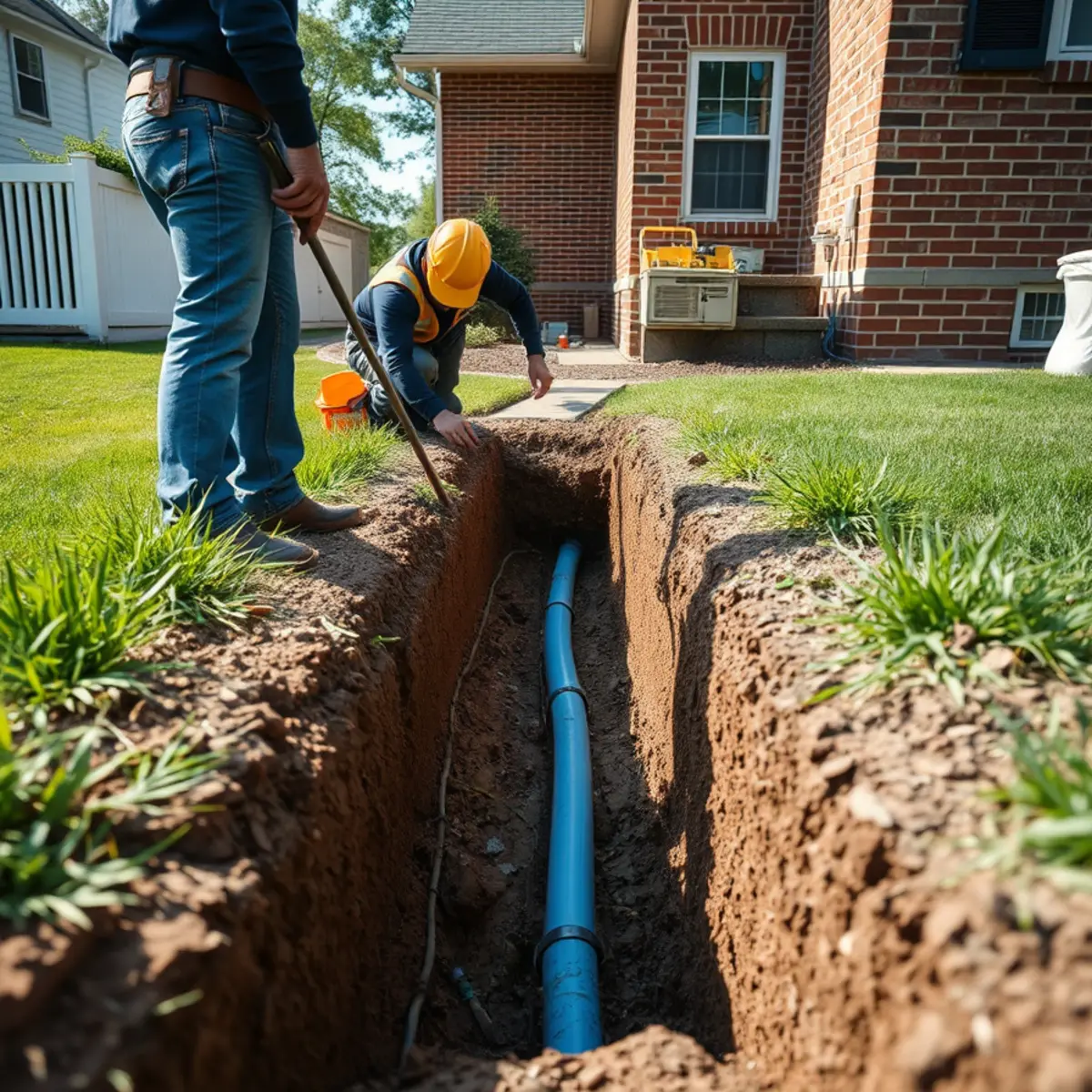
Static pressure, flow rate under load, and a meter check. Digging is the last resort, not the first move, and we have talked plenty of homeowners out of an excavation they were already braced for.
2. Locate the line and the utilities
We trace the service route and file for utility markouts. Gas, electric and communications lines cross yards in places that surprise people.
3. Present real options with real numbers
Spot repair, trenchless pull, or open-cut replacement. Each has a different cost, timeline and surface impact. You get it in writing.
4. Permit and coordinate
We pull the Baltimore County permit and coordinate with the water utility for any meter-side work or shutoff needed.
5. Install, test, restore
New line, new main shutoff, pressure verified at the house, then backfill compacted properly so you do not get a settling trench across the lawn next spring.
What drives the price
We do not publish fake prices, because a number that does not match your house is worse than no number at all. What we can do is tell you exactly what moves the figure, so nothing on the estimate is a surprise.
Length and depth of the run
Deep lots with the house set well back from the street mean a longer run. Depth is dictated by the frost line and the meter position, not by preference.
What the line runs under
Open lawn is straightforward. A driveway, a stone path, a retaining wall or established landscaping changes both method and cost, and usually makes trenchless worth pricing.
Open-cut versus trenchless
Trenchless pulling costs more per foot and far less in restoration. On a short run across open grass, open-cut usually wins. On a long run under a driveway, trenchless usually does.
Pipe material and sizing
Upsizing an undersized line to serve a house with three bathrooms is worth doing while the trench is open — but it is a real cost, and we quote it separately so you can decide.
Permits, markouts and restoration
County permits, utility locating, backfill compaction and surface restoration are itemized. Sidewalk or apron replacement, if the route crosses one, is called out on its own.
What this looks like in Catonsville
Catonsville's development history is written in its service lines. Streetcar-era homes near Frederick Road often still have their original galvanized service, which corrodes internally until the effective bore is a fraction of the original. Homeowners describe it as "the pressure has been getting worse for years" — that gradual decline is the signature.
Post-war neighborhoods generally have copper service lines, which hold up far better but are not immune. Aggressive soil conditions and stray current can pit buried copper, and a service line installed in 1955 has now had a long career.
Frost depth matters here. Maryland winters are mild by northern standards but still cold enough that a service line laid too shallow — often the case on additions and re-routes done informally decades ago — is exposed to freeze damage. A surprising number of our January service line calls trace back to a shallow section someone added in a hurry.
The lead question comes up regularly and deserves a direct answer. Some pre-1950s properties in Baltimore County have legacy lead components on the service side, and utilities across Maryland have been inventorying and replacing them. If you are unsure what material feeds your house, we can identify it during a routine visit — it takes minutes, and it is worth knowing.
Water Line Repair questions we get asked
Who is responsible for the water line — me or the county?
In Baltimore County the utility owns the main and typically the meter; the property owner is responsible for the service line from the meter to and through the house. We will confirm exactly where that split falls for your property before any work begins.
Why is my water pressure low everywhere in the house?
Three common causes: a corroded or undersized service line, a failed pressure reducing valve, or heavily scaled internal galvanized piping. They present almost identically and cost wildly different amounts to fix, which is why we test before we dig.
Can you replace the line without destroying my yard?
Often, yes. Trenchless pulling installs the new line along the old path from two small pits. It is not possible on every route — obstructions, severe bends and certain soil conditions rule it out — but we assess it on every job because the restoration savings are real.
How long does a service line replacement take?
Most residential replacements in Catonsville are completed within a day once permits and markouts are in place. Water is off for a portion of that day, and we tell you the window in advance so you can plan.