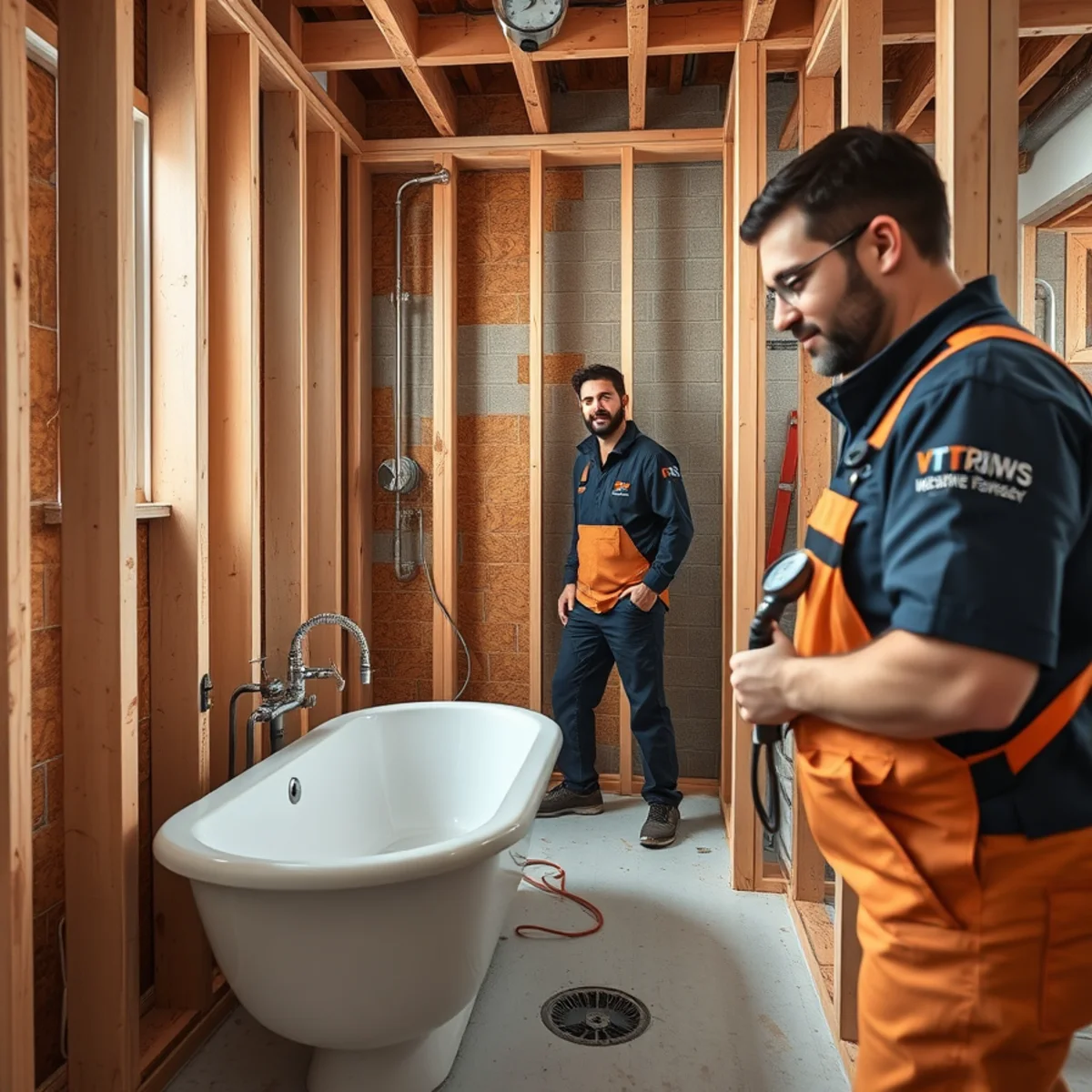
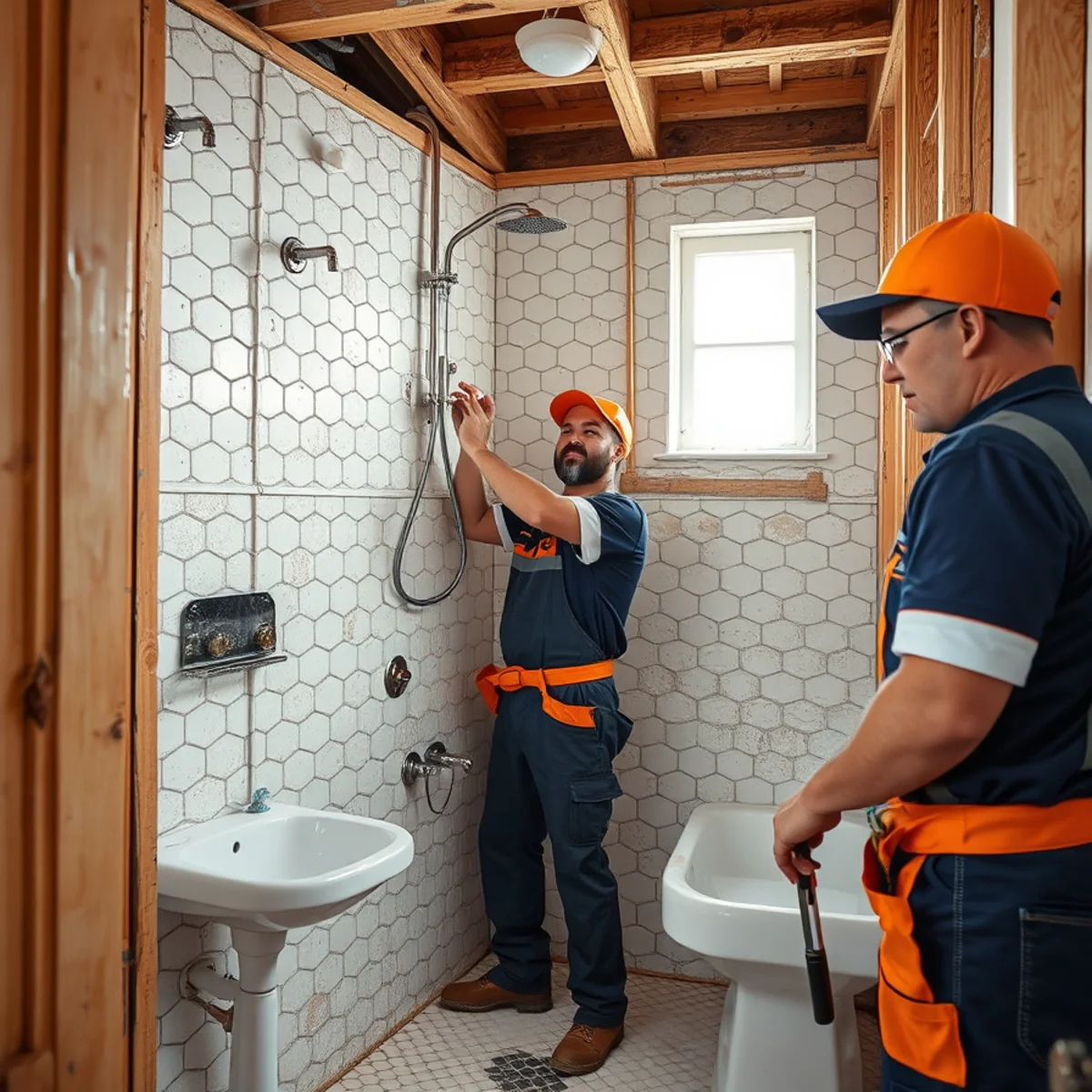
Bathrooms are where plumbing meets everything else — tile, framing, ventilation, waterproofing and a homeowner who has to live with the result every single day. They are also where shortcuts show up fastest. A shower pan that was not sloped right, a valve set at the wrong depth for the finished wall, a vent that was never properly connected. We have opened a lot of Catonsville bathroom walls and seen all of it.
Our customers tend to come to us for one of two things. Either something has failed — a shower valve that will not shut off, a tub that drains into the ceiling below, a toilet flange that has rotted out of the floor — or they are renovating and want the plumbing done by someone who will still answer the phone in five years.
Both jobs benefit from the same thing: doing the rough-in right. Tile is expensive and permanent. What goes behind it should be done once, to code, and tested before anything is closed up.
Signs you need bathroom plumbing & remodels
- Shower valve that is hard to turn, will not shut off fully, or scalds when a toilet flushes
- Tub or shower that drains slowly or leaves standing water
- A soft or spongy floor around the toilet base
- Water stains on the ceiling in the room below a bathroom
- Persistent musty or sewer odor no matter how much you clean
- A toilet that rocks or has to be flushed twice
- Low flow at the shower head with good pressure elsewhere
- Planning a remodel and needing the rough-in done before tile goes on
Any water stain below a bathroom deserves a look now rather than later. Slow leaks into a floor structure rot subfloor and joists long before the ceiling below shows anything.
What the job includes
Full bathroom rough-in and finish plumbing
Supply, drain, waste and vent for new layouts, coordinated with your tile setter and carpenter so the valve depth, drain location and blocking are right the first time.
Shower and tub valve replacement
Pressure-balancing and thermostatic valves that stop the shower going scalding when someone flushes. On older Catonsville bathrooms we can often replace a valve through a modest access opening rather than removing tile.
Bathtub and shower pan installation
Tub sets, shower base installation and drain assembly. Slope, waterproofing detail and drain connection are where showers fail — those are the parts we care most about.
Toilet, flange and subfloor repair
Rotted flanges and damaged subfloor around a leaking toilet are extremely common in older homes. We repair the structure properly instead of shimming a toilet onto a bad flange.
Vanity, sink and faucet installation
Including relocating supply and drain for a new vanity position, and replacing the old multi-turn angle stops with quarter-turn valves that will still work in ten years.
Period-appropriate fixture work
Catonsville has a lot of bathrooms worth keeping. We can source and fit fixtures that suit an older home, and adapt modern valves to work behind original tile where the layout allows.
How we work
1. Look before we plan
Existing drain size and material, vent configuration, joist direction, and what the previous renovation did. In a 1930s bathroom the answer to "can we move the toilet three feet" depends entirely on which way the joists run.
2. Coordinate with your other trades
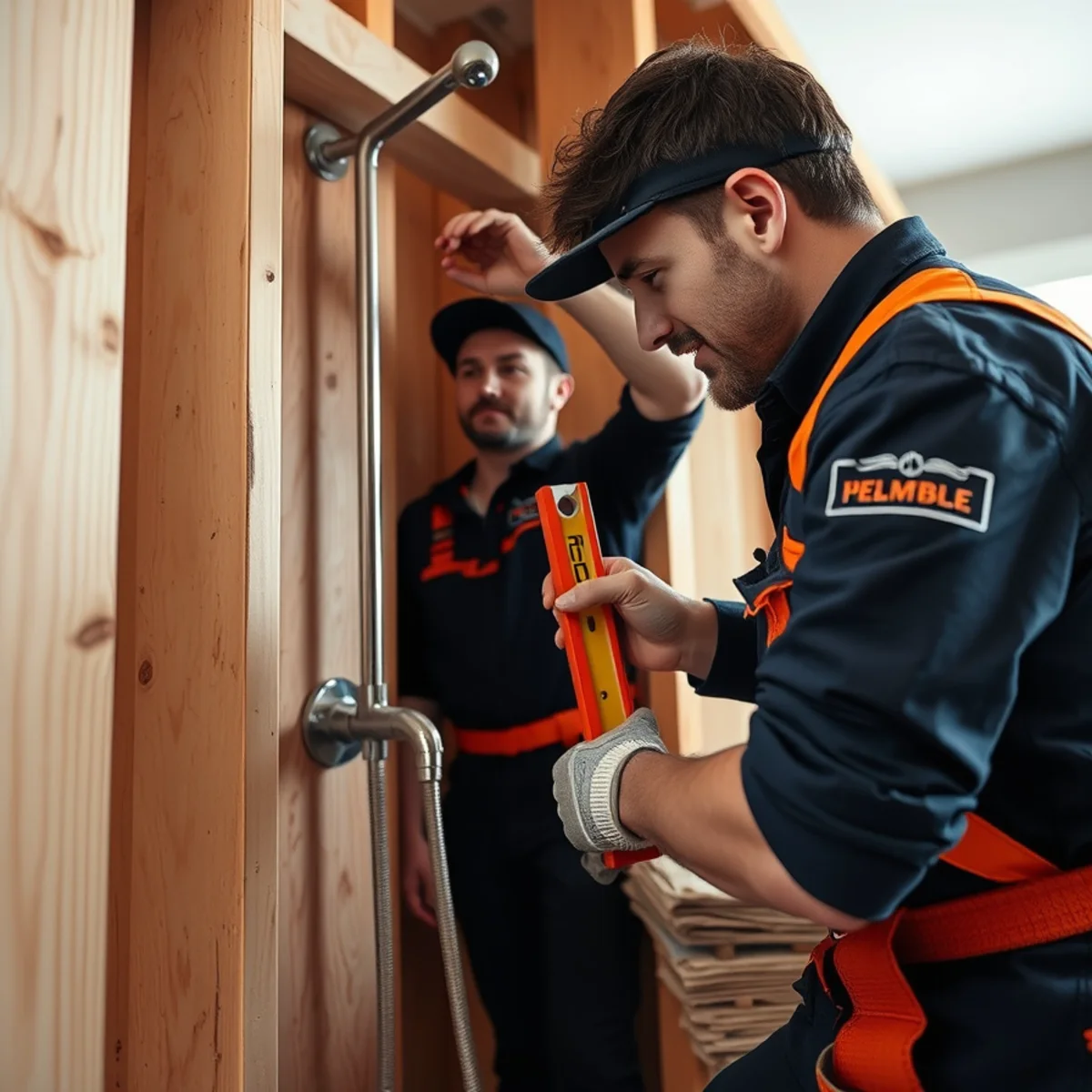
If there is a tile setter, a carpenter or a general contractor, we work to their schedule and confirm finished wall thickness before setting valves. This is the single most common source of remodel problems and it is entirely avoidable.
3. Rough-in and inspect
Supply, drain and vent installed to code, pressure tested, and inspected under permit before anything is covered. Tile goes on top of work that has already passed.
4. Finish plumbing
Fixtures set, trim installed, everything run and checked under real use. We look for the slow drip that only shows up after twenty minutes, not just the obvious one.
5. Leave it clean
Debris out, surfaces wiped, floors covered while we work. Our customers write about the cleanup more than anything else, and we would like to keep it that way.
What drives the price
We do not publish fake prices, because a number that does not match your house is worse than no number at all. What we can do is tell you exactly what moves the figure, so nothing on the estimate is a surprise.
Are you keeping the layout?
Replacing fixtures in place is a fraction of the cost of moving a toilet or relocating a shower drain. Moving drainage means opening the floor and re-running waste and vent at proper slope.
What is behind the wall
A bathroom on galvanized supply and cast iron drainage needs those replaced while it is open — doing it later means opening a finished bathroom again. We flag this before you commit to tile.
Venting corrections
Improvised venting from a past renovation is common and has to be corrected to pass inspection. It is not optional and it is better to know at estimate time.
Fixture selection
Standard-rough fixtures install predictably. Wall-hung toilets, custom shower systems with multiple outlets, and period reproduction fittings all take more labor and sometimes more supply capacity.
Access from below
An unfinished basement under the bathroom makes everything cheaper. A finished ceiling below means opening and restoring it.
What this looks like in Catonsville
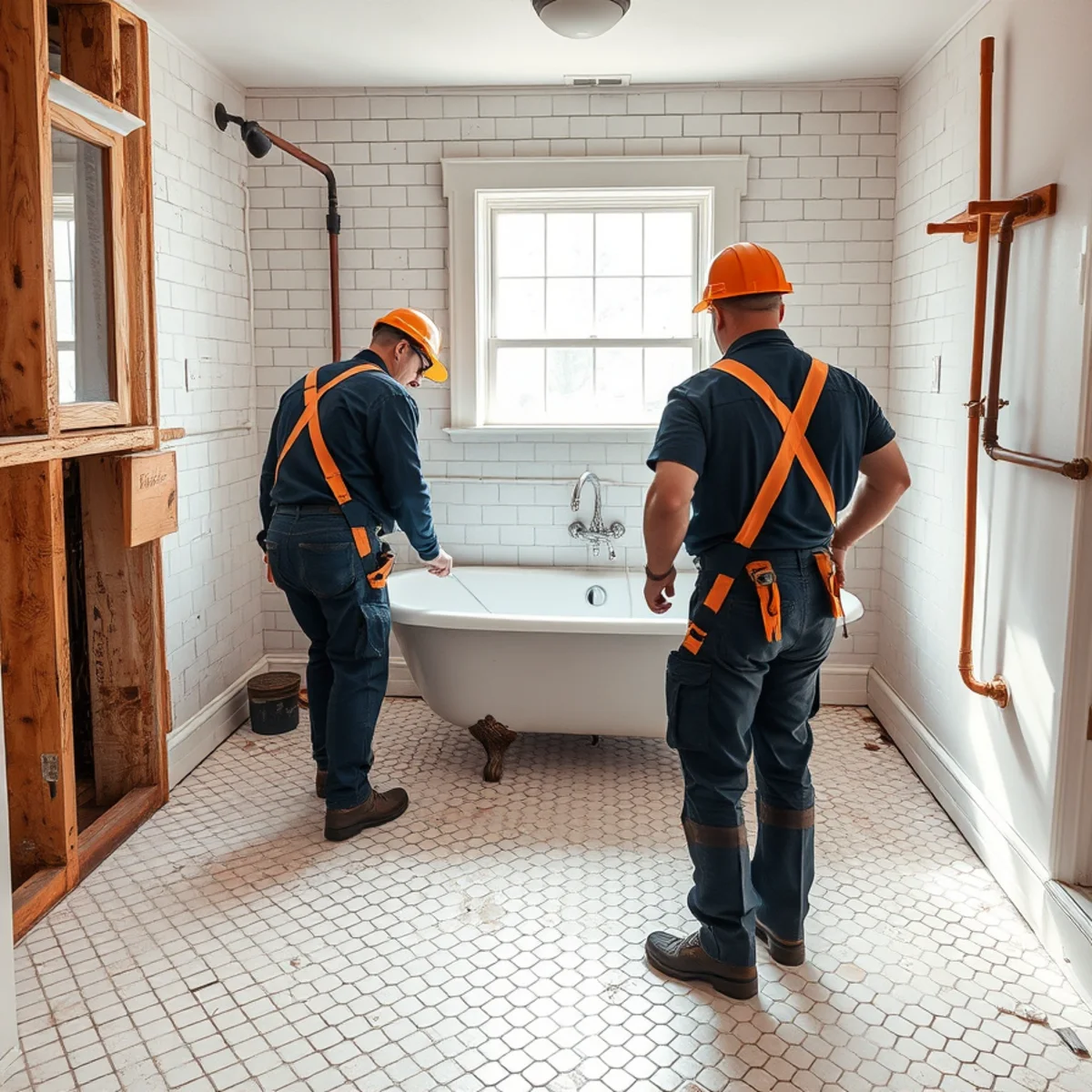
Bathrooms in Catonsville's older housing stock are rarely standard. Rough-in dimensions that are taken for granted today — the twelve-inch toilet rough, the sixty-inch tub alcove — were not universal when these houses were built. We have set a lot of ten-inch-rough toilets and adapted a lot of undersized alcoves in this town, and we would rather measure than assume.
Cast iron drainage is the other constant. It is durable stuff, but decades of hard-water scale narrows the bore, and the hub connections at a tub or lavatory branch are frequently where a hidden leak has been quietly soaking a joist. When we open a bathroom floor in a pre-war house, checking that connection is standard practice.
Venting is the third recurring issue. Bathrooms added into former closets, attic conversions and rear additions were often tied into drainage without proper venting, which is why some Catonsville bathrooms gurgle, drain slowly and hold an odor no amount of cleaning fixes. It is fixable, and it has to be fixed to pass inspection on a remodel.
Hard water shortens fixture life here too. Shower cartridges seize, aerators clog and angle stops calcify open. When we replace a valve in a Catonsville bathroom we always suggest replacing the shutoffs at the same time — they are inexpensive while the wall is open and infuriating when they fail later.
Bathroom Plumbing & Remodels questions we get asked
Can you replace a shower valve without removing the tile?
Often, yes. If there is access from behind — a closet, an adjacent room, or the basement below — we can work through a modest opening in an unfinished surface rather than cutting through finished tile. We check that possibility on every job, because tile matching in an older bathroom is nearly impossible.
Do I need a permit for a bathroom remodel?
If you are altering drain, vent or supply piping, yes. Cosmetic swaps generally do not require one. We pull the permit and meet the inspector for the work that needs it — and un-permitted plumbing has a way of surfacing during a home sale.
Can I move my toilet to the other wall?
Sometimes. It depends on which way the floor joists run and whether the drain can maintain proper slope to the existing stack. We can tell you in one visit, and we would rather tell you before you order tile.
How do I stop the shower going cold when someone flushes?
A pressure-balancing or thermostatic mixing valve. Older two-handle valves have no compensation at all, so a flush steals cold water and the shower goes hot. It is one of the most satisfying upgrades in an old house.