
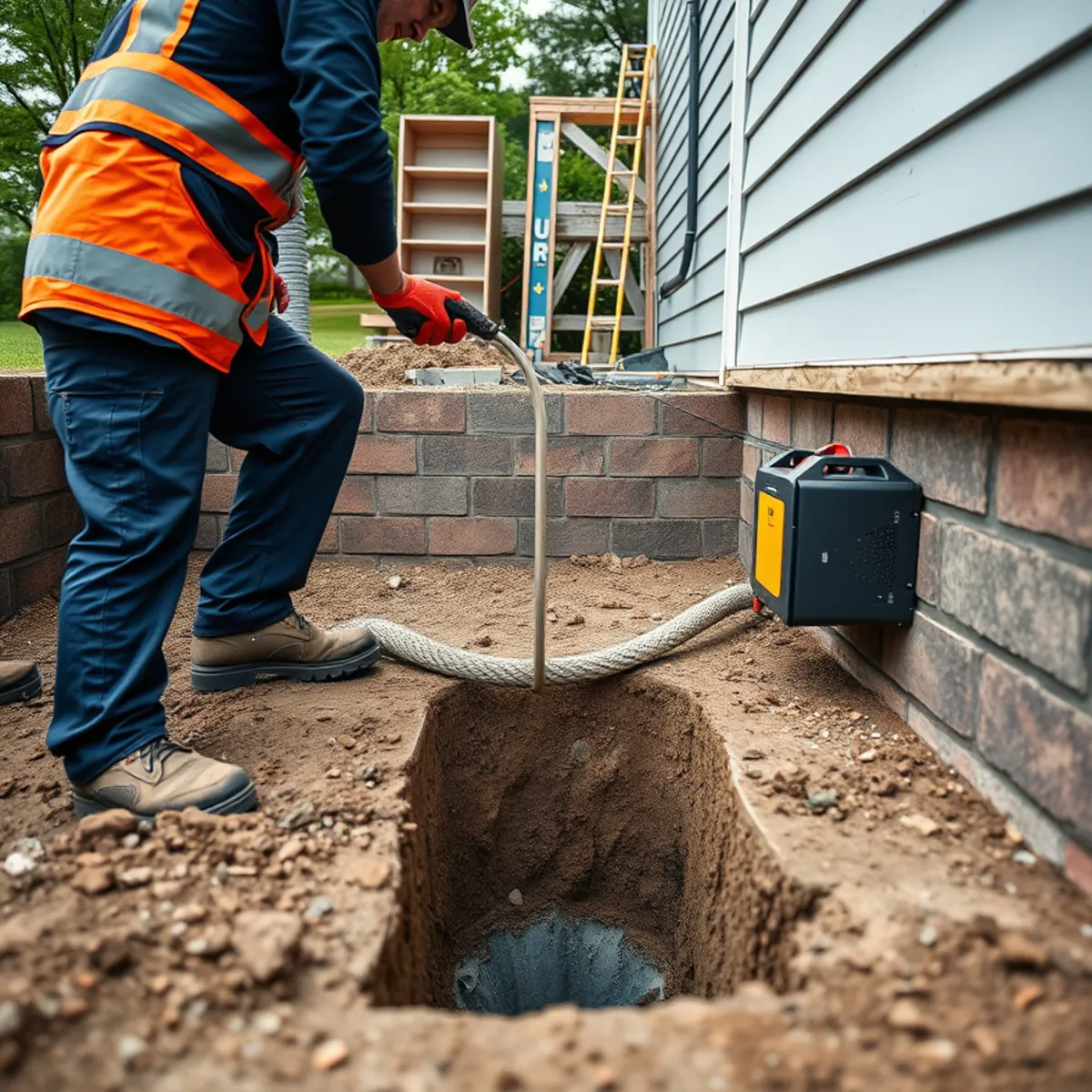
A basement bathroom is one of the best-value additions you can make to a Maryland house — it makes a finished basement genuinely usable and it adds real value. It is also a project where the budget varies enormously depending on one thing nobody thinks to check first.
That thing is whether your basement floor sits above or below the sewer lateral leaving the house. Everything else follows from it.
The question that decides the budget
Waste drains by gravity. If the fixtures sit above the level of the pipe carrying waste out of the house, everything flows naturally and the job is a conventional bathroom rough-in.
If the fixtures sit below that level, waste has to be pumped upward, and that means either a sewage ejector system or an upflush unit. Both work well and both are a substantially larger job.
On Catonsville's rolling terrain, houses a few doors apart genuinely have different answers. A property on the higher ground of Oak Forest may drain by gravity; one down in Woodbridge Valley may not.
If you drain by gravity
This is the good outcome. The work is cutting the slab where the drainage needs to run, installing waste and vent at proper slope, connecting into the existing lateral, and patching the concrete.
It is real work — concrete cutting is dusty and disruptive — but it is conventional plumbing and it is priced accordingly. The main variables are how far the new fixtures are from the existing drain line and whether the slab has anything unexpected under it.
If you need to pump
Sewage ejector system
A sealed basin set into the floor, a grinder or ejector pump inside it, and a discharge line running up and over to join the drainage above. It handles a full bathroom — toilet, shower and basin — and it drains by gravity into the basin exactly as a normal bathroom drains into a pipe.
This is the more permanent and more capable option. The basin has to be set into the slab, it needs its own vent, and it needs a dedicated circuit. Done properly it is invisible in daily use.
Upflush system
A macerating unit sitting behind or beside the toilet, above the floor, with a small-diameter discharge line. No slab cutting.
The advantage is obvious: far less disruption and considerably lower cost. The trade-offs are that the unit is visible, it is more sensitive to what goes into it — wipes will stop it dead — and the pump is a serviceable component that will eventually need replacing.
For a half bath tucked into a corner it is often the sensible answer. For a full bathroom that will get daily use, we usually recommend the ejector.
The things that catch people out
- Venting. This is where basement bathrooms most often go wrong. Every fixture needs a proper vent, and finding a compliant route from a basement to an existing vent stack — or a new one through the roof — is frequently the hardest part of the whole design. It is also what makes the difference between a bathroom that works and one that gurgles and smells.
- A backwater valve. If your basement fixtures sit below the level of the street main, a sewer surcharge can push back into them. In low-lying areas this is worth fitting and in some situations it is required.
- Water supply capacity. Adding a bathroom to a house still on original galvanized supply frequently disappoints, because the new fixtures share a bottleneck that was already restricting the old ones. Check before you design.
- The water heater. Another shower is another draw. Whether your existing unit can carry it is a first-hour-rating question, not a gallons question.
- Ceiling height and access. Drainage needs slope, and slope needs vertical space. In a basement with low headroom the routing options narrow quickly.
Permits, and why they matter here specifically
New drain, waste, vent and supply piping requires a permit in Baltimore County and every jurisdiction we work in. So does the electrical work for an ejector pump circuit.
Basement bathrooms are one of the most common places un-permitted work turns up during a home sale, precisely because they are often added as part of a DIY basement finish. It surfaces at the worst possible moment.
We file the permit, meet the inspector, and photograph the rough-in before it is covered. You will want those photographs in five years, and a buyer's inspector will want the permit. See plumbing installation for what the process involves.
Sensible sequence
We do this work throughout Catonsville and across the finished-basement projects common in Eldersburg and the surrounding suburbs. If you are early in planning, the single most useful hour is the one where somebody establishes what your basement can actually do.
- Establish gravity versus pumped. Everything else depends on it.
- Work out the vent route before fixing the layout.
- Check supply capacity and water heater capacity.
- Agree the layout, then permit.
- Rough-in, pressure test, inspect, photograph.
- Concrete, framing, finishes.
- Fixtures set and tested under real use.
Frequently asked questions
How do I know if my basement drains by gravity?
It depends on where the lateral leaves the house relative to the floor. A plumber can establish it by locating the lateral and checking elevation, usually in one visit. Do not guess from the appearance of the floor drain — that can be connected differently.
Is an upflush toilet reliable?
Modern macerating units are reliable within their limits, and the limits matter. Nothing but waste and toilet paper — wipes will stop one dead. The pump is a serviceable part with a finite life. For a lightly used half bath they are excellent; for a family bathroom an ejector is the better long-term answer.
Do I need a backwater valve?
If your basement fixtures sit below the level of the public main, it is worth serious consideration and in some circumstances it is required. In low-lying parts of Catonsville and Baltimore County it protects against sewer surcharge during heavy rain.

Who wrote this
Collins & Sons LLC — Daniel Collins and family
We are a family plumbing business working out of 209 Westowne Rd in Catonsville, and we have been under Maryland houses for over 40 years — three generations of it. Most of what is on this page comes from doing the same jobs repeatedly on the same housing stock: pre-1950 homes off Frederick Road, galvanized supply, cast iron drainage, and water that runs 7–8.2 grains per gallon.
Licensed MHIC #117712 with the Maryland Home Improvement Commission and fully insured. We pull the Baltimore County permits on water heaters, sewer work and gas piping, and we meet the inspector ourselves.