

Kitchen remodels go over budget in the plumbing more often than in the cabinetry, and almost always for the same reason: a layout was agreed before anybody established what the drainage could actually do.
This is the list we work through with homeowners before anything is ordered.
1. Establish whether the sink can move — first
This is the question that decides the budget, and it is decided by structure rather than preference.
Waste drains by gravity and needs consistent fall. Whether a sink can move depends on which way the floor joists run, how far the new position is from the existing stack, and whether that fall can be maintained across the distance.
Moving along the run of the joists is usually feasible. Moving across them frequently is not without notching or engineered solutions that a structural engineer needs to be involved in.

2. Islands are a venting problem before they are a plumbing problem
A sink in an island cannot vent the conventional way, because there is no wall to run a vent up. The solutions are an island loop vent — a specific configuration that rises as high as possible under the countertop before returning down and across — or an air admittance valve where local code permits one.
Both are legitimate. Both need designing rather than improvising, and an island sink vented badly is the classic source of a kitchen that gurgles and smells.
If your plan has a sink or a dishwasher in an island, raise it early.

3. Find out what is behind the wall
In a pre-1960 Catonsville kitchen, the supply is likely galvanized and the drainage cast iron. Both are at or past design life, and the walls being open is the expensive part of replacing them.
This is the biggest cost-avoidance decision in an older-home kitchen. If the supply feeding the kitchen is original, replace it while you have access. Doing it later means opening a finished kitchen again.
Cast iron drainage deserves the same look. Decades of hard water scale narrows the bore, and the hub connection at the kitchen branch is a common place for a slow leak to have been quietly soaking a joist. See our guide to repiping for what full replacement involves.

4. Deal with the grease line properly
If your kitchen drain has been backing up annually, a remodel is the moment to fix it rather than inherit it.
Grease on a scaled cast iron wall is not cleared by cabling — that bores a channel that closes back up. Jetting scours the wall, and while the kitchen is open is the easiest time to camera the line and decide whether jetting is enough or a section needs replacing.
There is nothing more frustrating than a new kitchen backing up in month four.

5. Plan the appliances honestly
- Dishwasher. Needs a supply, a drain connection with a proper high loop or air gap, and a reachable shutoff. The high loop is what stops waste water siphoning back into the machine, and it is missed constantly.
- Fridge with ice and water. Needs a supply line. Replace old quarter-inch plastic tubing with braided stainless — the original tubing behind a fridge nobody moves is a classic source of slow, undetected leaks that ruin flooring.
- Pot filler. Needs a supply run to the wall behind the range and a shutoff somewhere accessible. Decide before tile.
- Second sink or bar sink. Its own drain and vent. Not a trivial addition.
- Instant hot water tap or under-sink filtration. Both need space in the cabinet, which competes with the disposal and the dishwasher connection.

6. Sequence it with the other trades
A kitchen runs demolition, plumbing and electrical rough-in, inspection, drywall, cabinets, countertop template and fabrication, then final plumbing connections.
Two things are worth flagging. The countertop cannot be templated until the cabinets are in, and the sink cannot be finally connected until the countertop is in — so there is an unavoidable gap where the kitchen has no working sink. Plan for it.
And the plumber has to come twice: once for rough-in, once for final. A contractor who has budgeted for one visit has budgeted wrong.

7. The small things that are cheap now
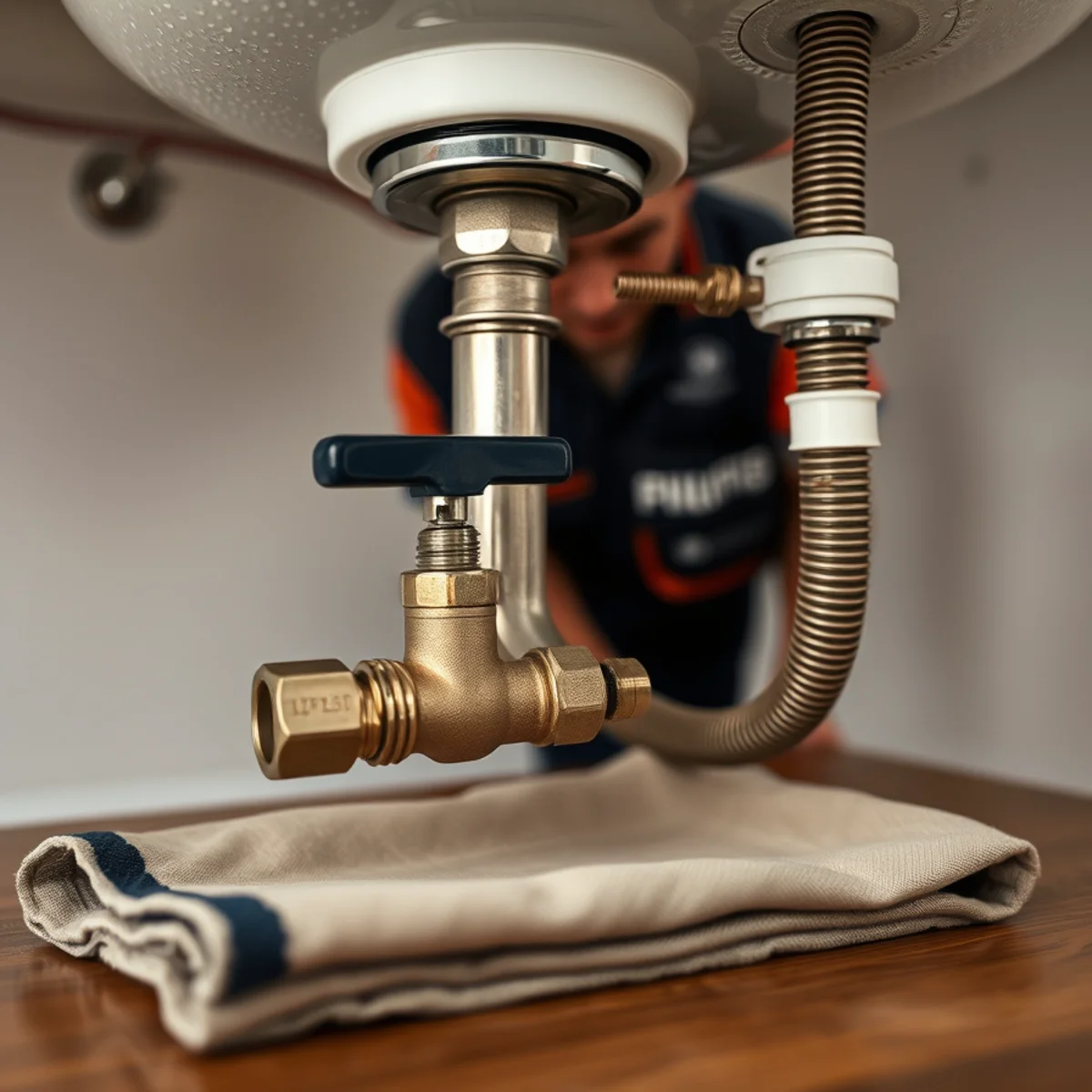
- Replace the shutoff valves under the sink with quarter-turn ball valves. In Catonsville water the old multi-turn stops calcify open and snap when forced.
- Braided stainless supply lines rather than whatever came in the box.
- A proper basket strainer.
- An accessible shutoff for the fridge line and the dishwasher.
- If you are adding load, check whether the water heater can carry it — a dishwasher on a hot fill is a real draw.
8. Permit it
Altering drain, vent or supply piping requires a permit in Baltimore County. Replacing a faucet in place does not. Moving a sink absolutely does.
We pull it, meet the inspector, and photograph the rough-in before it is covered. Un-permitted kitchen work is a routine finding during home sales.
We work alongside contractors and cabinet installers on renovation projects throughout Catonsville and Pikesville, and turning up when we said we would is most of the job.

Frequently asked questions
Can I move my kitchen sink to the island?
Sometimes. It depends on joist direction, the distance to the existing stack, whether drain slope can be maintained, and how the island will be vented. All four need answering before the layout is fixed, and it takes one visit.
Do I need to replace the plumbing in an older kitchen?
If the supply feeding it is galvanized or the drainage is heavily scaled cast iron, replacing what the remodel exposes is almost always the right call. Access is the expensive part and the remodel is giving it to you free.
How long will I be without a kitchen sink?
There is an unavoidable gap between cabinets going in and the countertop being fabricated and installed, because the sink cannot be connected until the counter is set. Ask your fabricator for their lead time early — it is usually the longest single wait in the project.

Who wrote this
Collins & Sons LLC — Daniel Collins and family
We are a family plumbing business working out of 209 Westowne Rd in Catonsville, and we have been under Maryland houses for over 40 years — three generations of it. Most of what is on this page comes from doing the same jobs repeatedly on the same housing stock: pre-1950 homes off Frederick Road, galvanized supply, cast iron drainage, and water that runs 7–8.2 grains per gallon.
Licensed MHIC #117712 with the Maryland Home Improvement Commission and fully insured. We pull the Baltimore County permits on water heaters, sewer work and gas piping, and we meet the inspector ourselves.