
When plumbing fails in a business, the repair bill is rarely the biggest cost. A restaurant that cannot use its three-compartment sink is closed. A salon without hot water is cancelling appointments. An office with a backed-up restroom is sending people home.
Almost all of it is predictable, and that is the argument for scheduling rather than reacting. Here is what actually belongs on a small business plumbing schedule.
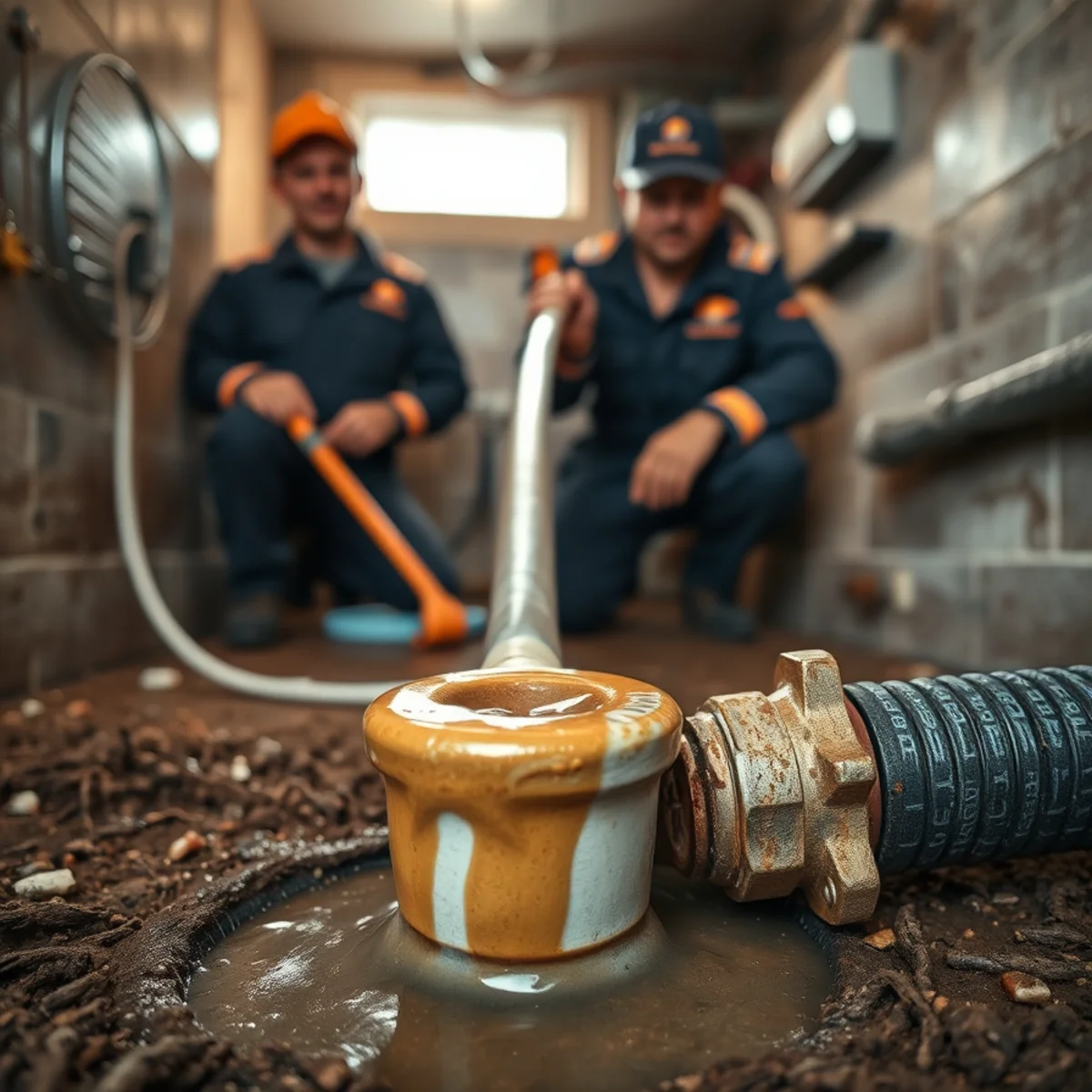
Kitchen drain jetting — the big one for food service
Grease is the defining commercial plumbing problem, and it is worse in older Maryland buildings than in new construction. Cast iron drainage plus grease plus hard water scale builds a deposit that cabling barely touches — a cable bores a channel through the accumulation and the channel closes back up over the following weeks.
Hydro jetting scours the pipe wall and actually removes the material. On a busy kitchen line the difference between the two methods is the difference between clearing it monthly and clearing it annually.
The interval should be set from what the camera shows for your specific line and your actual volume, not from a generic package. A busy kitchen in an older building on Frederick Road may need quarterly; a low-volume operation in newer premises may need annually.
Grease trap or interceptor service
Required for food service, regulated, and inspected. An overdue trap smells, overflows, and puts you at odds with the health department.
Service intervals depend on trap size and volume. Keep the service records — they get asked for. Jurisdictions across our service area have their own requirements and enforcement, and it is worth knowing yours specifically rather than assuming.
Backflow prevention testing
Most commercial properties carry an annual backflow testing obligation, and it is a compliance requirement rather than a maintenance recommendation. A lapsed test can mean a notice, and a failed assembly needs repair or replacement before certification.
The practical advice is to have somebody track the due date for you rather than relying on remembering. We do that for our commercial customers as standard — the annual reminder is worth more than the test itself, because the test is easy and forgetting it is expensive.
Water heating sized for real peak demand
Commercial hot water demand is spikier than residential. A restaurant's peak is the hour after service; a salon's is a busy Saturday morning. Sizing on average use produces a system that fails exactly when it matters.
Where fixtures are a long way from the heater, recirculation matters more in a commercial setting than a domestic one, because staff waiting for hot water at a hand sink is both a labour cost and a compliance issue in food service.
And the same hard water that shortens residential heater life shortens commercial equipment life faster, because it runs harder. Treatment on a commercial water heater usually pays back quicker than it does at home.
Restroom fixtures under public use
- Fit commercial-grade fixtures. Residential parts in a commercial restroom are a false economy and we will talk you out of them.
- Flushometers need periodic diaphragm replacement rather than waiting for failure.
- Sensor faucets and flush valves have batteries and solenoids that fail on a predictable timeline.
- ADA compliance affects fixture heights, clearances and pipe insulation under accessible basins. Worth confirming during any refit.
A sensible schedule
- Quarterly to annually: kitchen line jetting for food service, set from camera findings.
- Per your jurisdiction: grease trap service and records.
- Annually: backflow testing and certification.
- Annually: water heater service, flush and safety check.
- Annually: a walk-through of restroom fixtures, shutoff valves and visible piping.
- Every few years: camera inspection of the main line, particularly in older buildings.
- Once: confirm you know where the main water shutoff and the gas shutoff are, and that staff on shift know too.
Mixed-use buildings need thinking about as buildings
A great deal of small commercial space in our area sits under apartments — converted storefronts along Frederick Road, mixed-use buildings near UMBC, similar stock throughout Baltimore and Howard County.
In those buildings, drainage is frequently shared and sometimes water heating is too. A recurring complaint in one unit is often a building-level problem rather than a tenant problem, and diagnosing it properly means understanding the whole building once rather than returning four times.
For landlords with several properties, the value of a single family-run plumber is continuity — remembering which building has the undersized main, which has the temperamental ejector pump, and which tenant calls about everything. That knowledge saves money on every subsequent visit. See commercial plumbing for how we work with businesses across Catonsville and Jessup.
The economics, plainly
A jetting contract on a busy kitchen line costs less per year than two emergency call-outs and one lost service. That comparison is the whole case for scheduling, and it is worth doing with your actual numbers rather than accepting it as a slogan.
We will price both — reactive and scheduled — so you can compare. If the arithmetic does not favour a contract for your volume, we will say so.
Frequently asked questions
How often should a commercial kitchen line be jetted?
It depends entirely on volume, what is being cooked, and the condition and material of the line. We set the interval from a camera inspection rather than a generic package — a busy kitchen in an older building may need quarterly, a lower-volume operation annually.
Can you work outside our trading hours?
For anything that is not an emergency, yes, and we treat that as normal rather than a favour. Tell us your trading hours when you book.
What happens if our backflow test lapses?
It varies by jurisdiction, and it can mean a notice and a requirement to test and certify promptly. The practical answer is to have somebody tracking the due date — we do that for our commercial customers because forgetting it is far more expensive than the test.

Who wrote this
Collins & Sons LLC — Daniel Collins and family
We are a family plumbing business working out of 209 Westowne Rd in Catonsville, and we have been under Maryland houses for over 40 years — three generations of it. Most of what is on this page comes from doing the same jobs repeatedly on the same housing stock: pre-1950 homes off Frederick Road, galvanized supply, cast iron drainage, and water that runs 7–8.2 grains per gallon.
Licensed MHIC #117712 with the Maryland Home Improvement Commission and fully insured. We pull the Baltimore County permits on water heaters, sewer work and gas piping, and we meet the inspector ourselves.