If your Catonsville house was built before about 1960 and has never been repiped, the odds are good that some or all of your water supply lines are galvanized steel. It was excellent pipe in its day — steel dipped in molten zinc, which resists corrosion far better than bare steel.
The problem is that the zinc does not last forever. Once it wears away, the steel underneath starts corroding from the inside. That is the crucial detail: the failure happens on the inside, invisibly, for years before anything shows on the outside.
How galvanized actually fails
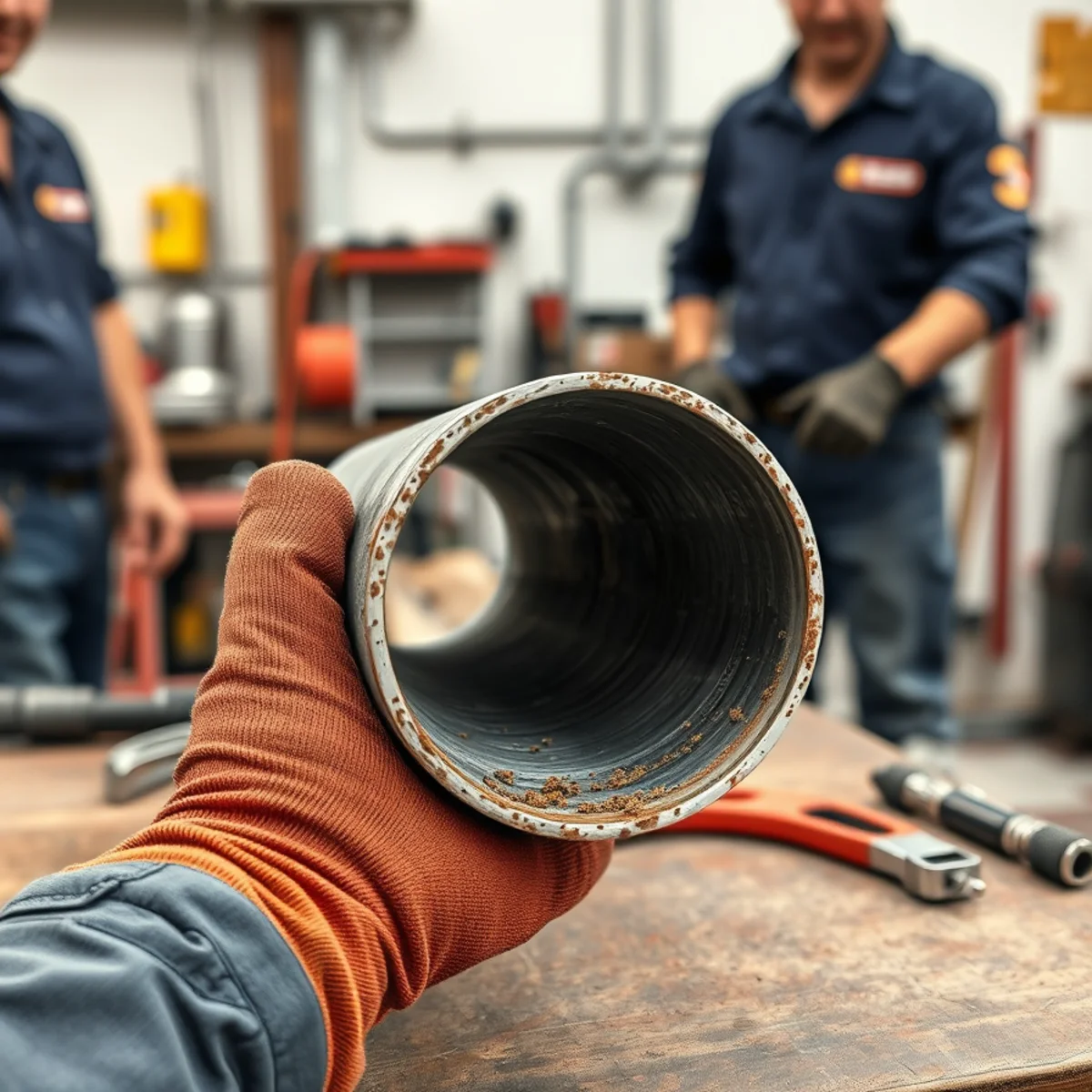
Corrosion inside a steel pipe does not produce a smooth, evenly thinning wall. It produces tubercles — knobby rust nodules that grow inward from the pipe wall. They restrict flow long before they breach anything.
When we cut a section out of a badly affected three-quarter-inch line, the opening left in the middle can be a quarter inch or less. Homeowners look at that cut and stop asking whether a repipe is necessary. It is the most persuasive thing in our toolkit and we did not have to say a word.
Signs you are on galvanized and it is failing
- Water pressure that has declined so gradually over twenty years you stopped noticing.
- Rusty or brownish water on first draw in the morning, clearing after a minute.
- Pressure that collapses when a second fixture opens.
- Hot water noticeably weaker than cold at the same fixture — hot lines corrode faster.
- More than one leak in different parts of the house within a couple of years.
- Visible threaded steel pipe in the basement with rust staining at the joints.
How to check yourself in five minutes
Go to the basement and look at the pipe where the water service enters the house. Galvanized is dull silver-grey steel with threaded joints and screwed fittings. Copper is unmistakable — reddish-brown, joined with soldered sweat fittings. PEX is flexible plastic tubing, usually red, blue or white.
A magnet is the quick test: it sticks to galvanized steel and does not stick to copper or brass. Then follow the pipe visually as far as you can. In a house repiped in pieces you will find a mix, and where two metals meet directly is where corrosion runs fastest.
Partial or whole house?
Plenty of older Catonsville homes have already been partly repiped — a copper branch to a 1975 bathroom remodel, a PEX run to a kitchen addition, and original galvanized everywhere else. That history shapes the plan.
For many households a staged approach is genuinely right. We start with the basement trunk lines and the risers, because that is where most of the flow restriction lives and the improvement is immediate and dramatic. Branch runs to individual fixtures follow later as budget allows. The important thing is planning the phases so nothing done first has to be torn out second.
When there is a leak history across multiple rooms, or the house is being renovated anyway, doing it all at once is cheaper per foot and less disruptive overall. Whole-house repiping in Catonsville is a several-day project, and you will have working water at the end of each day — we do not leave families without water overnight.
PEX or copper?
The case for PEX
For most older homes here, PEX is the sensible answer. It is flexible, so it routes through existing wall cavities, chases and joist bays with far fewer openings. In a house with plaster-and-lath walls, every opening you avoid is a plaster repair you do not pay for.
It also tolerates freezing far better than rigid pipe, has fewer joints (and joints are what fail), and installs faster, which shows up in the labor line.
The case for copper
Copper is rigid, proven over a century, and still the right choice for exposed runs where appearance matters, for certain historic renovations, and for homeowners who simply prefer it. It costs more in material and labor.
Both are code-approved and both will comfortably outlive the galvanized they replace. We price both and let you decide, rather than pushing whichever suits our week.
What drives the cost
- Bathroom count more than square footage — fixtures, not floor area, determine the run count.
- Material choice, with PEX generally less expensive installed than copper.
- Wall construction. Plaster and lath is slower to open and harder to patch than drywall, and it is the biggest single cost difference between a 1925 house and a 1985 one.
- Access. A full unfinished basement and a walkable attic can transform the job. A finished basement below and a low attic above push everything into finished walls.
- Additional scope. Drain and vent replacement, a new water service line or fixture upgrades all cost less bundled into one project than done separately later.
- Restoration expectations. We patch openings back to a paint-ready surface. Plaster restoration, historic tile matching and painting are separate trades and we say so before you sign.
The lead question
Galvanized pipe is not lead pipe, and the two get conflated. However, in homes built before 1986, lead solder was commonly used at copper joints, and some older properties in Baltimore County have legacy lead components on the buried service side.
A repipe replaces internal piping and joints, which addresses solder. It does not by itself address the buried water service line between the meter and the house — that is a separate item we identify and quote alongside. If you have small children, it is worth knowing exactly what you have rather than assuming either way.
What to do next
If you recognise your house in this article, the next step is not a quote — it is an assessment. We survey the whole system, identify materials, measure pressure at multiple points, and map what previous work has already done. Then you get a written picture of what you own and a sensible order to address it in.
That assessment is useful even if you do nothing this year. Knowing that your supply system has five years left rather than fifteen changes how you plan a kitchen remodel, and it is exactly the sort of thing that should inform a decision before the tile goes on. We do this work throughout Catonsville, Oella and the older neighborhoods across Baltimore County.
Frequently asked questions
How long does galvanized pipe last?
Typically 40 to 60 years, and much of Catonsville's pre-war housing stock passed that mark decades ago. Hot water lines fail first because heat accelerates corrosion. If yours is original to a 1930s or 40s house, it is well past its design life.
Can I just replace the sections that leak?
You can, and it is the right call for a single failure. But when a second leak appears elsewhere within a year or two, that is the system telling you the whole run is at the same point in its life. At that stage repeated patching becomes the expensive option.
Will a repipe fix my water pressure?
If the restriction is in the interior piping, dramatically — most people are surprised by how much. If the bottleneck is the buried service line or a failed pressure reducing valve, a repipe alone will not solve it. That is why we test pressure at the meter and at the house before recommending anything.
Who wrote this
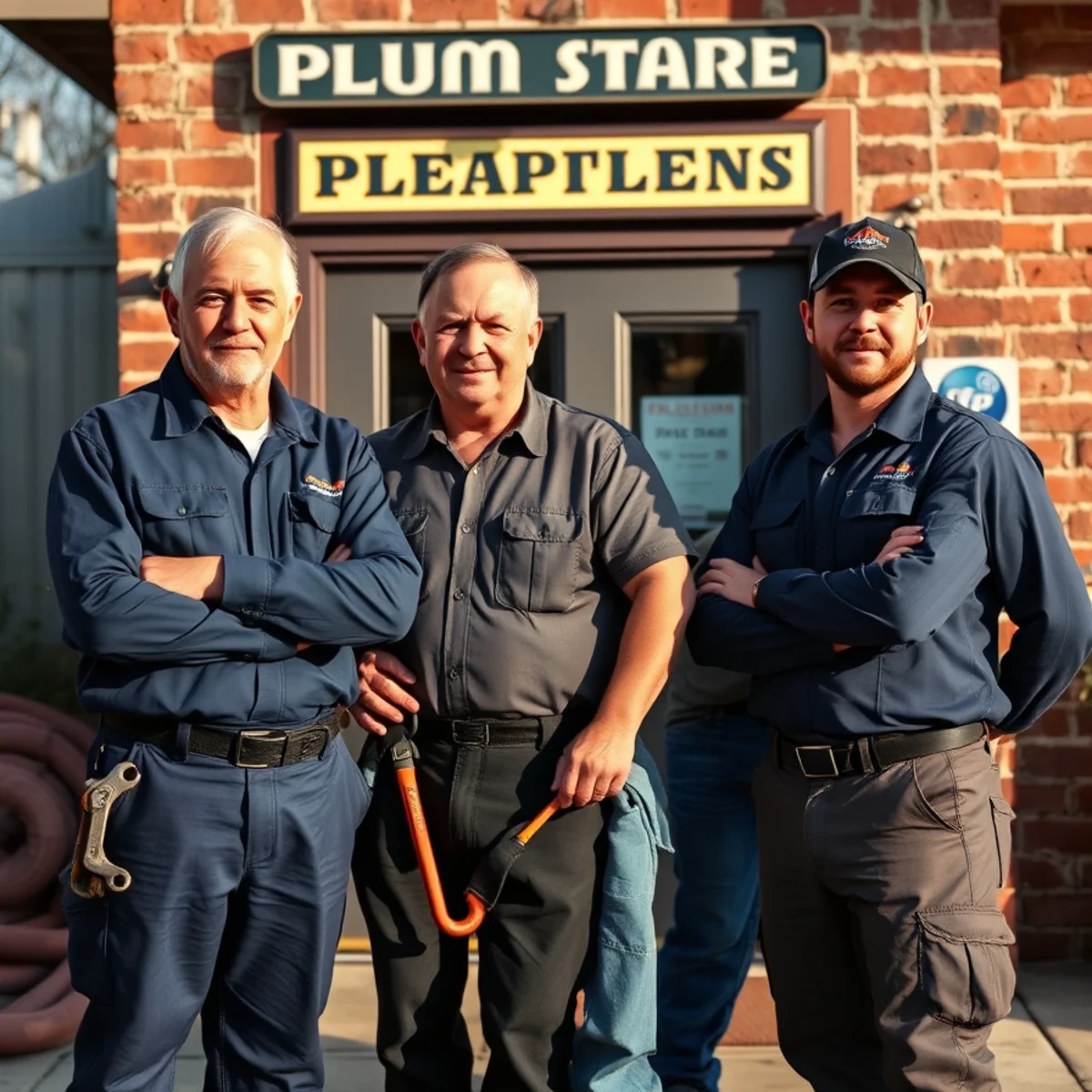
Collins & Sons LLC — Daniel Collins and family
We are a family plumbing business working out of 209 Westowne Rd in Catonsville, and we have been under Maryland houses for over 40 years — three generations of it. Most of what is on this page comes from doing the same jobs repeatedly on the same housing stock: pre-1950 homes off Frederick Road, galvanized supply, cast iron drainage, and water that runs 7–8.2 grains per gallon.
Licensed MHIC #117712 with the Maryland Home Improvement Commission and fully insured. We pull the Baltimore County permits on water heaters, sewer work and gas piping, and we meet the inspector ourselves.