Of all the things that go wrong in a house, a running toilet has the worst ratio of cost to drama. There is no flood, no emergency, no stain on the ceiling. There is a faint trickle that most people stop hearing after a week, and a water bill that keeps climbing.
The part responsible usually costs a few dollars and takes fifteen minutes to change.
The fifteen-minute test that settles it
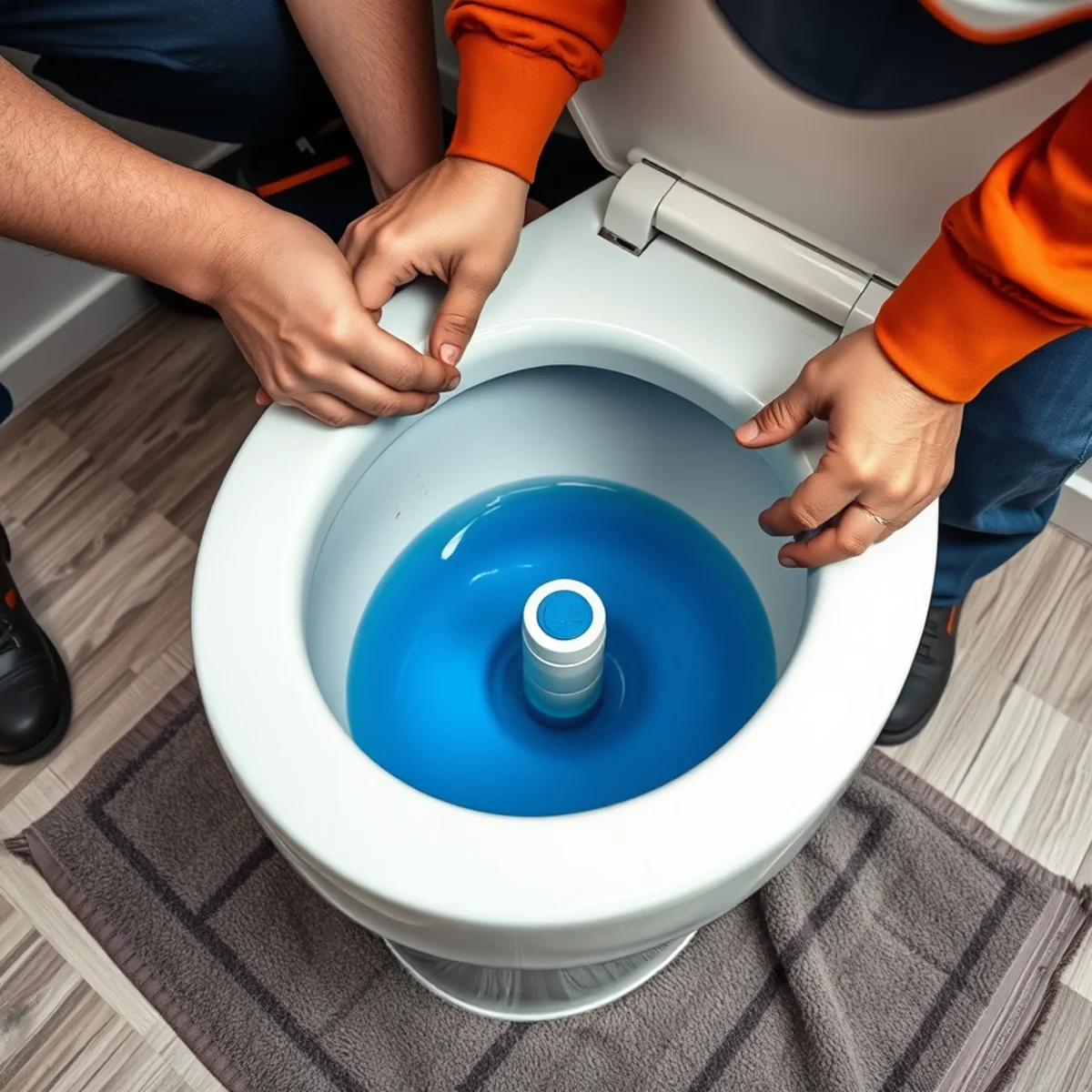
Take the lid off the tank. Put a few drops of food coloring — or a dye tablet — into the tank water. Do not flush. Wait fifteen minutes, then look in the bowl.
If there is color in the bowl, water is passing from the tank into the bowl continuously. That is your leak, it runs twenty-four hours a day, and you are paying for every gallon.
What is actually failing
The flapper
The rubber flapper at the bottom of the tank is the most common culprit. It seals the opening between tank and bowl. Over years the rubber hardens, warps or develops mineral deposit on the sealing surface — and in Catonsville's hard water that deposit builds faster than in softer regions.
Once it stops sealing perfectly, water passes continuously. Flappers are inexpensive, universally available, and replaceable in about ten minutes with no tools. Take the old one to the store to match it, or photograph the toilet's model number inside the tank lid.
The fill valve
If water is running into the overflow tube — the vertical pipe in the middle of the tank — the fill valve is not shutting off, or the water level is set too high.
Sometimes it is just adjustment: the water level should sit about an inch below the top of the overflow tube. Sometimes the valve itself has worn out. A replacement fill valve is a modest part and a straightforward job.
The chain, the handle and the flush valve
A chain that is too short holds the flapper slightly open. A chain that is too long tangles under the flapper. A handle arm that binds keeps it from seating. All are free to fix and worth checking before buying parts.
Less commonly, the flush valve seat itself is pitted or scaled so that no flapper will seal against it. That is a bigger job — the tank has to come off — and it is one point where calling somebody makes sense.
The other silent water thieves
- A dripping faucet. Slower than a running toilet but constant, and it wears the valve seat while it drips.
- A leaking irrigation valve or an outdoor hose bib that weeps.
- A water softener stuck in continuous regeneration, sending treated water straight to the drain.
- A failed pressure relief valve on a water heater, discharging intermittently.
- A hidden supply line leak, which is the serious one.
The meter test for everything else
If the dye test is clean and the bill is still high, run the meter test. Shut off every fixture and appliance that uses water. Note the meter reading exactly. Wait thirty minutes without using any water at all. Read it again.
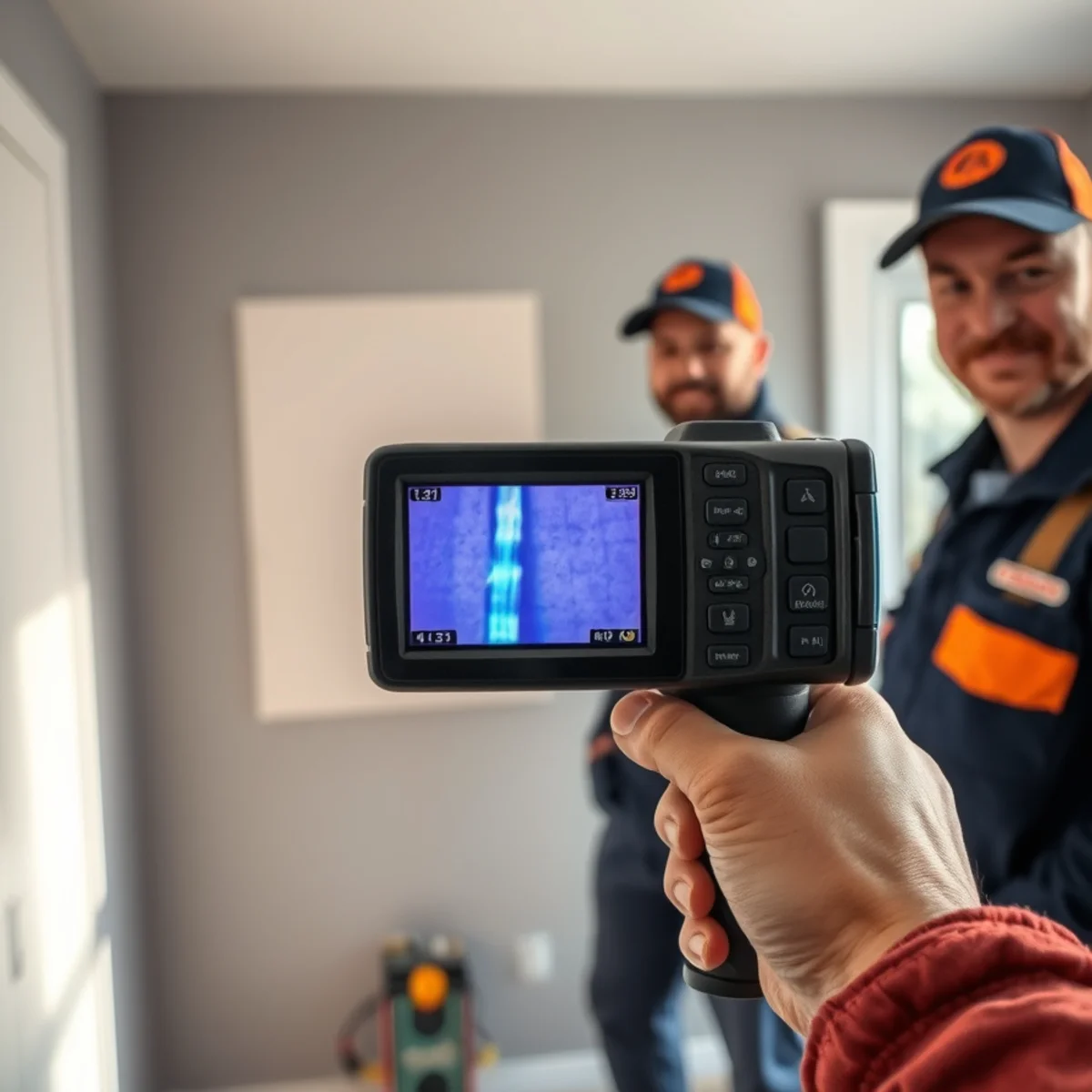
Any movement means water is leaving the system somewhere. That is not a toilet — that is a leak, and it deserves attention now rather than later. Leak detection uses acoustic and thermal equipment to locate it precisely so the repair means one deliberate opening rather than exploratory demolition.
When to stop fixing and call
Replace a flapper. Replace a fill valve. Adjust a chain. Those are good homeowner jobs and we would rather you saved the money.
Call when the toilet rocks — that means the flange has corroded or the subfloor beneath has softened, and in older Catonsville homes with cast iron flanges it is common. Call when water appears at the base, which means the seal has failed and the floor structure is getting wet. Call when the same toilet clogs repeatedly, because that usually points downstream rather than at the fixture. And call when the shutoff valve under the toilet will not turn, because that is the valve you need in an emergency and hard water calcifies them open. Toilet repair and installation is usually a same-day job.
Worth doing once a year
Dye-test every toilet. Check under every sink for damp. Turn every angle stop to confirm it still moves — and replace the ones that do not with quarter-turn valves while there is no emergency. Look at the water heater base. Read your meter with everything off.
Twenty minutes, once a year, catches most of what would otherwise become a call to us. That is not a bad trade for anybody. We do plenty of work across Catonsville and Halethorpe that started as "I noticed this during my annual check", and those jobs are always cheaper than the emergency versions.
Frequently asked questions
How much water does a running toilet waste?
Enough to be clearly visible on a quarterly bill. Because it is nearly silent, households commonly run for months before noticing. The dye test takes fifteen minutes and the part costs a few dollars — it is the best return on effort available in home maintenance.
My toilet refills briefly every few minutes with nobody using it. Why?
That is called phantom flushing and it is a leaking flapper. The tank level drops slowly as water passes into the bowl, and when it drops enough the fill valve kicks in to top it up. Replacing the flapper solves it.
Are the cheapest flappers fine?
Usually, but match the type to your flush valve rather than buying whatever is nearest. In hard water areas a better-quality rubber compound genuinely lasts longer before mineral deposit compromises the seal.
Who wrote this
Collins & Sons LLC — Daniel Collins and family
We are a family plumbing business working out of 209 Westowne Rd in Catonsville, and we have been under Maryland houses for over 40 years — three generations of it. Most of what is on this page comes from doing the same jobs repeatedly on the same housing stock: pre-1950 homes off Frederick Road, galvanized supply, cast iron drainage, and water that runs 7–8.2 grains per gallon.
Licensed MHIC #117712 with the Maryland Home Improvement Commission and fully insured. We pull the Baltimore County permits on water heaters, sewer work and gas piping, and we meet the inspector ourselves.