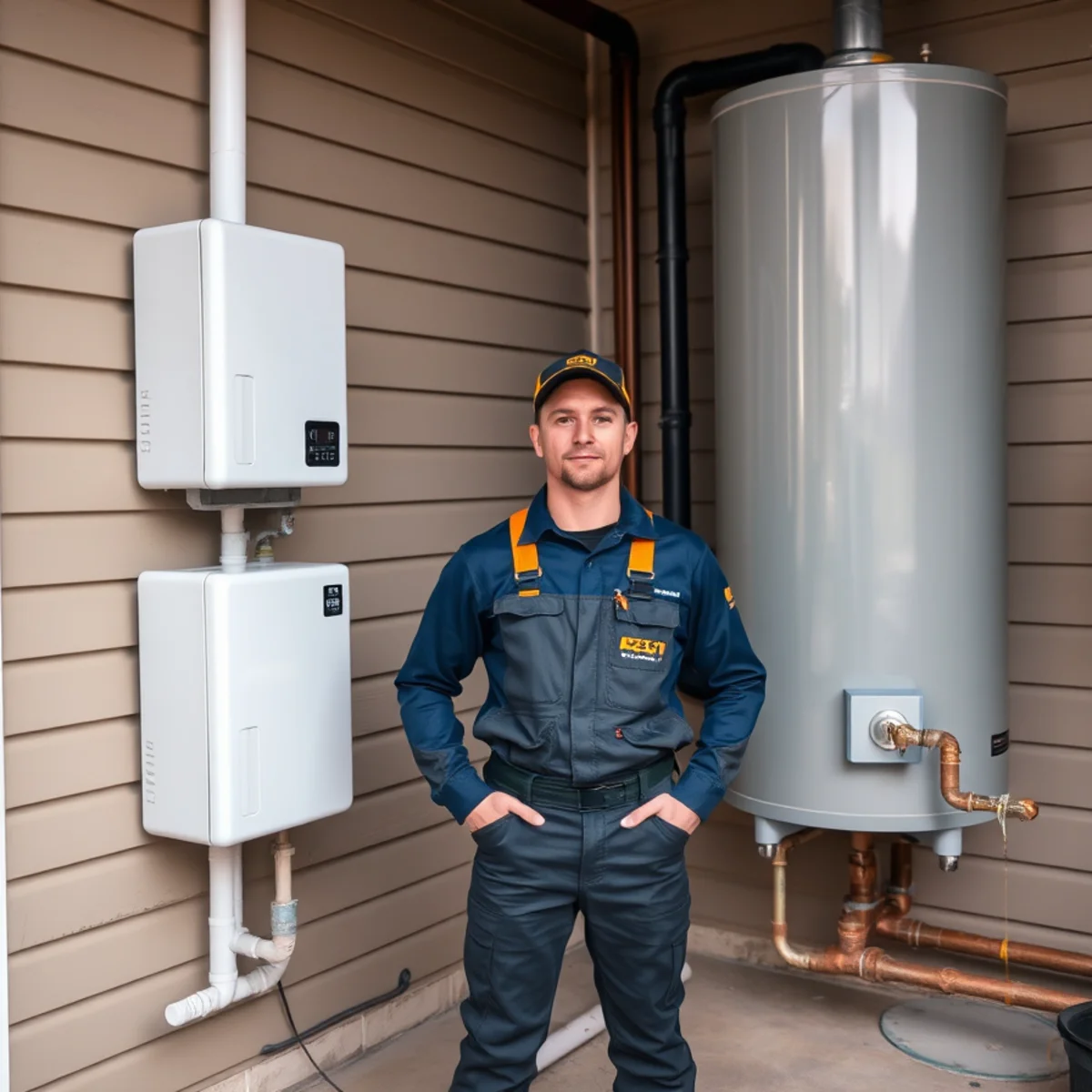
Every water heater replacement conversation now includes the tankless question, and most of the answers online are written by people selling one or the other. Here is ours, from a family shop that installs both across Baltimore, Howard, Carroll, Frederick, Montgomery and Anne Arundel counties.
Short version: tankless is excellent equipment for the right house and the right owner. It is not automatically the better choice, and in Maryland there is one local factor that changes the maths more than anything on a spec sheet.
How each one works
A tank heater keeps 40 to 80 gallons hot all the time, ready to go. When you draw hot water, the tank refills and reheats. Simple, proven, cheap to install, and it loses some energy to standby heat.
A tankless unit heats water on demand as it flows through a heat exchanger. Nothing is stored, so there is no standby loss and no finite supply — you can shower indefinitely. The trade-off is that it can only heat so much water per minute, which is the number that actually matters when you are choosing one.
Where tankless genuinely wins
- Endless hot water. Long showers, a big tub and back-to-back use stop being a scheduling problem.
- Space. A wall-mounted unit gives you back the footprint of a tank, which matters in a tight utility room or a converted basement.
- Longevity. Twenty years or more is realistic with maintenance, roughly double a typical tank.
- Efficiency. No standby losses. Real savings, though usually more modest than the marketing suggests for an average household.
- No catastrophic tank failure. A tankless unit cannot dump 50 gallons onto your floor, which matters a lot if the heater lives inside finished space.
Where a tank still wins
- Installed cost. Equipment costs more, and in most retrofits the gas line and venting need upgrading too. That is where the real difference lives.
- Simultaneous demand. A tank does not care how many fixtures are open; it cares how much total water you draw. A tankless unit has a hard flow-rate ceiling, and exceeding it means lukewarm water everywhere.
- Simplicity. Fewer components, easier diagnosis, cheaper parts, and any plumber can work on one.
- Tolerance of neglect. A tank will limp along for years with no maintenance. A tankless unit in hard water will not.
The Maryland factor: hard water
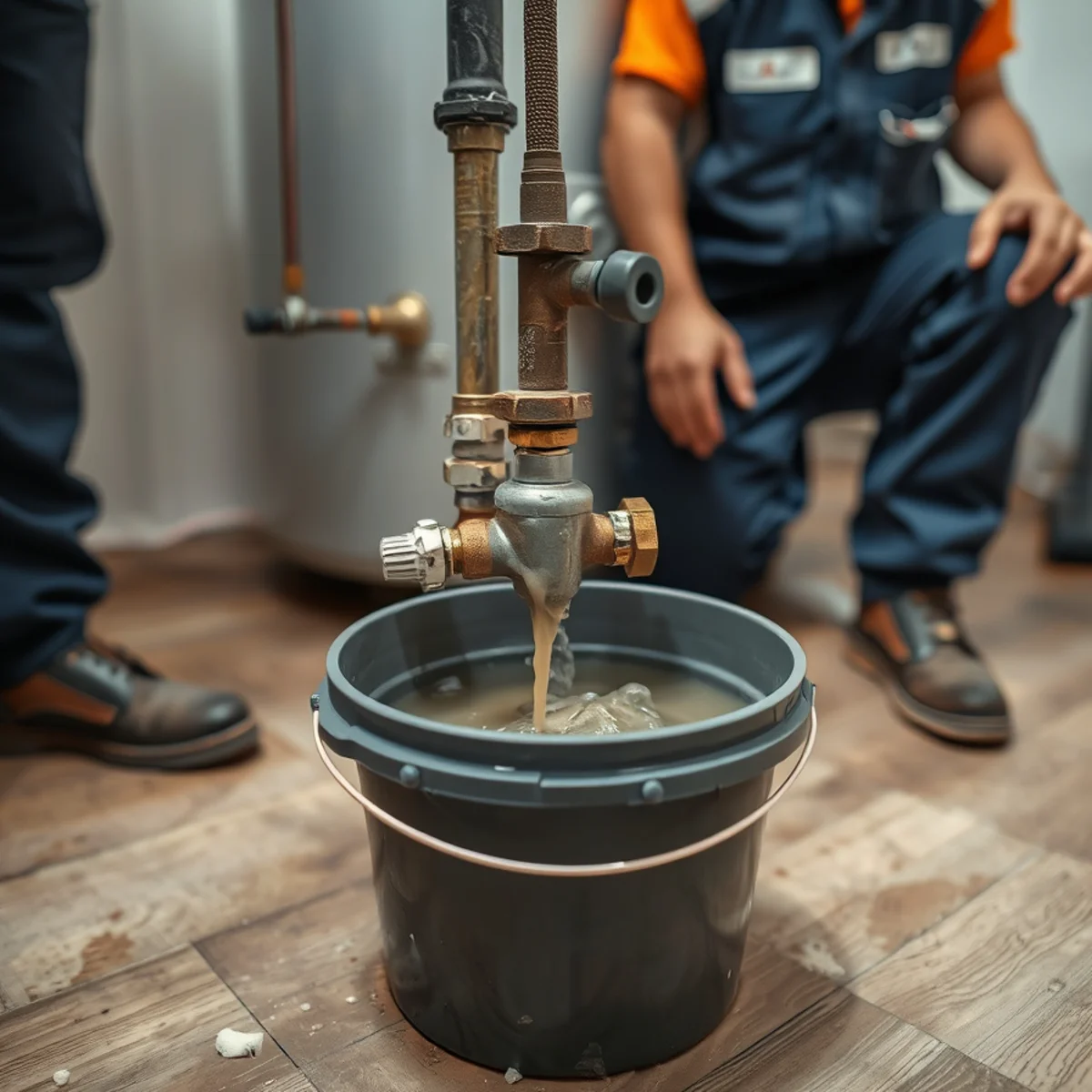
This is the part most comparisons skip. Water across our service area is hard — around 7 to 8.2 grains per gallon on the Baltimore City supply serving Catonsville, and variable but frequently harder still on private wells out in Carroll and western Howard County.
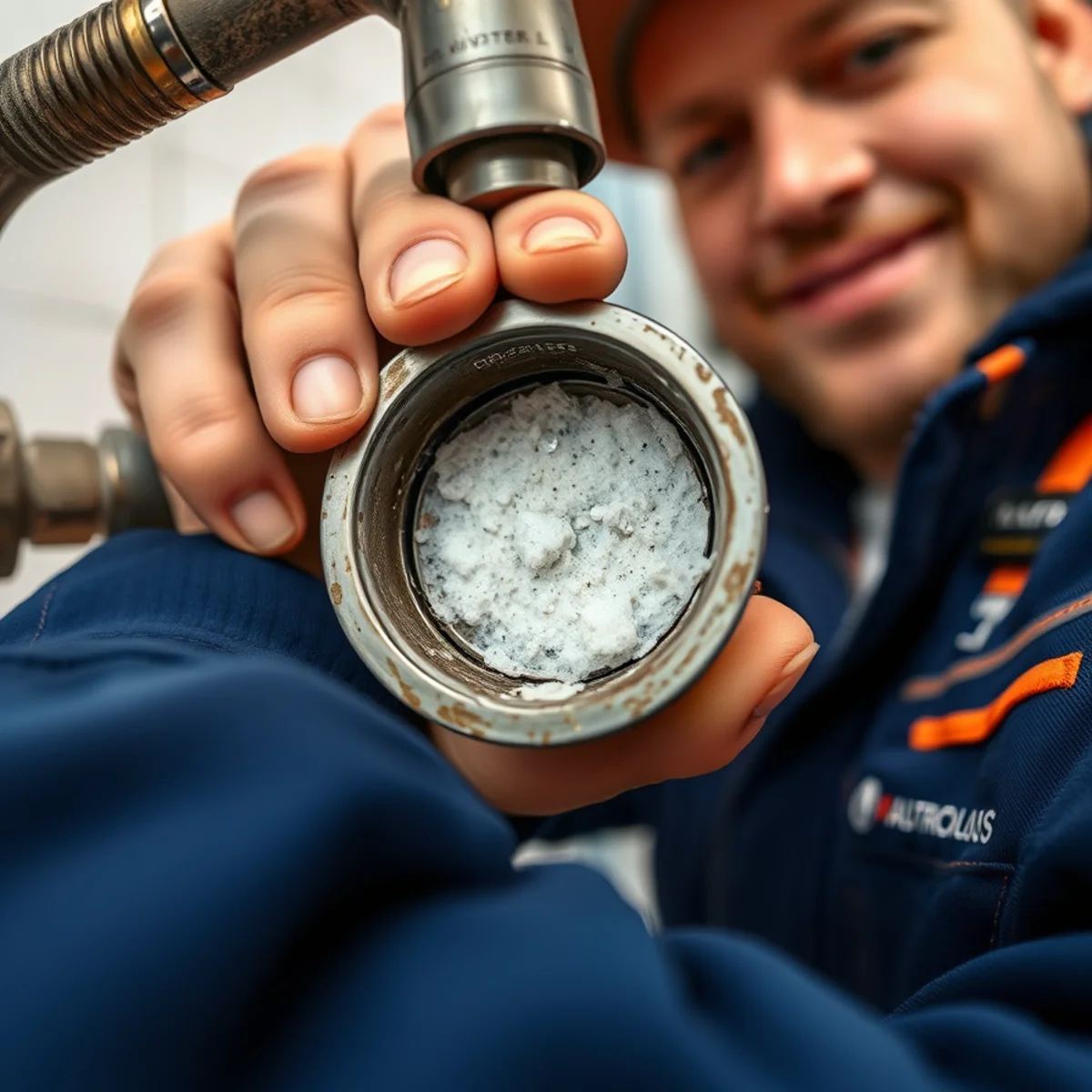
A tank heater deals with hard water by collecting sediment at the bottom, where it insulates and shortens tank life. That is bad, but it is slow and forgiving. A tankless heat exchanger has narrow passages and no sediment reservoir, so scale plates directly onto the heat transfer surfaces. Flow drops, the burner cycles oddly, temperature becomes inconsistent, and eventually the unit throws error codes.
The fix is not complicated: annual descaling, and ideally softening or dedicated scale prevention feeding the unit. Done that way, tankless in Maryland performs superbly for two decades. Skipped, it disappoints inside five years. We say this to every customer considering one, because it is the single biggest predictor of whether they will be happy.
The retrofit costs people do not expect
Gas supply
A tankless unit fires at a far higher BTU rate than a tank, because it has to heat water instantly rather than gradually. A gas line sized in 1965 for a furnace and a 40-gallon tank frequently cannot deliver that. Upsizing the trunk line is real work and real money, and it needs to appear on the estimate rather than as a discovery on installation day.
Venting
Modern condensing tankless units vent differently from an atmospheric tank into a masonry chimney. That usually means new venting through a sidewall, plus a condensate drain. In an older Catonsville or Frederick rowhome, finding a compliant route is sometimes the hardest part of the whole job.
Electrical and water treatment
Tankless units need power for controls and ignition, sometimes on a dedicated circuit. And if you are adding softening or scale prevention as part of the project — which we would recommend here — that is another line item worth pricing at the same time rather than later. Water treatment installed alongside the heater is cheaper than two separate visits.
How we actually decide
We ask four questions. How many people, and do they shower at the same time? Is there existing gas capacity and a viable vent route? Will you maintain it annually, honestly? And how long do you plan to stay in the house?
A family of two in a modern Owings Mills or Columbia home with adequate gas, who plan to stay twenty years and will book a yearly service — tankless is a straightforward yes. A family of five in a 1930s Catonsville house with an undersized gas line, a chimney vent and no appetite for annual maintenance — a well-chosen tank with a softener will make them happier and cost far less.
Neither answer is a compromise. They are just different houses. When we come out for water heater installation we price both so you can see the actual numbers for your address instead of a generic comparison.
The short version
- Tankless: endless hot water, space savings, 20+ year life, higher installed cost, needs annual descaling in Maryland water.
- Tank: cheaper to install, handles simultaneous demand better, simpler to service, shorter life, tolerates neglect.
- The deciding factors are usually gas capacity, vent route, simultaneous demand and whether you will maintain it.
- Whichever you choose, address the water. Hard water is what shortens both.
Frequently asked questions
How much can a tankless unit actually deliver at once?
It depends on the model and the incoming water temperature — the colder the supply, the less it can deliver. Maryland winters bring incoming water temperatures down significantly, so a unit sized on summer performance will disappoint in January. We size on winter conditions.
Can I put a tankless unit where my tank is now?
Usually, but the connections rarely line up and the venting almost never does. Expect new gas piping, new venting and a condensate drain. That is normal for a retrofit and should be in the written estimate before you commit.
What does annual tankless maintenance involve?
Circulating a descaling solution through the heat exchanger, cleaning the inlet filter, checking the venting and condensate drain, and verifying combustion. It takes about an hour and it is what protects the expensive part of the unit.
Who wrote this
Collins & Sons LLC — Daniel Collins and family
We are a family plumbing business working out of 209 Westowne Rd in Catonsville, and we have been under Maryland houses for over 40 years — three generations of it. Most of what is on this page comes from doing the same jobs repeatedly on the same housing stock: pre-1950 homes off Frederick Road, galvanized supply, cast iron drainage, and water that runs 7–8.2 grains per gallon.
Licensed MHIC #117712 with the Maryland Home Improvement Commission and fully insured. We pull the Baltimore County permits on water heaters, sewer work and gas piping, and we meet the inspector ourselves.