
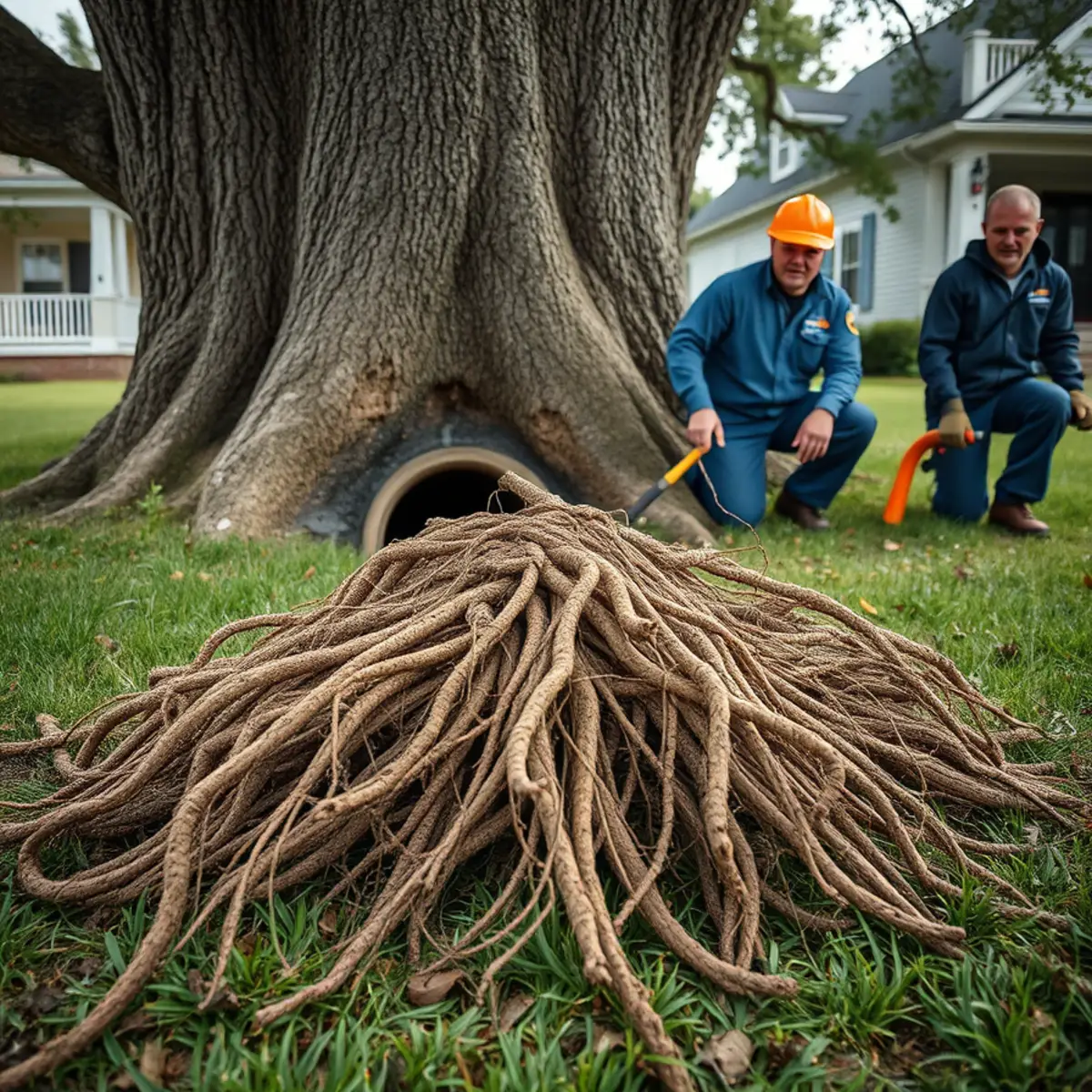
Drive down Ingleside Avenue or through Paradise and Westchester and you will see exactly why people move to Catonsville. Mature oaks and maples arching over the street, planted when these houses were new. Those trees are also, quietly, inside a lot of sewer pipes.
This is not a Catonsville failing. It is what happens anywhere old trees sit above old jointed sewer pipe. But it is common enough here that root intrusion is the single most frequent cause of the recurring main line backup we get called about.
How roots get into a sealed pipe
Roots do not drill through sound pipe. They exploit what is already there. On properties built before roughly 1970, the sewer lateral is usually vitrified clay laid in short sections with mortared joints. Those joints were watertight when installed. Eighty years of soil movement, freeze cycles and settling later, some of them are not.
A sewer line carries warm water, nutrients and moisture — everything a root system is looking for, especially in a dry summer. A hair-fine root finds a hairline gap at a joint, enters, and grows. Inside the pipe it has abundant water and nutrients, so it thrives, branching into a dense mat that catches everything flowing past.
The signs, roughly in order of appearance
- Occasional slow drainage across the whole house that resolves on its own.
- Gurgling from a tub or floor drain when a toilet flushes.
- The lowest fixture in the house backing up first — a basement floor drain or shower.
- Repeat main line backups at intervals of a year or two.
- Sewer odor in the yard, particularly after rain.
- Unusually green, fast-growing or soggy patches along the line of the sewer route.
- A depression forming in the lawn where the pipe runs.
Why a camera inspection comes first
You cannot make a sensible decision about a pipe you have never seen, and neither can we. A camera inspection costs a small fraction of any sewer repair and it converts the conversation from opinion to evidence.
It answers the questions that determine everything: is it roots or something else, at how many joints, how far out, how much pipe is affected, and is the pipe otherwise structurally sound. A sonde locator marks the position and depth on the surface so you know exactly what is above the problem — lawn, driveway, or the tree itself. Sewer camera inspection in Catonsville typically takes under an hour with reasonable access.
Your four options
1. Mechanical root cutting on an interval
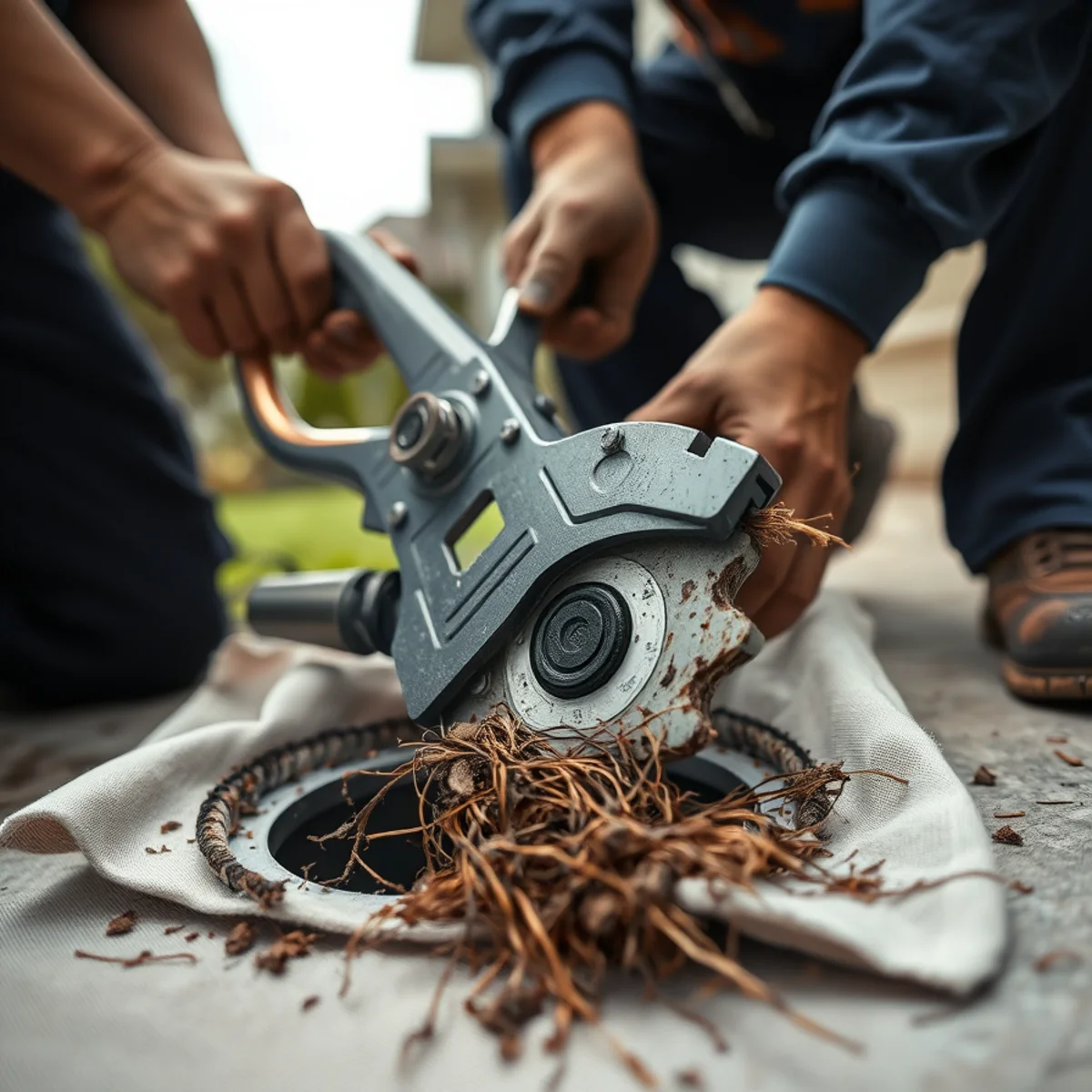
A cutter head on a cable shears the roots off inside the pipe and restores flow. It does not remove what is outside, so the roots regrow — typically over 18 to 24 months on an active line.
This is a legitimate long-term strategy, not a cop-out, provided the pipe is structurally sound and you accept the interval. For some households — an older owner not planning to stay long, or a line with intrusion at a single joint — it is genuinely the right economic answer, and we will say so.
2. Cutting plus hydro jetting
Cutting opens the line; jetting strips the remaining root hair off the pipe wall and clears accumulated debris. It leaves less material behind for regrowth to anchor to, so the interval before the next service tends to be longer.
Combined with an annual root-inhibiting foam treatment, this can stretch the maintenance cycle meaningfully on a sound line.

3. Trenchless pipe lining
A resin-saturated liner is pulled or inverted into the existing pipe and cured in place, forming a new jointless pipe wall inside the old one. No joints means no entry point, which addresses the cause rather than the symptom.
Access is through one or two small pits rather than a trench across the yard. That matters enormously when the route runs under a driveway, a stone walkway, mature landscaping or — as often happens — the tree that caused the problem. Liners are commonly rated at 50 years. The requirement is that the host pipe is still structurally intact; a collapsed section has nothing to line. Trenchless sewer repair is the most common permanent answer we recommend for root intrusion here.
4. Full replacement
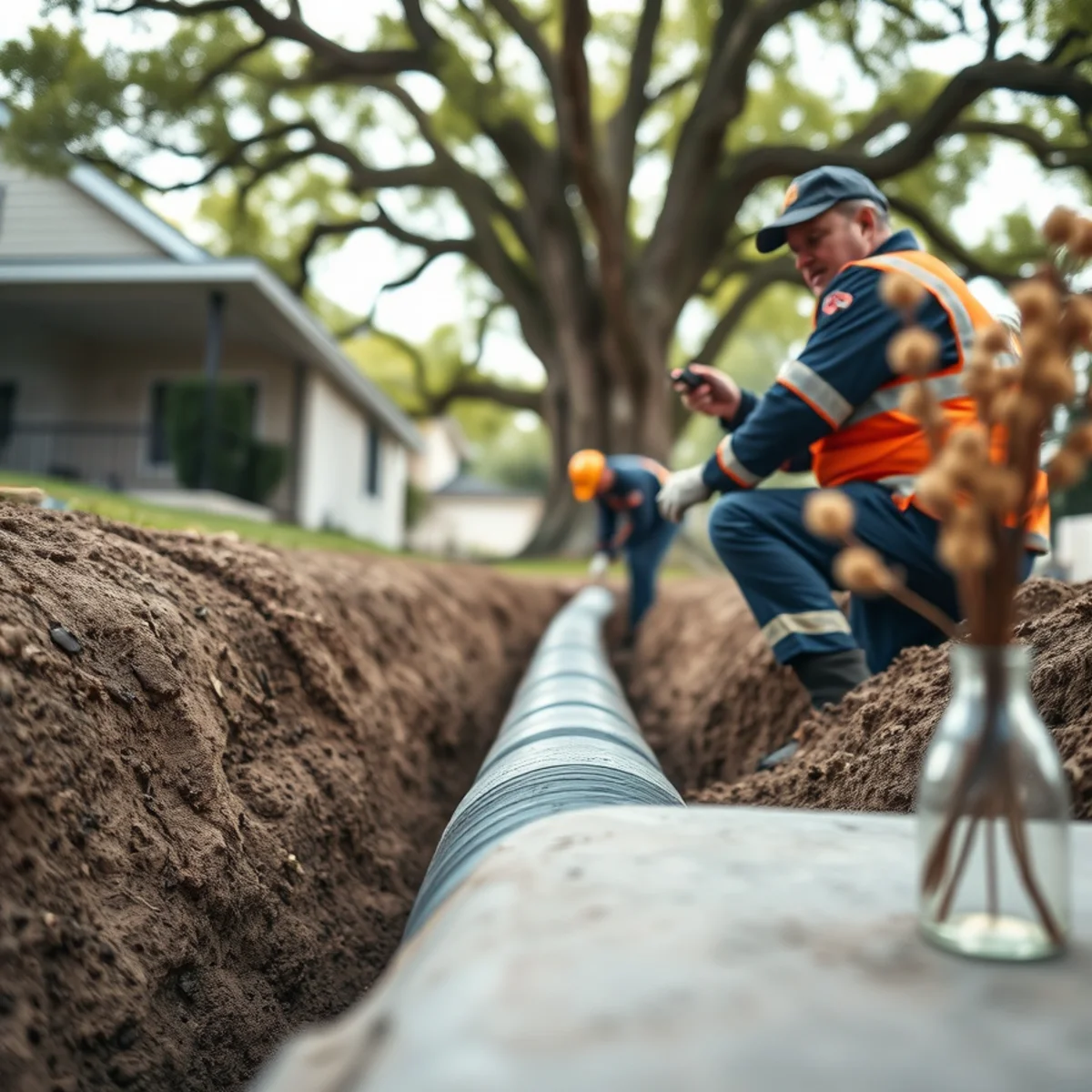
When a lateral has collapsed, is badly bellied over a long run, or is undersized for the property, replacement with modern PVC at proper grade is the answer. It is the most disruptive and most expensive option, and it is genuinely necessary less often than homeowners fear.
When we do it, we add cleanouts, backfill and compact properly so you do not get a settling trench across the lawn next spring, and we handle the Baltimore County permit and inspection.

What about the tree?
People ask whether they should remove it. Usually the answer is no, and we say that as plumbers who would financially benefit from saying otherwise. A mature specimen tree is worth a great deal to a property, removal is expensive, and the roots that are already in the pipe do not vanish when the trunk comes down.
Lining the pipe solves the problem while the tree stays. That is almost always the better trade. Where tree removal genuinely does come into it is when a root system is physically displacing the pipe rather than just growing into a joint — and the camera shows that distinction clearly.
Who pays for what
In Baltimore County the property owner is generally responsible for the lateral from the house to the connection at the public main. That is a longer stretch of pipe than most people assume, particularly on deep lots.
Standard homeowners policies rarely cover the pipe itself, though many cover resulting water damage and some carriers sell a service line endorsement that does. Check your policy before assuming either way, and keep camera footage and invoices — carriers ask for documentation. We provide both as standard on work across Catonsville, Woodlawn and the surrounding communities.
Frequently asked questions
Do chemical root killers work?
Foaming root-inhibiting products applied after a proper mechanical cleaning can slow regrowth and extend the interval between services. They will not clear an established root mass and they do not repair the joint the roots came through. Useful as maintenance, not as a fix.
How much of my yard gets dug up for lining?
Typically one or two small access pits rather than a trench. That is the main advantage of the method, and the reason it is worth pricing whenever the route crosses a driveway, walkway or established planting.
How do I know if my lateral is clay?
Build year is the strongest clue — pre-1970 in this area is usually clay. The camera confirms it definitively, and the material matters because it determines which repair options are actually available to you.
Who wrote this
Collins & Sons LLC — Daniel Collins and family
We are a family plumbing business working out of 209 Westowne Rd in Catonsville, and we have been under Maryland houses for over 40 years — three generations of it. Most of what is on this page comes from doing the same jobs repeatedly on the same housing stock: pre-1950 homes off Frederick Road, galvanized supply, cast iron drainage, and water that runs 7–8.2 grains per gallon.
Licensed MHIC #117712 with the Maryland Home Improvement Commission and fully insured. We pull the Baltimore County permits on water heaters, sewer work and gas piping, and we meet the inspector ourselves.