
There is a specific kind of frustration that belongs to older houses: the drain that gets cleared, works beautifully for four months, and then starts backing up again. Then again. Then again. Each time somebody runs a cable down it, pulls out something unpleasant, takes payment and leaves.
That cycle is not bad luck and it is not something you are doing wrong in the kitchen. It is a pipe problem, and it will continue until somebody looks at the pipe.
What cabling actually does
A drain cable — a snake — is a flexible steel coil with a cutting head. Pushed into a blocked line, it bores through the obstruction and restores flow. That is genuinely the right tool for a hair clog in a bathroom sink or a foreign object in a toilet trap.
What it does not do is clean the pipe wall. On a line where the actual problem is a thick layer of accumulated material lining the inside of the pipe, a cable punches a channel through the middle. Water flows again, everyone is happy, and the channel closes back up over the following months.
The four things we actually find in older Catonsville homes
1. Scale inside cast iron
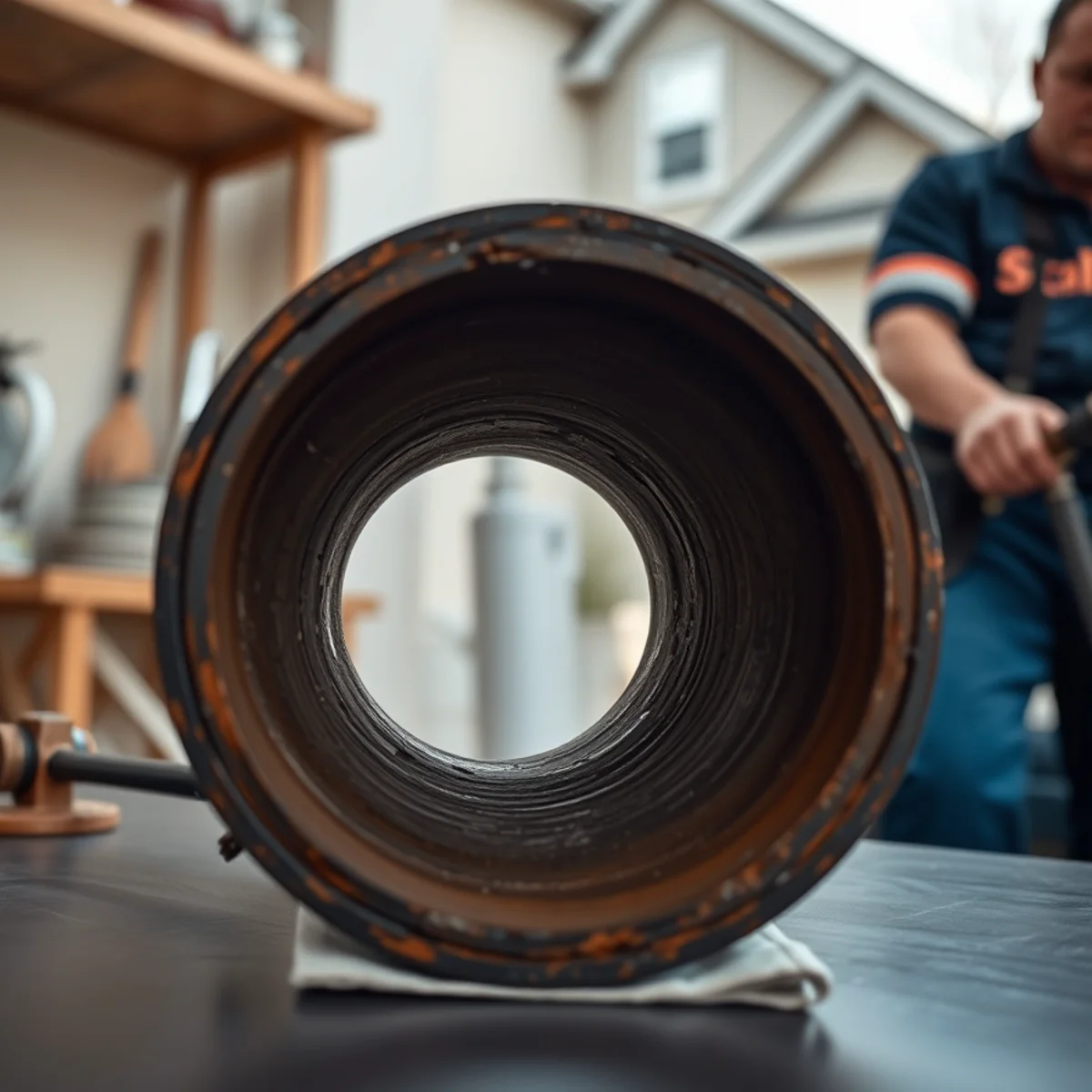
Homes built here before roughly 1960 have cast iron drainage. Cast iron is durable — much of it is still doing its job after eighty years — but it is rough inside, and our hard water leaves mineral deposit on any rough surface.
Over decades that deposit builds into a layer that measurably narrows the bore. A four-inch main can end up with the effective diameter of something much smaller. At that point, material that would have washed straight through a clean line catches, and a dam starts to form.
2. Grease shelves in kitchen lines
Grease is liquid when it goes down and solid a few feet later. In a smooth new PVC line it has a hard time getting a grip. On a scaled cast iron wall it adheres readily, and each subsequent wash adds to it.
A kitchen line in a fifty-year-old house can carry a substantial shelf of accumulated grease that no amount of hot water and dish soap will move. This is the single most common cause of the annual kitchen backup, and cabling barely touches it. Hydro jetting is what actually removes it, because it scours the wall rather than boring through the middle.

3. Root intrusion in the sewer lateral
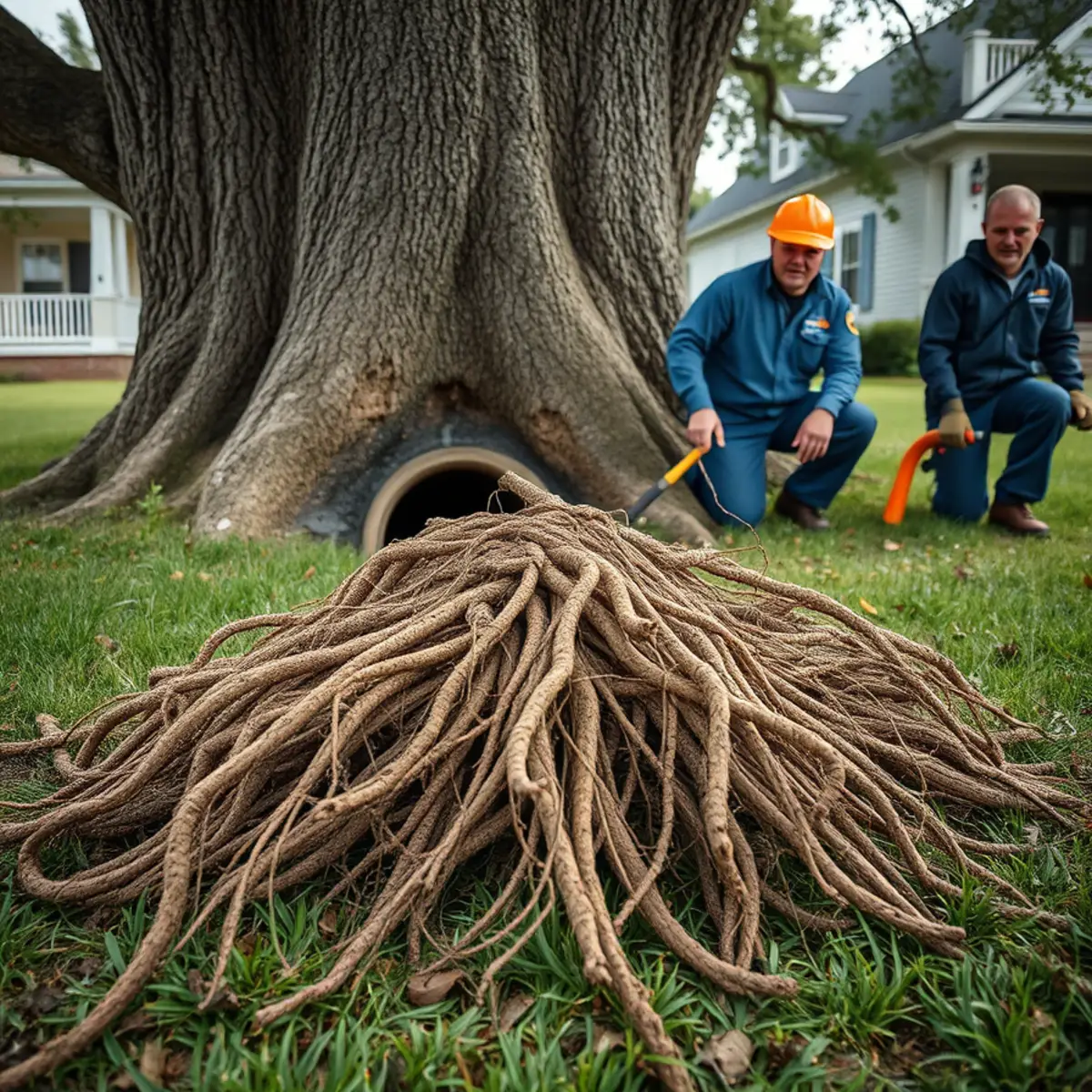
If every fixture in the house is slow rather than one, the problem is in the main line or the lateral outside. On pre-1970 Catonsville properties that lateral is typically clay tile in short sections with mortared joints — and this town has magnificent old trees.
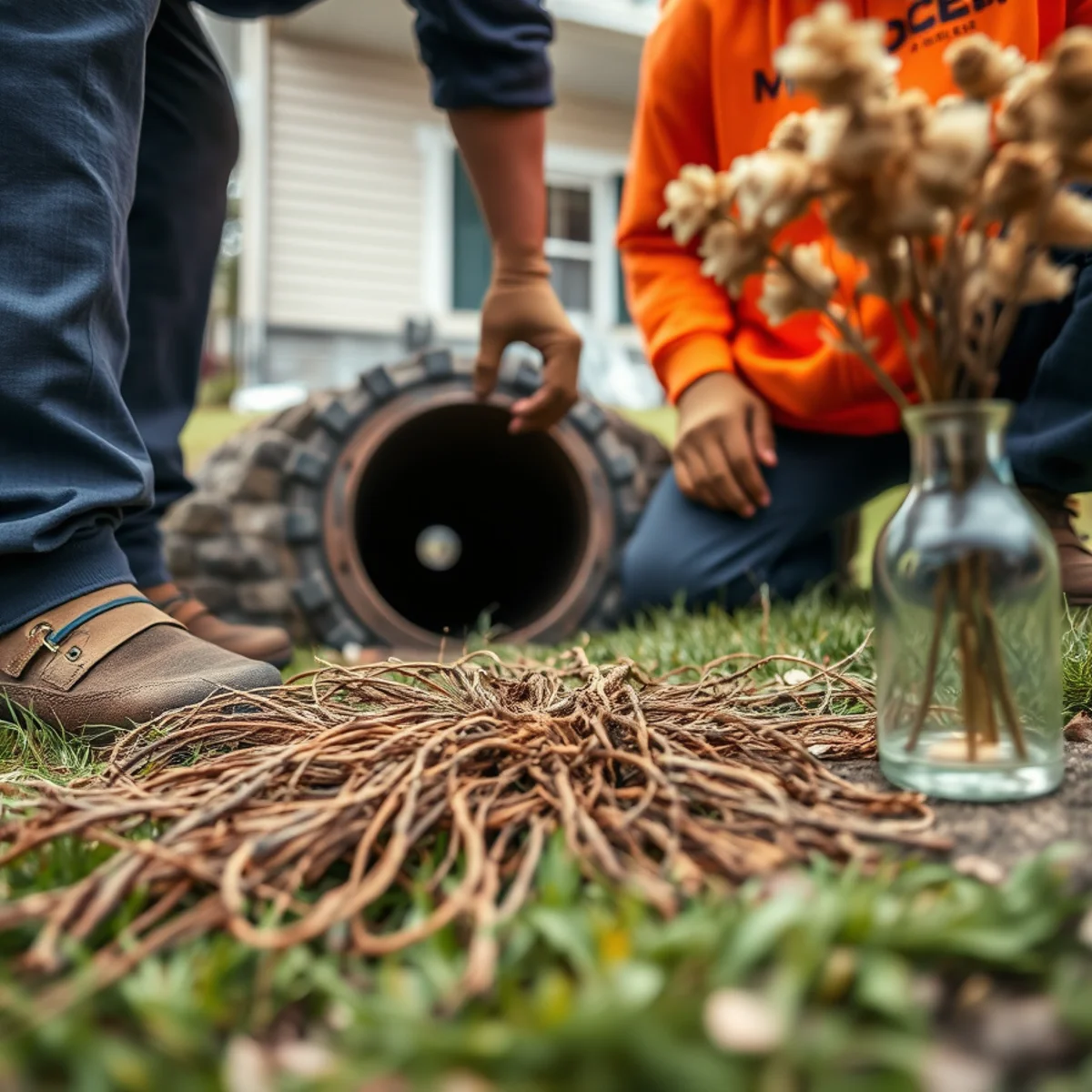
Roots find the joint, enter as a hair, and grow into a mat that catches everything passing. Neighborhoods like Oak Forest, Paradise, Westchester and the streets around Ingleside Avenue are classic for this, as is Gwynn Oak just north of us.
4. A belly in the line
Piedmont clay soil expands when wet and contracts when dry. Over decades that movement can settle a section of pipe into a low spot — a belly. Water sits in the low point instead of flowing through, solids settle out of the standing water, and blockages start forming there.
A shallow belly in an otherwise sound line may need nothing but occasional cleaning. A deep one is a repair. Telling the difference is the entire value of a camera inspection.

How to work out which one you have
- One fixture slow, others fine → local branch problem. Usually cheap.
- Kitchen line specifically, recurring annually → grease on a scaled wall. Jetting, not cabling.
- Every fixture slow, lowest one backing up first → main line or lateral. Camera it.
- Gurgling from a tub when a toilet flushes → partial main line blockage or a venting problem.
- Backups that worsen after heavy rain → often groundwater entering a cracked lateral through defective joints.
- Sewer odor in the basement or yard → a defect in the line, not a clog.
Why we camera every main line we clear
It is not an upsell. It is how we decide what tool to use next time and what to tell you honestly about the pipe. A camera turns "we think there might be roots" into you looking at roots on a screen.
It also protects you from the opposite error. Plenty of camera inspections show a pipe in genuinely good condition and a one-off clog, and that is a perfectly good answer. We say so, you go on with your life, and you have avoided being sold a sewer line repair you did not need. If any contractor quotes you a lateral replacement without showing you footage, get a second opinion — this is the most common place in residential plumbing where homeowners get oversold.
What you can do to slow it down
- Never pour grease down a kitchen drain. Pour it into a can, let it set and bin it. This matters far more in an old house than a new one.
- Skip the caustic drain cleaners. They sit on top of a blockage, generate heat and attack the pipe. In aging cast iron they can turn a clog into a leak, and they make the line dangerous for whoever opens it next.
- Use strainers in tubs and showers. Hair binding to soap scum is the mechanism, and catching the hair breaks it.
- Run plenty of cold water while a disposal is running, and keep coffee grounds and eggshells out of it. Both form a dense sludge that settles in horizontal runs.
- Consider water treatment. Softened water produces far less soap scum, and households on a softener genuinely do clog less often.
- If your house has no exterior cleanout, add one. It makes every future service call cheaper and easier.
When it is time to stop clearing and start fixing
Twice in a year on the same line is the threshold. At that point another clearing costs you money and buys you months, and you have paid for a camera inspection twice over without ever getting one.
The good news is that most of these problems have proportionate answers. Jetting solves a grease shelf. Root cutting on an interval is a legitimate long-term strategy for a sound clay lateral. Lining eliminates the joints roots enter through. Full replacement is genuinely necessary far less often than homeowners fear — and the only way to know which category you are in is to look. We do this work daily across Catonsville and the surrounding Baltimore County neighborhoods.
Frequently asked questions
Is hydro jetting safe for old cast iron?
On sound cast iron, yes, and it is far more effective than cabling. On a line that is already cracked or heavily corroded it can make things worse. That is exactly why we camera first — the inspection decides which tool is appropriate.
How often should a main line be cleaned?
A sound line without large trees nearby may go decades. A clay lateral under mature oaks may need root cutting every 18 to 24 months until it is lined. The camera tells us which house you have, and we will give you an honest interval rather than a subscription.
Are enzyme drain treatments worth using?
They are far safer than caustic cleaners and can help maintain a line that has already been properly cleaned. They will not clear an existing blockage or remove an established grease shelf. Think maintenance, not repair.
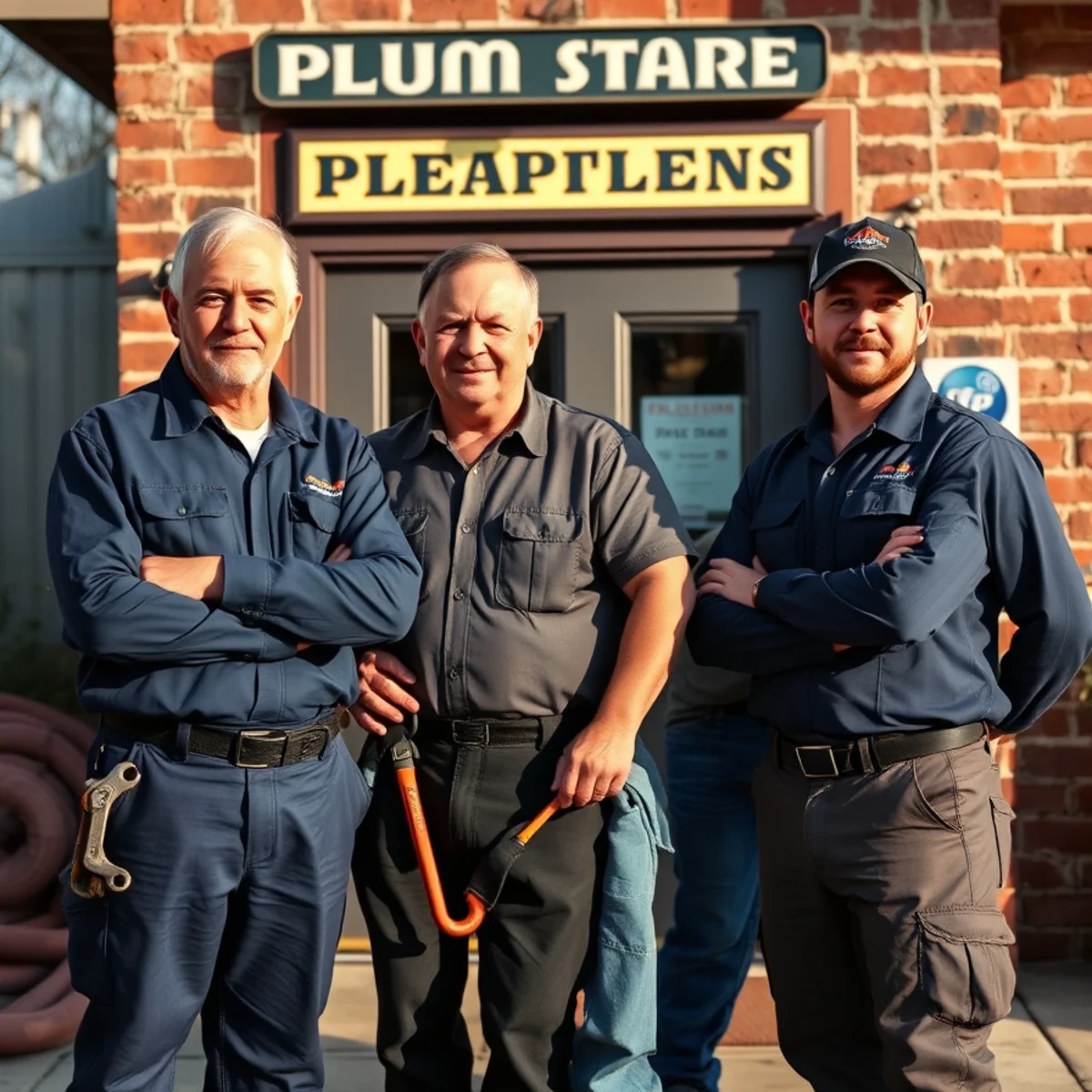
Who wrote this
Collins & Sons LLC — Daniel Collins and family
We are a family plumbing business working out of 209 Westowne Rd in Catonsville, and we have been under Maryland houses for over 40 years — three generations of it. Most of what is on this page comes from doing the same jobs repeatedly on the same housing stock: pre-1950 homes off Frederick Road, galvanized supply, cast iron drainage, and water that runs 7–8.2 grains per gallon.
Licensed MHIC #117712 with the Maryland Home Improvement Commission and fully insured. We pull the Baltimore County permits on water heaters, sewer work and gas piping, and we meet the inspector ourselves.