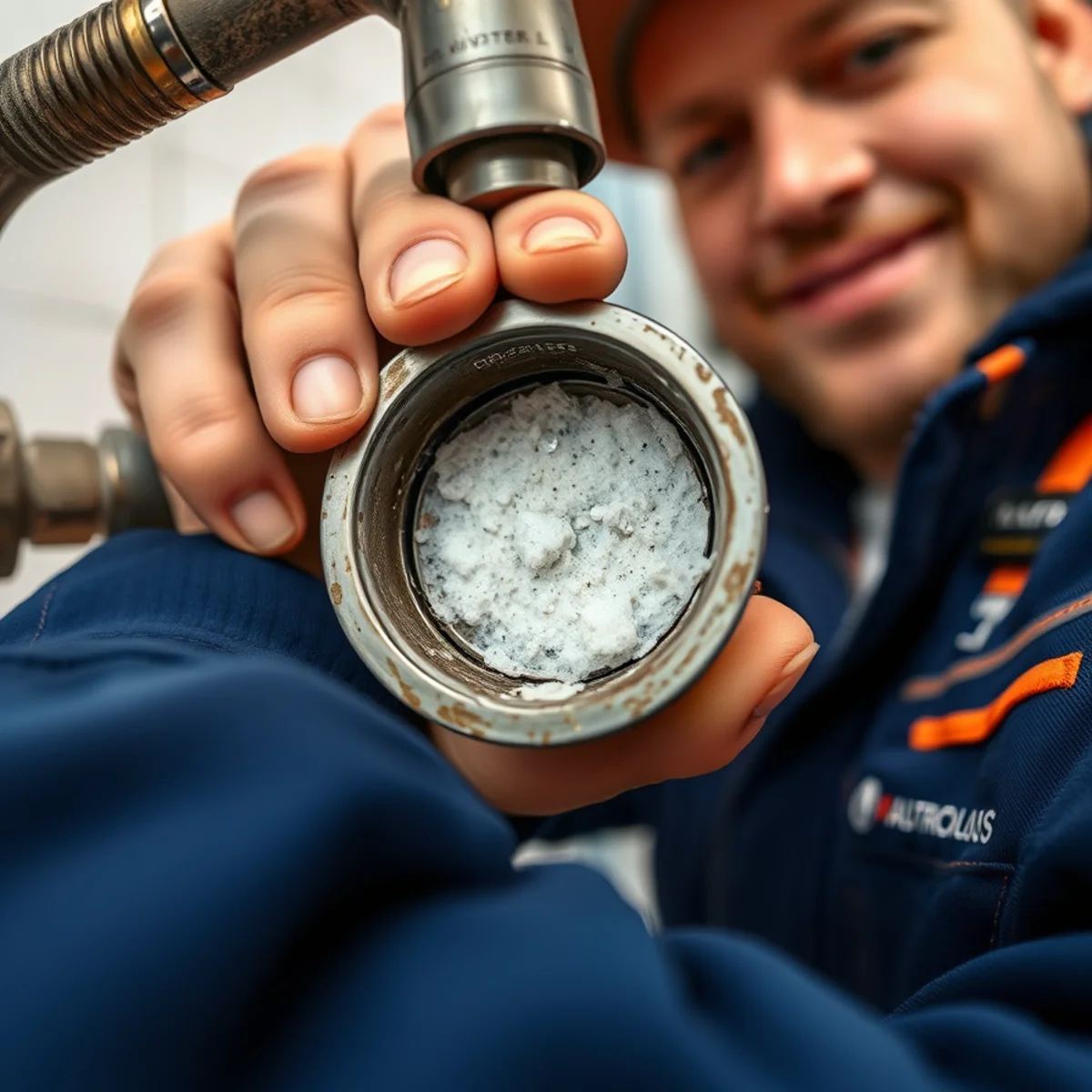

Faucets are the fixture people replace most often and need to replace least often. A quality faucet with a serviceable cartridge can run for decades — what fails is a rubber seat, a ceramic disc or an aerator screen clogged with the mineral deposit our water leaves behind.
In Catonsville the hard water story shows up here faster than anywhere else in the house. At roughly 7 to 8.2 grains per gallon, aerators clog on a predictable schedule and cartridges stiffen and then seize. Homeowners read the symptom as "we have lost water pressure" or "this faucet is worn out", and frequently neither is true.
So we diagnose before we sell. Sometimes the fix is a cartridge. Sometimes it is soaking the aerator in vinegar, which is advice we give on the phone rather than turning into a service call. And sometimes the fixture genuinely is finished, in which case we will tell you what to look for when you buy the replacement.
Signs you need faucet installation & repair
- A drip from the spout that continues after the handle is fully closed
- Water seeping from the base of the faucet onto the countertop
- A handle that is stiff, gritty or will not return smoothly
- Weak flow at one faucet with good pressure elsewhere
- A pull-down sprayer that will not retract or leaks at the hose
- A sprayer diverter that sends water to both outlets at once
- Corrosion or mineral crust around the spout base or aerator
- A new sink or countertop going in that needs the faucet re-fitted
Weak flow at a single faucet is nearly always the aerator, not the plumbing. Unscrew it, soak it in white vinegar for an hour, rinse and refit — it costs nothing and it solves this more often than not.
What the job includes
Cartridge, seat and stem repair
Most drips are a worn cartridge or a pitted seat. Parts are inexpensive, the job is quick, and it is the right answer far more often than replacement.
Kitchen and bath faucet replacement
Removing the old fixture, cleaning up the deck, fitting the new one properly sealed, and replacing the supply lines and shutoffs while we are under there.
Pull-down, sprayer and diverter work
Retraction weights, hose replacement, spray head descaling and diverter valve repair — the parts that fail first on modern kitchen faucets.
Shower and tub faucet work
Trim replacement, cartridge swaps and diverter repair. Where the valve body itself needs replacing we look for rear access before touching tile.
Outdoor hose bibs and frost-free spigots
Split bibs from a hose left connected over winter, leaking wall penetrations, and upgrades to frost-free models with proper vacuum breakers.
Shutoff valve replacement
The unglamorous one that matters. Calcified multi-turn stops replaced with quarter-turn ball valves while the cabinet is already open.
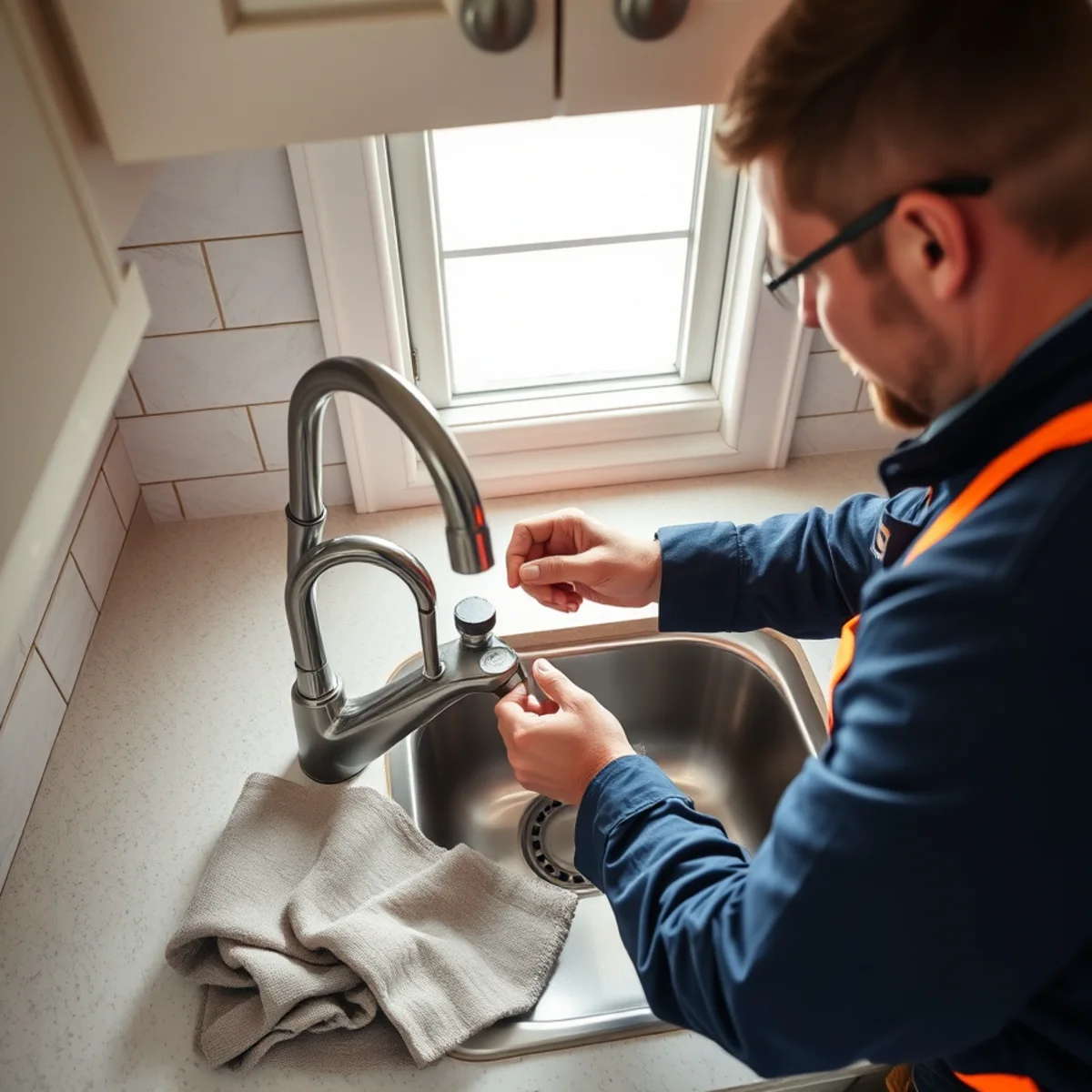
How we work
1. Find the actual leak point
Water in a cabinet can come from the faucet base, the sprayer hose, the basket strainer, the supply lines, the shutoffs or the trap. We dry it, run it and watch rather than replacing hopefully.
2. Identify the fixture
Cartridge and seat parts are brand and model specific. Photographing the fixture and any markings before we order saves a wasted trip.
3. Repair first when repair is honest
A good faucet with a failed cartridge deserves a cartridge. We will tell you plainly when a fixture has reached the point where parts are no longer worth fitting.
4. Replace properly if replacing
Clean deck, correct sealing, braided stainless supply lines rather than the plastic in the box, and new quarter-turn shutoffs.
5. Test hot and cold, then check again
Run both sides, work the handle through its range, check the sprayer and diverter, then re-check under the sink after twenty minutes for the slow weep.
What drives the price
We do not publish fake prices, because a number that does not match your house is worse than no number at all. What we can do is tell you exactly what moves the figure, so nothing on the estimate is a surprise.
Repair or replace
A cartridge is a small part and a short job. A full replacement includes removing the old fixture, which on a corroded thirty-year-old mounting nut can take longer than everything else combined.
Access under the sink
A clear cabinet is quick. A sink base packed with a disposal, a water filter, an RO tank and a dishwasher connection in a 1940s cabinet takes real time.
Fixture type
A standard deck-mount faucet installs predictably. Wall-mount fittings, pot fillers, and multi-hole configurations that do not match the new fixture all add work.
Whether shutoffs need replacing
Very often they do, because they no longer turn. It is inexpensive while the cabinet is open and worth doing at the same time.
Who supplies the fixture
You can buy your own — plenty of our customers do, and we are happy to advise on what to look for. We can also supply.
What this looks like in Catonsville
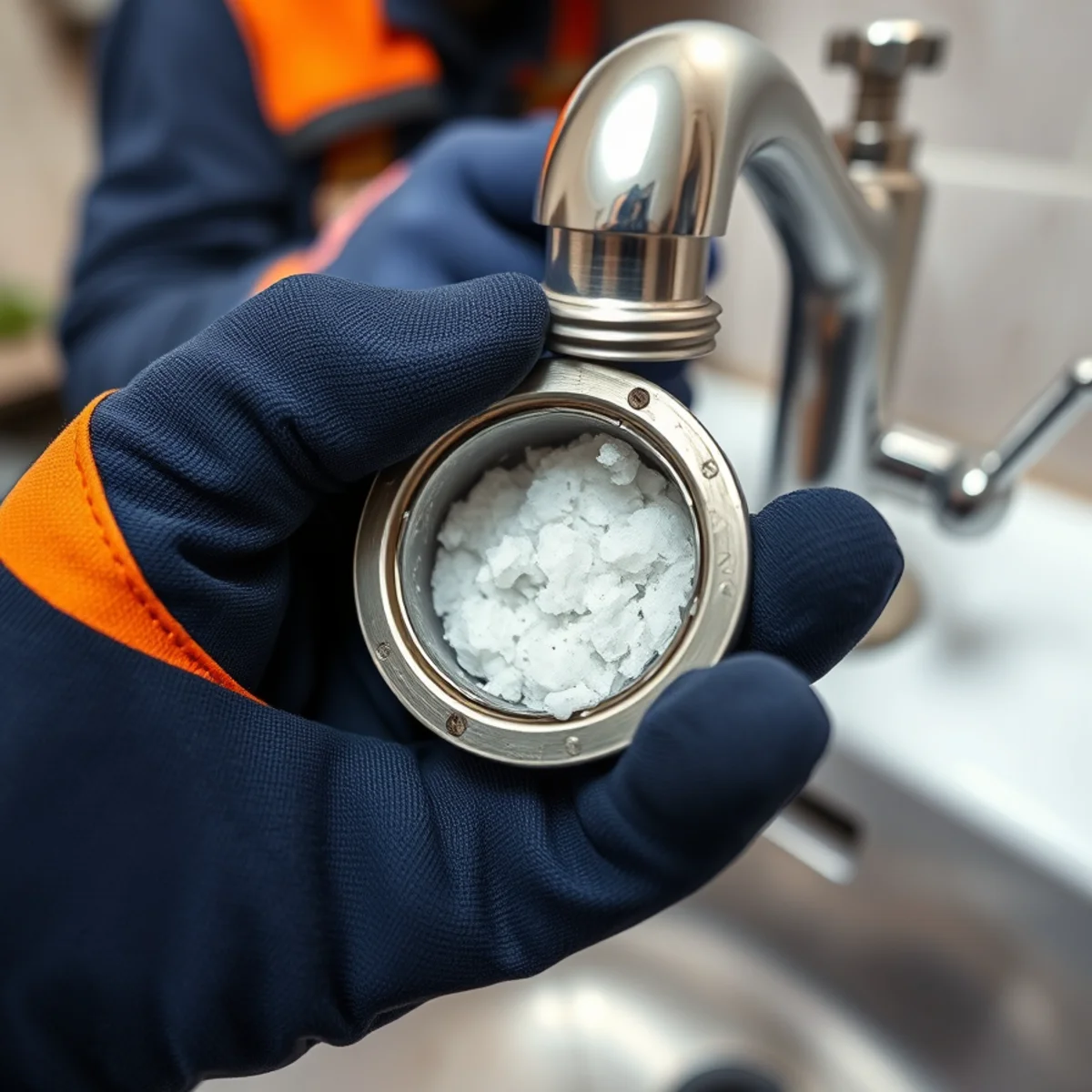
Aerator clogging is the defining local faucet issue. In softer-water regions an aerator might go five years without attention. In Catonsville, at 7 to 8.2 grains per gallon, visible mineral accumulation inside the screen within a year or two is entirely normal. A great many "low pressure" complaints in this town are a two-dollar screen.
Cartridges suffer the same way. Ceramic disc cartridges tolerate hard water reasonably; older rubber-seat designs and cheaper compression fittings do not, and the grit that makes a handle feel rough is mineral deposit working against the seal.
The second local factor is fixture age in older housing. Pre-war Catonsville bathrooms frequently still have original or near-original fittings, sometimes with non-standard hole spacing and mounting arrangements that modern fixtures do not match. We measure before ordering, and where a homeowner wants to keep a period fixture we can usually rebuild it rather than replace it.
Hose bibs deserve a specific mention here. Maryland winters are mild enough that plenty of people leave a hose connected through November, and cold enough that it splits the bib. We replace a lot of these in March, and a frost-free replacement with a vacuum breaker prevents the repeat.
Faucet Installation & Repair questions we get asked
My faucet drips even when it is off. Do I need a new one?
Almost certainly not. That is a worn cartridge or a pitted valve seat, and both are inexpensive parts. We replace the fixture only when the body itself is corroded or the parts are genuinely no longer available.
Why is the water weak at just one faucet?
The aerator. Unscrew it from the spout tip, soak it in white vinegar for an hour, rinse and refit. In this water that is the answer most of the time, and we would rather you fixed it yourself for free.
Can I buy the faucet myself?
Yes, and many customers do. Check the hole spacing on your sink and the number of holes before you buy. Send us a photo if you are not sure — it takes us a moment and it saves you a return trip to the store.
Should the shutoff valves be replaced too?
If they do not turn freely, yes. Hard water calcifies multi-turn stops in the open position and they snap when finally forced. Replacing them with quarter-turn valves while the cabinet is already open is cheap insurance.