Almost every plumbing emergency we attend was preventable and visible a year earlier. The heater that let go had been rumbling since spring. The angle stop that snapped had not turned in a decade. The sump pump that failed in July had not been tested since it was installed.
Here is the whole checklist, split by season, with an honest note on which parts are genuinely worth doing yourself.
Any time: the two free tests
The meter test
Shut off every fixture and water-using appliance — including ice makers, humidifiers and irrigation. Note the meter reading exactly, including the small low-flow indicator. Wait thirty minutes using no water at all. Read it again.
Any movement means water is leaving the system somewhere. It is the fastest, cheapest diagnostic in plumbing and it catches hidden leaks while they are still cheap.
The toilet dye test
Put a few drops of food colouring in each tank. Do not flush. Wait fifteen minutes and look in the bowl. Colour in the bowl means the flapper is passing water continuously, day and night.
Do this on every toilet, not just the noisy one. The silent ones are the expensive ones because nothing prompted you to look.
Spring — before storm season
- Test the sump pump. Pour five gallons into the pit. It should start, clear the pit promptly, and shut off cleanly without short-cycling.
- Clean the sump pit. Silt, gravel and rust flakes are the most common cause of a jammed impeller.
- Check the float has clearance on all sides. A pump that has shifted so the float rests against the wall never triggers.
- Listen for a back-flow gurgle after the pump stops. That is the check valve, and a failed one doubles the pump's workload.
- Walk the discharge line outside. Clear the outlet, confirm it terminates well away from the foundation, look for crushed or kinked sections.
- Test the backup battery under load and check its install date. Three to five years is the replacement interval.
- Clear the gutters and check every downspout extension.
- Pour water into basement floor drains to confirm they take it.
- Turn the outdoor hose bibs back on and check for splits from winter.
Summer
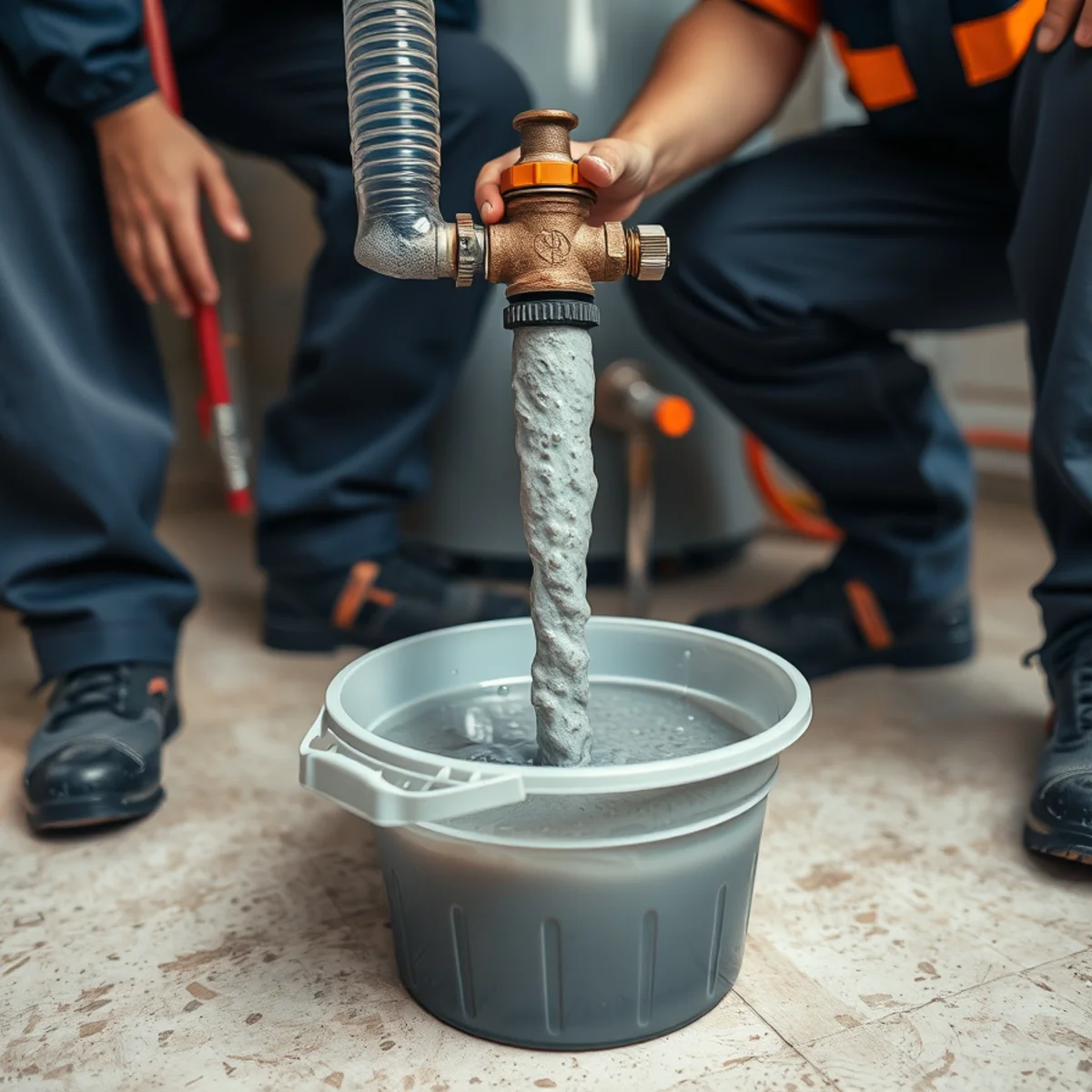
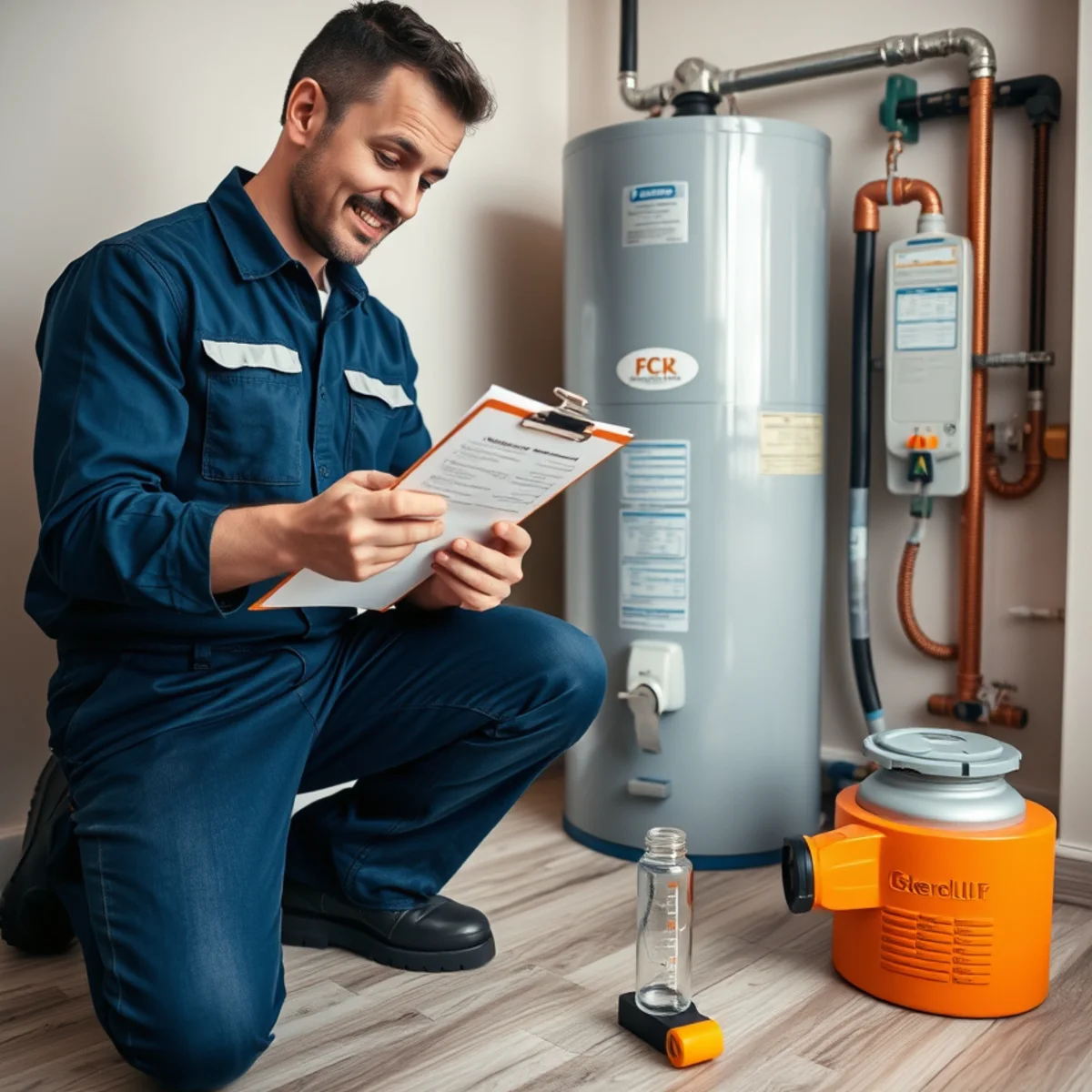
- Flush the water heater. In Maryland water this is an annual job, not an every-few-years one. It is the single highest-return maintenance task in the house.
- Check the anode rod if it is due — every three to four years.
- Test the temperature and pressure relief valve by lifting the lever briefly. It should discharge and reseat. If it will not reseat, it needs replacing.
- Check the water heater temperature. Around 120°F is the usual recommendation — hotter costs more and accelerates scale.
- Inspect washing machine hoses. Replace rubber hoses every five years or so, or switch to braided stainless. Failed washing machine hoses are one of the most common causes of major residential water damage.
- Check under every sink for damp, staining or a swollen cabinet base.
Autumn — before the freeze
- Disconnect every garden hose and drain the bibs. A hose left connected traps water in the bib, which freezes, expands and splits it — and the damage is inside the wall.
- Insulate exposed pipe in crawl spaces, garages, unheated basements and exterior wall runs.
- Seal air leaks around pipe penetrations and rim joists. Cold air blowing directly on a pipe does more damage than ambient cold.
- Check heat cable on any run that has frozen before. A section that froze once will freeze again.
- Confirm the sump discharge line has freeze protection and no low spots that hold water.
- If a property will be unoccupied over winter, arrange a proper drain-down rather than relying on a low thermostat setting.
Winter
- Open cabinet doors under sinks on exterior walls during a hard freeze so household heat reaches the pipes.
- Let a faucet drip on the most vulnerable run on the coldest nights. Moving water is far harder to freeze and the water cost is nothing against a burst pipe.
- Keep the heat on at a minimum of about 55°F even in unused rooms and when away.
- Know where your main shutoff is and confirm it turns. This is the winter test that matters most.
Twice a year, whatever the season
- Operate every shutoff valve — the main, and the angle stops under every sink and toilet. In Catonsville water at 7 to 8.2 grains per gallon these calcify open and then snap when finally forced. Replace the ones that will not turn with quarter-turn ball valves while there is no emergency.
- Test smoke and carbon monoxide detectors at the same time. Different trade, same weekend, and gas appliances are the reason CO detectors matter.
Every few years
- Sewer camera inspection on any property built before roughly 1970 with mature trees over the lateral. Every three years is a sensible interval. It turns an annual surprise into a plan.
- Water hardness test. Free with any service call. Worth having a number for your own address rather than a regional average.
- Water quality test at a laboratory if the house predates 1986 and there are young children in it, or any time water on a private well changes in taste, smell or appearance.
- A whole-system assessment if the house is older and has never had one — supply material and condition, pressure at multiple points, water heater condition, treatment status.
What we do that you cannot easily do yourself
We are straightforward about this: a diligent homeowner can do most of the list above, and we would rather you did. What a professional annual visit adds is the equipment to flush a heavily silted tank safely without wrecking the drain valve, a hardness meter, a camera where one is warranted, and forty years of knowing what a particular noise means.
And the willingness to say "nothing needs doing this year", which happens more often than people expect. We do these visits throughout Catonsville and Linthicum and across the counties we serve, and for landlords with several properties the per-property cost drops because the coordination overlaps.
Frequently asked questions
How much of this can I realistically do myself?
Most of it. The meter test, the dye test, the sump test, the valve exercise, hose disconnection and insulation are all straightforward. The one to be careful with is flushing a heater that has never been flushed — a silted drain valve can clog or fail to reseat, and that turns a maintenance task into an emergency.
Is annual maintenance worth it on a newer house?
Yes, though the focus shifts. In a newer home the pipe will outlive all of us; what ages out first is angle stops, supply connectors, fill valves and washing machine hoses. Those are cheap to replace proactively and cause a disproportionate share of water damage claims.
What is the single most important item on this list?
Locating and testing your main shutoff valve. Everything else on the list prevents a problem; that one limits the damage when a problem happens anyway. A seized main shutoff is the most common thing we find when we arrive at a flooding house.

Who wrote this
Collins & Sons LLC — Daniel Collins and family
We are a family plumbing business working out of 209 Westowne Rd in Catonsville, and we have been under Maryland houses for over 40 years — three generations of it. Most of what is on this page comes from doing the same jobs repeatedly on the same housing stock: pre-1950 homes off Frederick Road, galvanized supply, cast iron drainage, and water that runs 7–8.2 grains per gallon.
Licensed MHIC #117712 with the Maryland Home Improvement Commission and fully insured. We pull the Baltimore County permits on water heaters, sewer work and gas piping, and we meet the inspector ourselves.