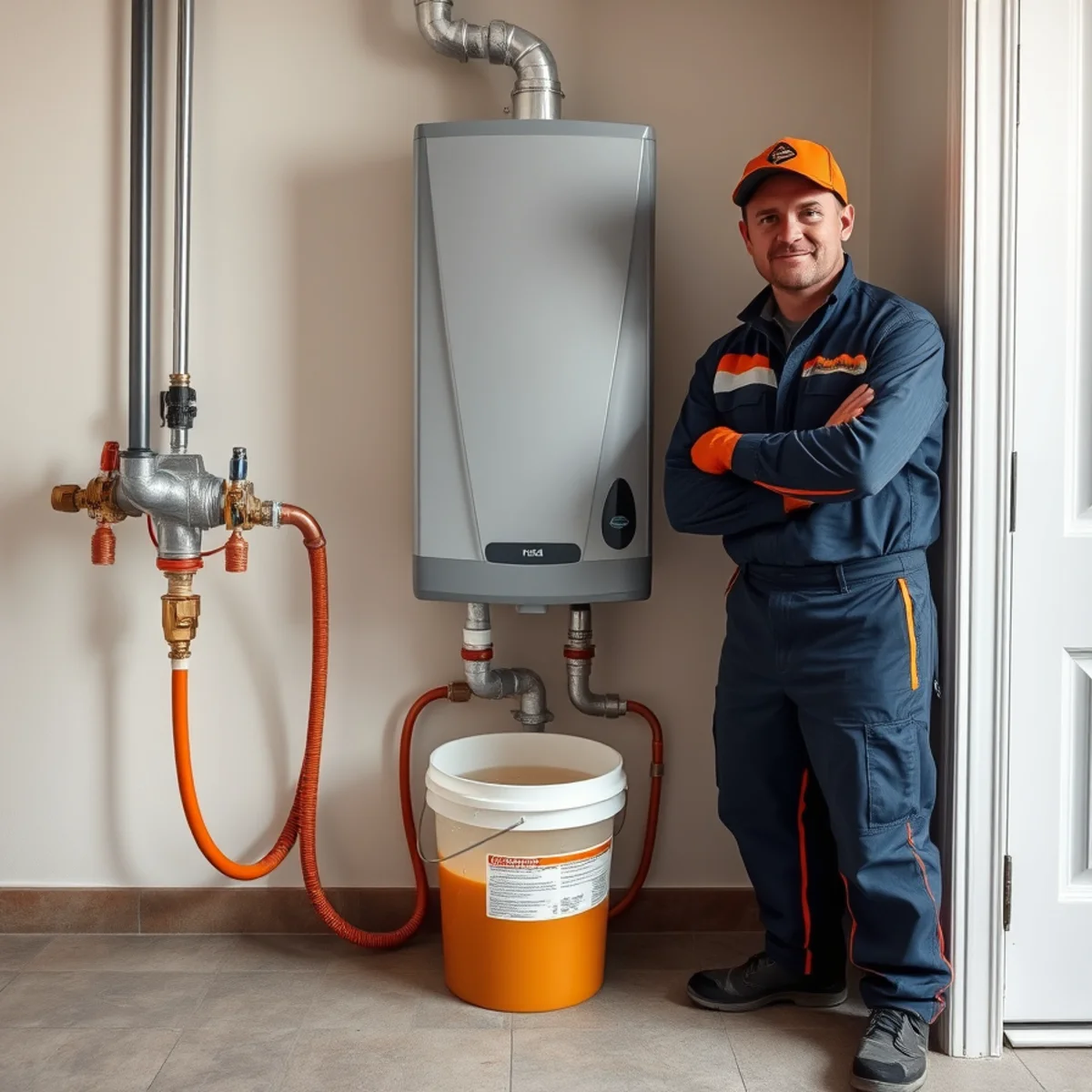
Flushing a water heater is the highest-return maintenance job in a Maryland house and almost nobody does it. It takes about half an hour, it costs nothing but your time, and in water this hard it genuinely decides whether a tank gives you six years or twelve.
Here is how to do it, and — just as importantly — the two situations where you should put the hose down and call somebody.
Why it matters more here than most places
Catonsville and most of the Baltimore metro run at roughly 120 to 141 PPM, about 7 to 8.2 grains per gallon. Every gallon you heat leaves a little calcium and magnesium behind, and it settles on the bottom of the tank exactly where a gas burner applies its heat.
That sediment layer acts as insulation. The burner runs longer for the same output, the steel underneath runs hotter than design, and the sacrificial anode gets consumed faster. Left long enough it also buries the drain valve, which is how a simple maintenance job turns into a service call.
When not to attempt this yourself
None of those mean it cannot be done — they mean the first one should be done by somebody with a spare valve on the truck. After that, doing it yourself annually is entirely reasonable.
- The heater is more than about six years old and has never been flushed. A silted drain valve can clog solid mid-flush or fail to reseat afterward, leaving you with an open tank and no water.
- The drain valve is plastic and looks brittle or discoloured. Plastic valves on older units snap. Once it breaks you cannot stop the flow without shutting the whole house down.
- You cannot locate or operate the cold inlet shutoff on top of the tank.
- There is any sign of water at the base of the tank already. That is a different problem and flushing will not help it.
What you need
- A garden hose long enough to reach a floor drain, a utility sink or outside.
- A bucket, for checking what comes out.
- A flathead screwdriver, for the drain valve on some models.
- Gloves. The water coming out is at tank temperature.
The steps
1. Shut off the heat
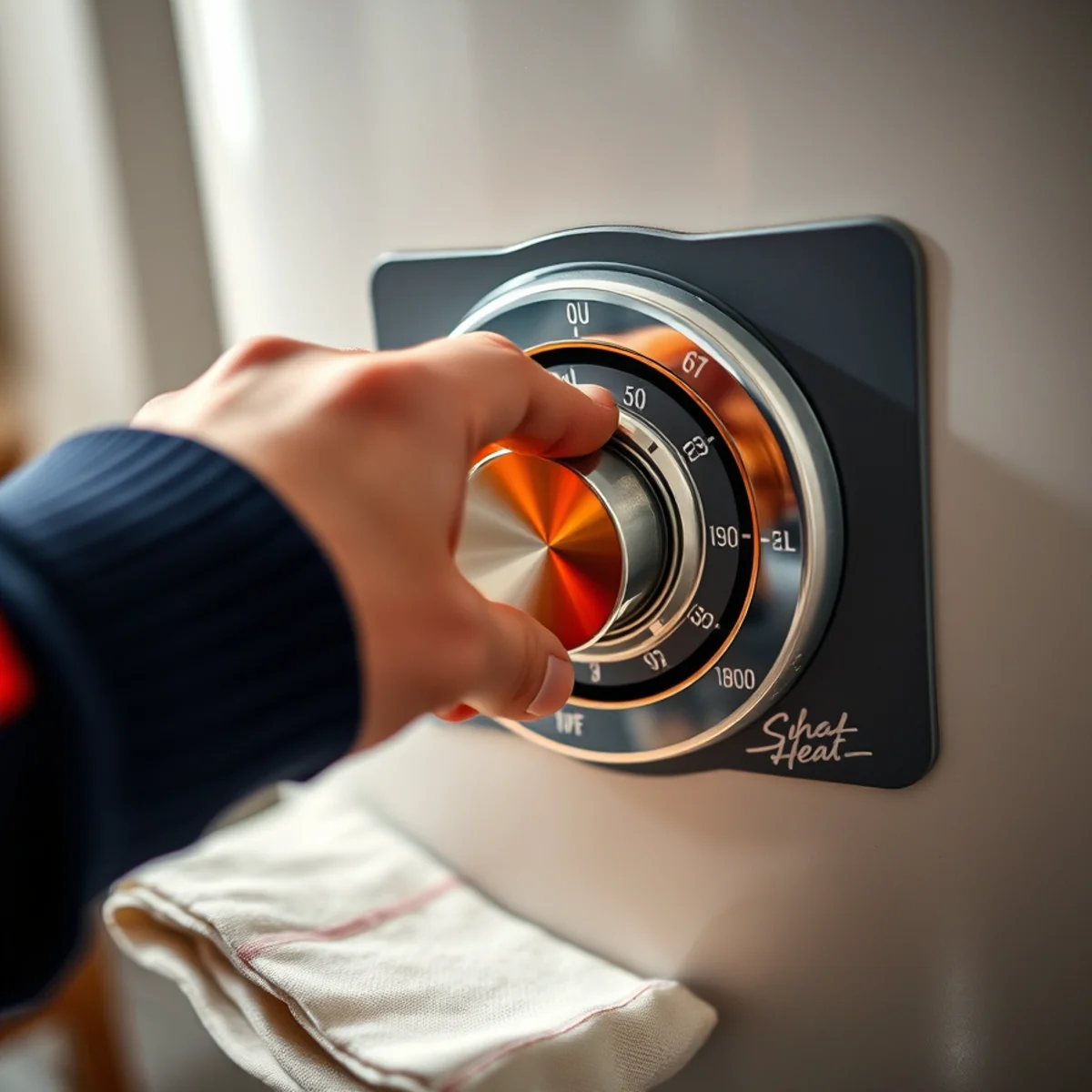
On a gas heater, turn the gas control dial to "Pilot" or "Vacation". On an electric heater, switch off the breaker — this matters more than people realise, because energising elements in an empty tank destroys them in seconds.
2. Let it cool, then close the cold inlet
Give it a couple of hours if you can. Then close the cold water shutoff on the inlet pipe at the top of the tank.
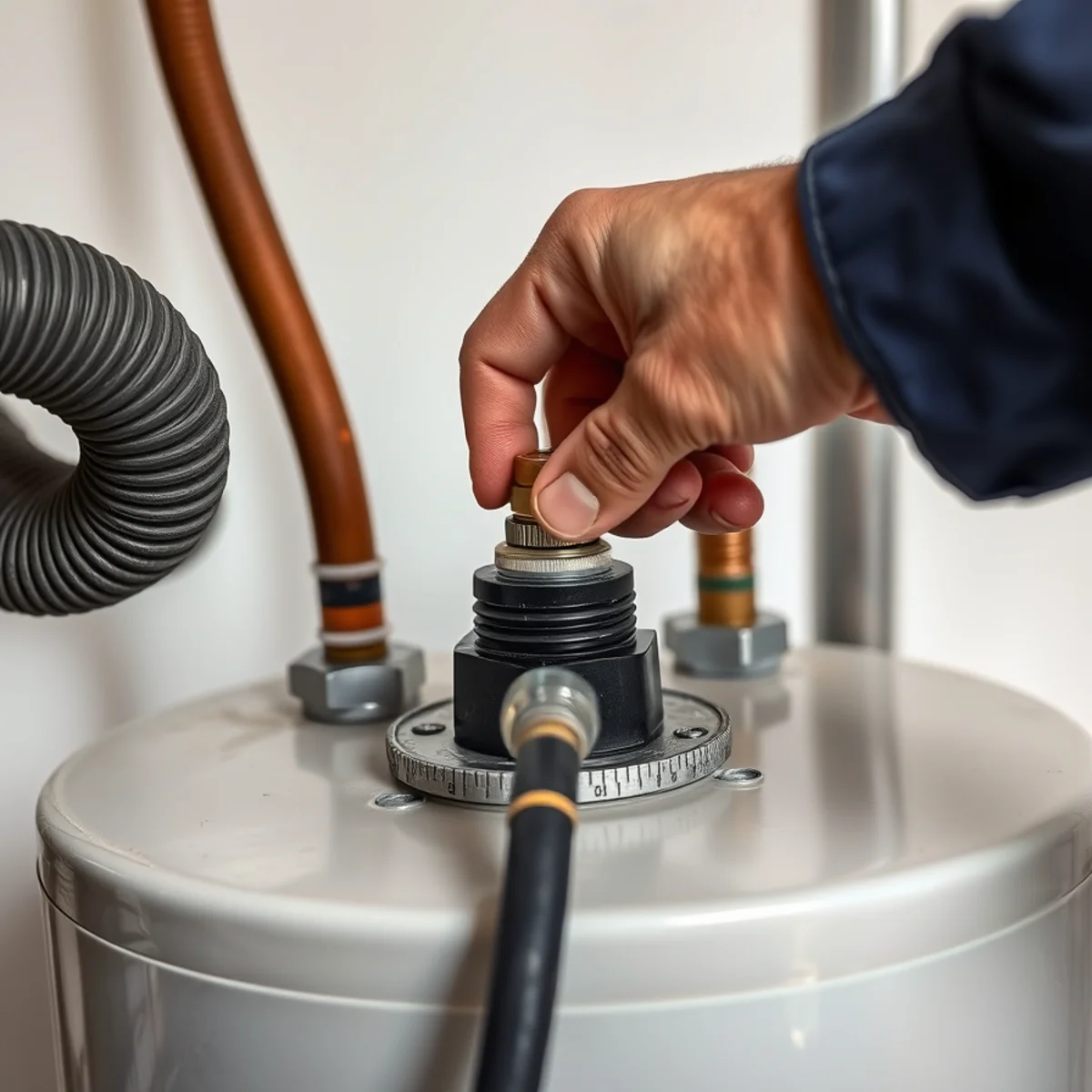
3. Connect the hose and open a hot tap
Attach the hose to the drain valve at the bottom of the tank and run the other end somewhere that can take very hot water safely. Then open a hot water tap somewhere in the house — this breaks the vacuum so the tank will actually drain.
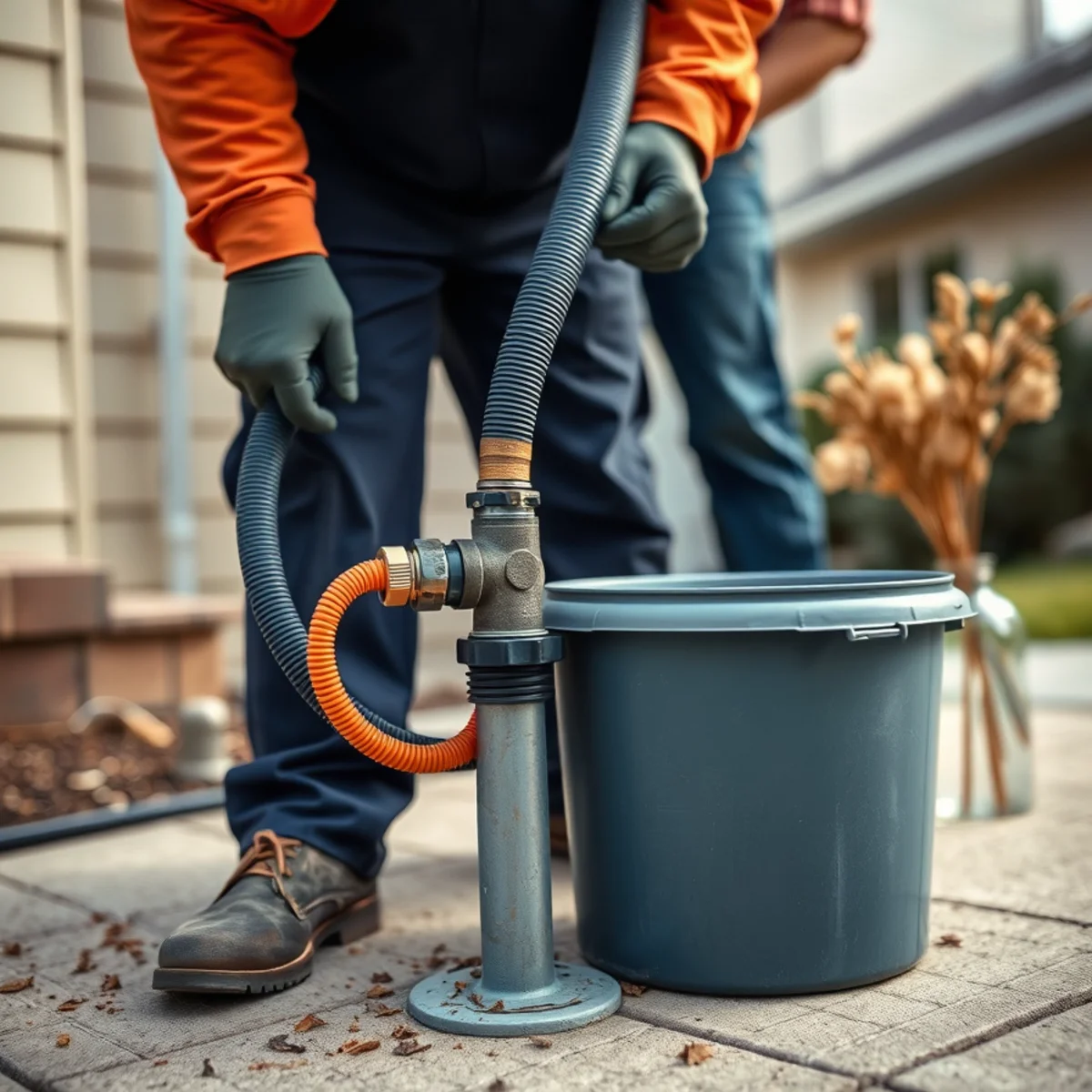
4. Open the drain valve and watch what comes out
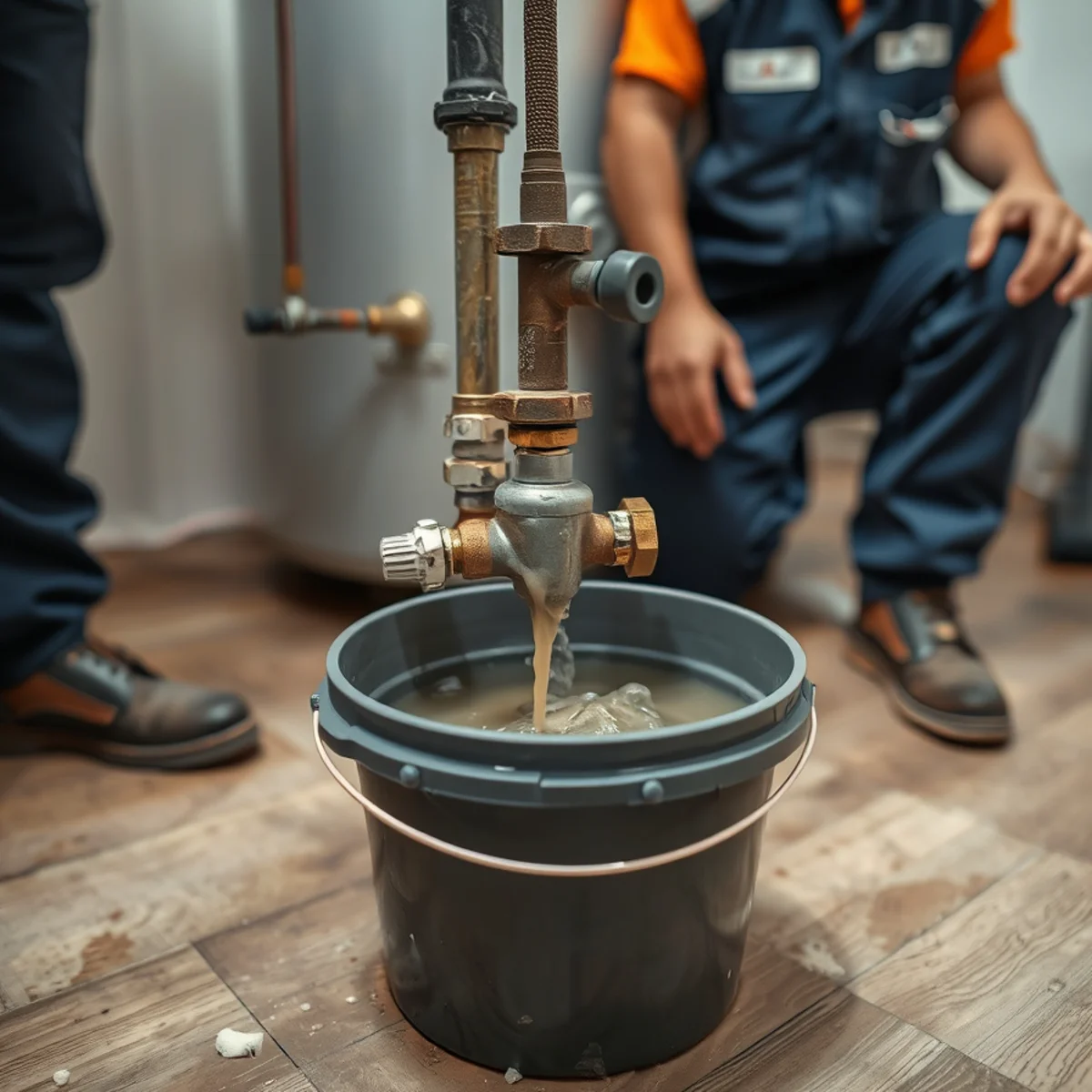
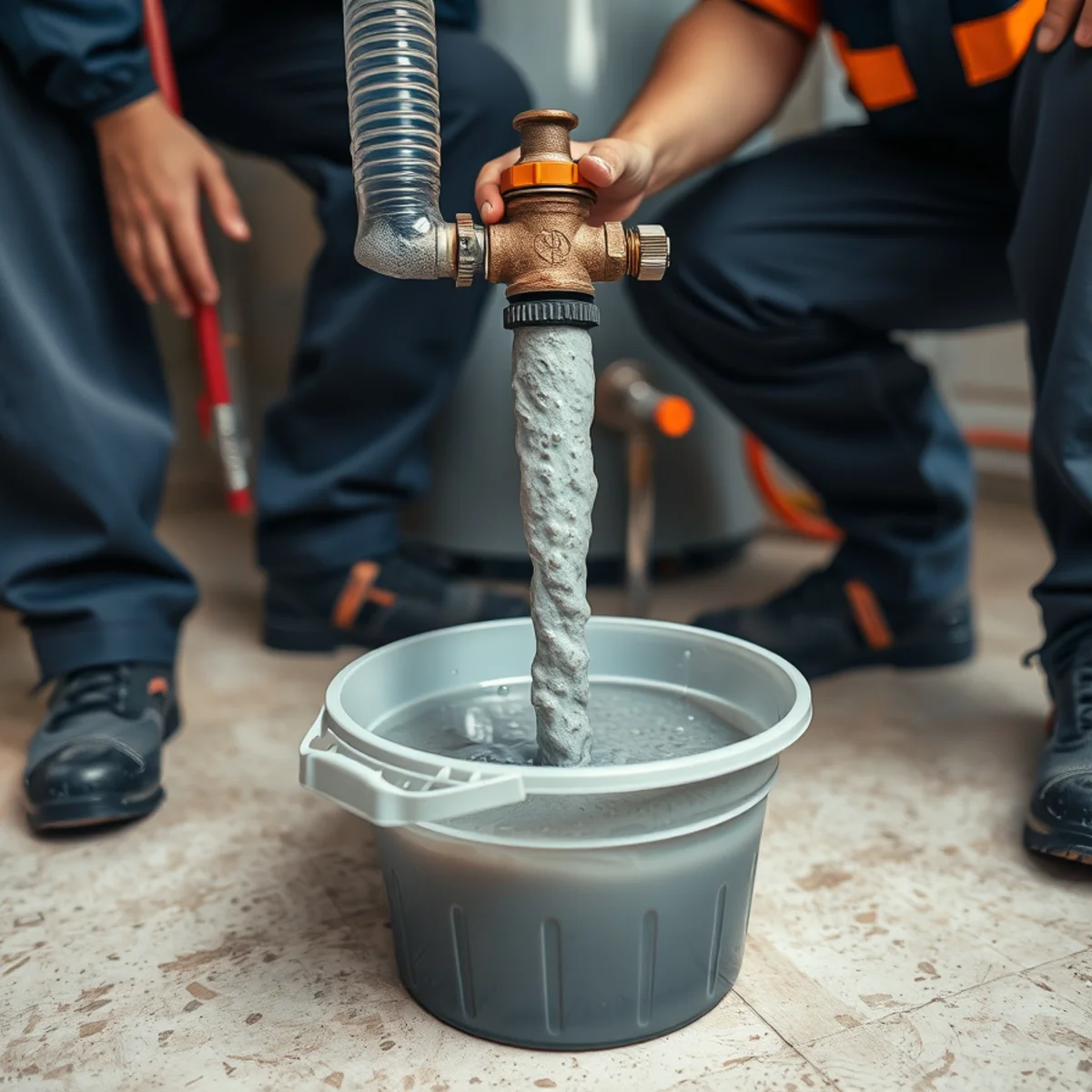
Catch the first flow in a bucket. On a neglected tank it comes out cloudy grey or brown with visible grit. That is what you are removing.
Let it run until the water is clear. On a tank that has been maintained, that takes a few minutes. On one that has not, it can take considerably longer — and if the flow slows to a trickle, sediment has blocked the valve.
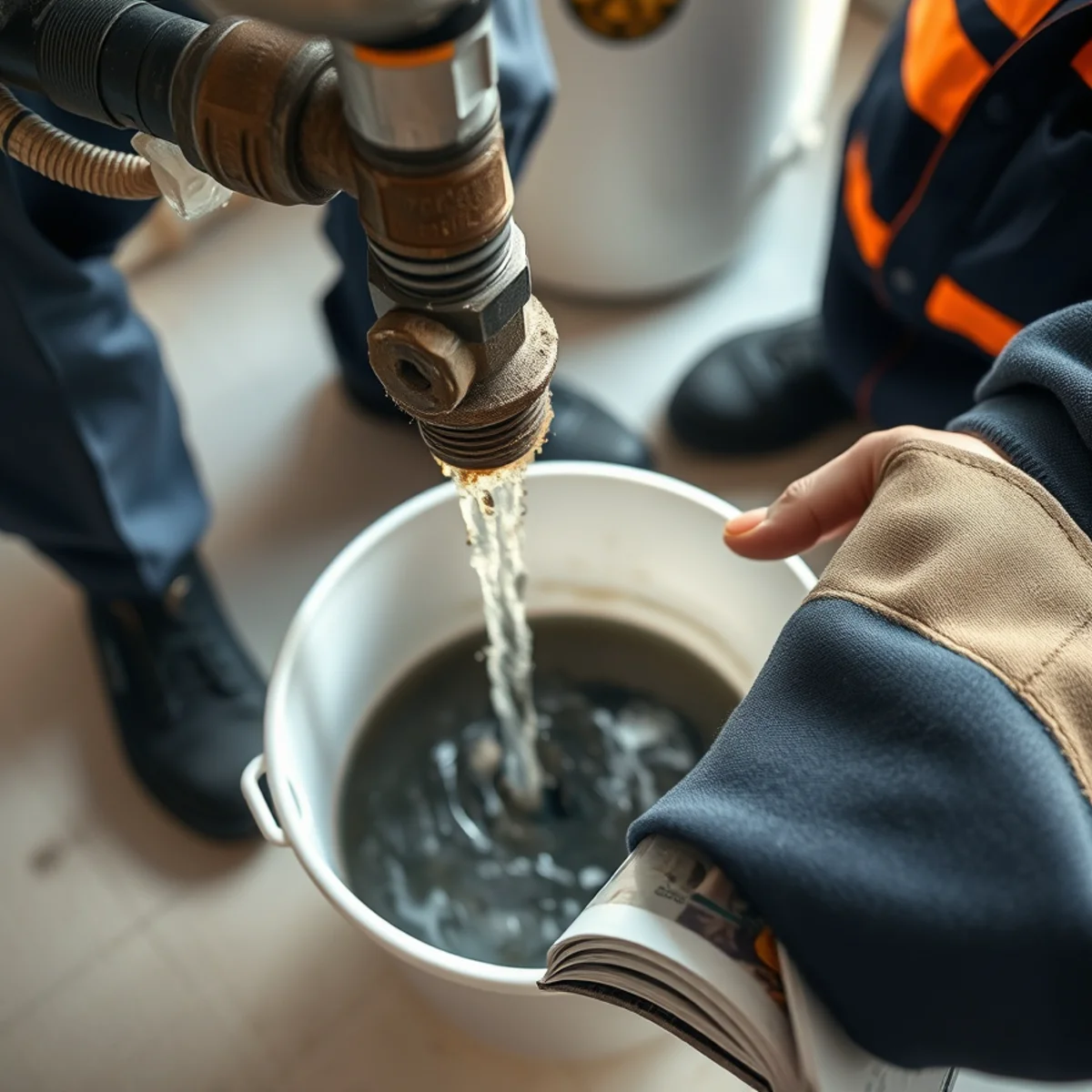
5. Stir up the rest
With the drain still open, briefly open the cold inlet to let fresh water swirl through the bottom of the tank, then close it again. Repeat two or three times until what leaves is clear. This is the part that actually lifts settled sediment rather than just draining the water above it.
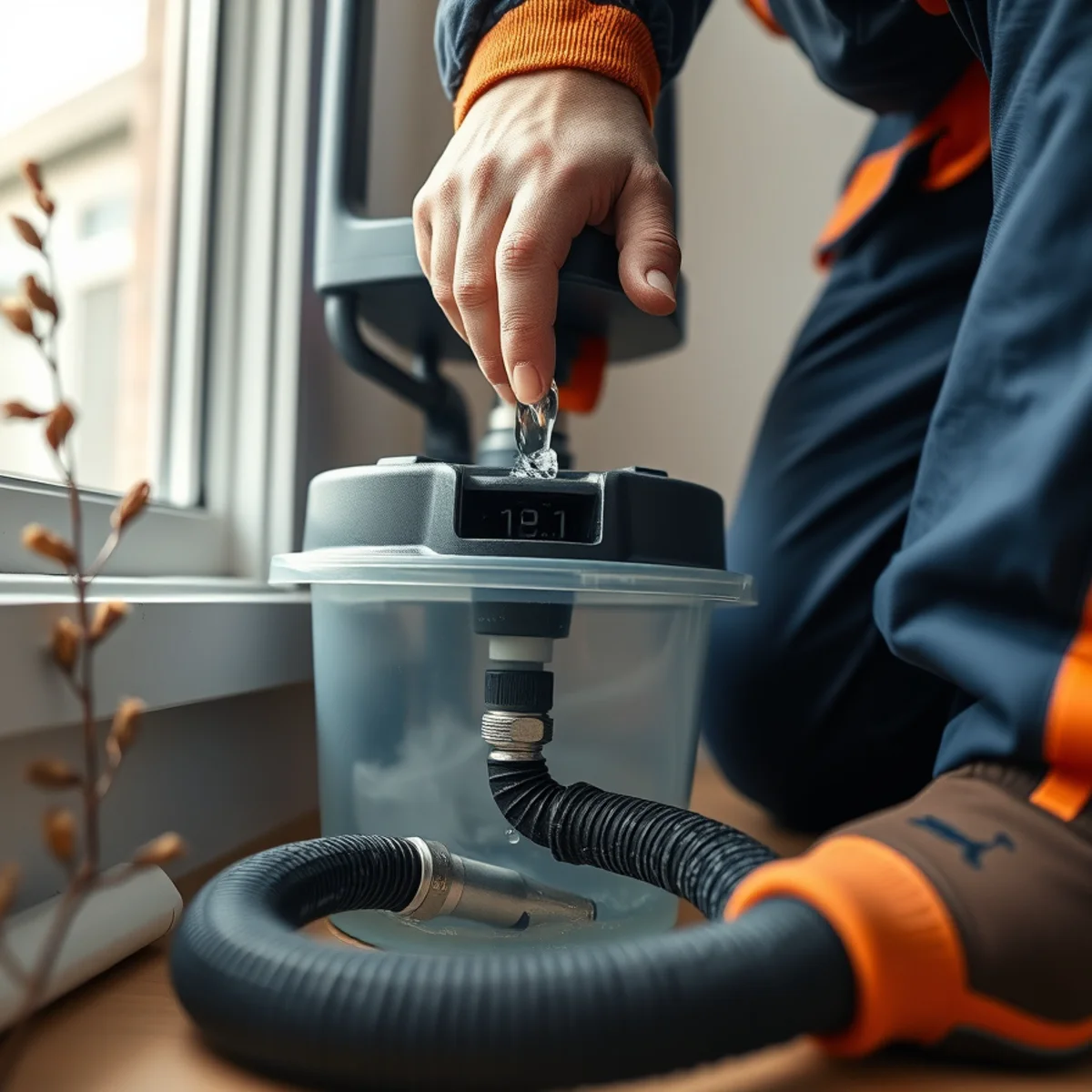
6. Refill and restore
- Close the drain valve and remove the hose.
- Open the cold inlet fully and let the tank fill. Leave that hot tap open until water runs steadily with no spitting — that is the air clearing.
- Only now, restore gas or switch the breaker back on. Never energise an electric heater before the tank is full.
- Check the drain valve for drips over the next hour. A valve that will not reseat is the most common thing to go wrong.
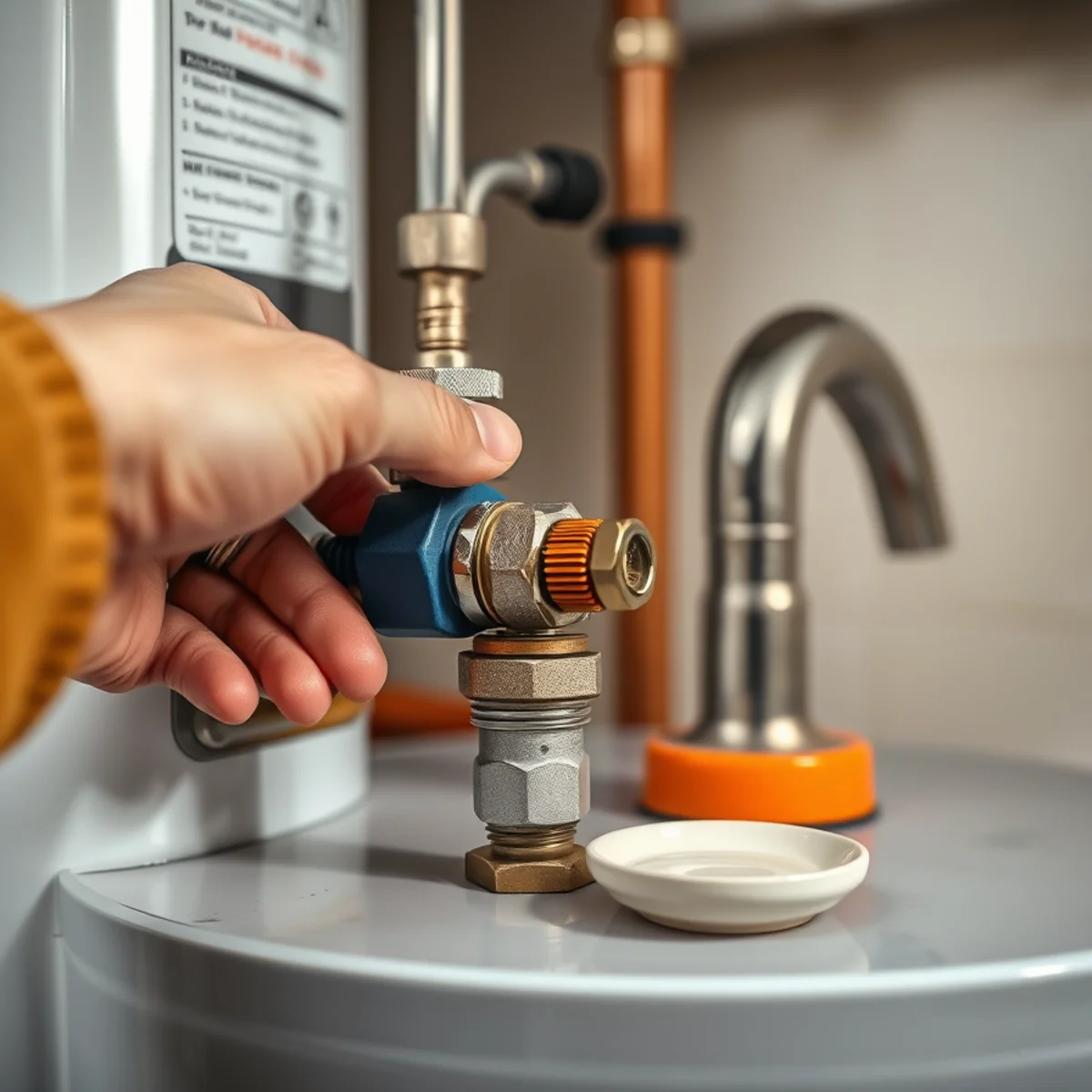
While you are down there: the anode rod
The sacrificial anode is a metal rod inside the tank that corrodes so the steel does not. Once it is consumed, the tank itself starts corroding and there is no recovering from that. Almost nobody checks it, and it is the second-highest-return item after flushing.
Every three to four years is a reasonable interval here. It needs a socket and sometimes real leverage to break loose, so plenty of homeowners have us do it during a service visit — we look at it as standard on any water heater service call in Catonsville.
One useful side effect: if your hot water smells of rotten eggs, swapping a magnesium anode for an aluminium-zinc or powered anode usually solves it. That is a far cheaper conversation than a new heater.
How often, honestly
Annually in this region. In softer-water parts of the country people stretch it to two or three years without much harm, and that advice gets repeated online by people who do not live here. At 7 to 8.2 grains per gallon it should be a yearly job.
And if you find yourself doing it every year on a heater that keeps struggling, the heater was never really the problem. That is a water treatment conversation, and it is the thing that actually stops the cycle for households across Catonsville and Ellicott City.
Frequently asked questions
Can flushing an old water heater cause a leak?
It can, and that is the honest risk. Disturbing years of sediment in a tank whose steel is already thin occasionally reveals a weakness that was being held together by the sediment itself. If your heater is over ten years old and has never been flushed, weigh that against how much life is realistically left in it.
How much sediment is too much?
There is no precise threshold, but if the water runs grey or gritty for more than a few minutes, or the drain valve clogs during the flush, the tank has been neglected long enough to have shortened its life already. Start an annual routine from now.
Do tankless units need flushing too?
They need descaling, which is a different process — a circulating pump and a descaling solution run through the heat exchanger. It is required annually in this water and it protects the most expensive component in the unit.

Who wrote this
Collins & Sons LLC — Daniel Collins and family
We are a family plumbing business working out of 209 Westowne Rd in Catonsville, and we have been under Maryland houses for over 40 years — three generations of it. Most of what is on this page comes from doing the same jobs repeatedly on the same housing stock: pre-1950 homes off Frederick Road, galvanized supply, cast iron drainage, and water that runs 7–8.2 grains per gallon.
Licensed MHIC #117712 with the Maryland Home Improvement Commission and fully insured. We pull the Baltimore County permits on water heaters, sewer work and gas piping, and we meet the inspector ourselves.