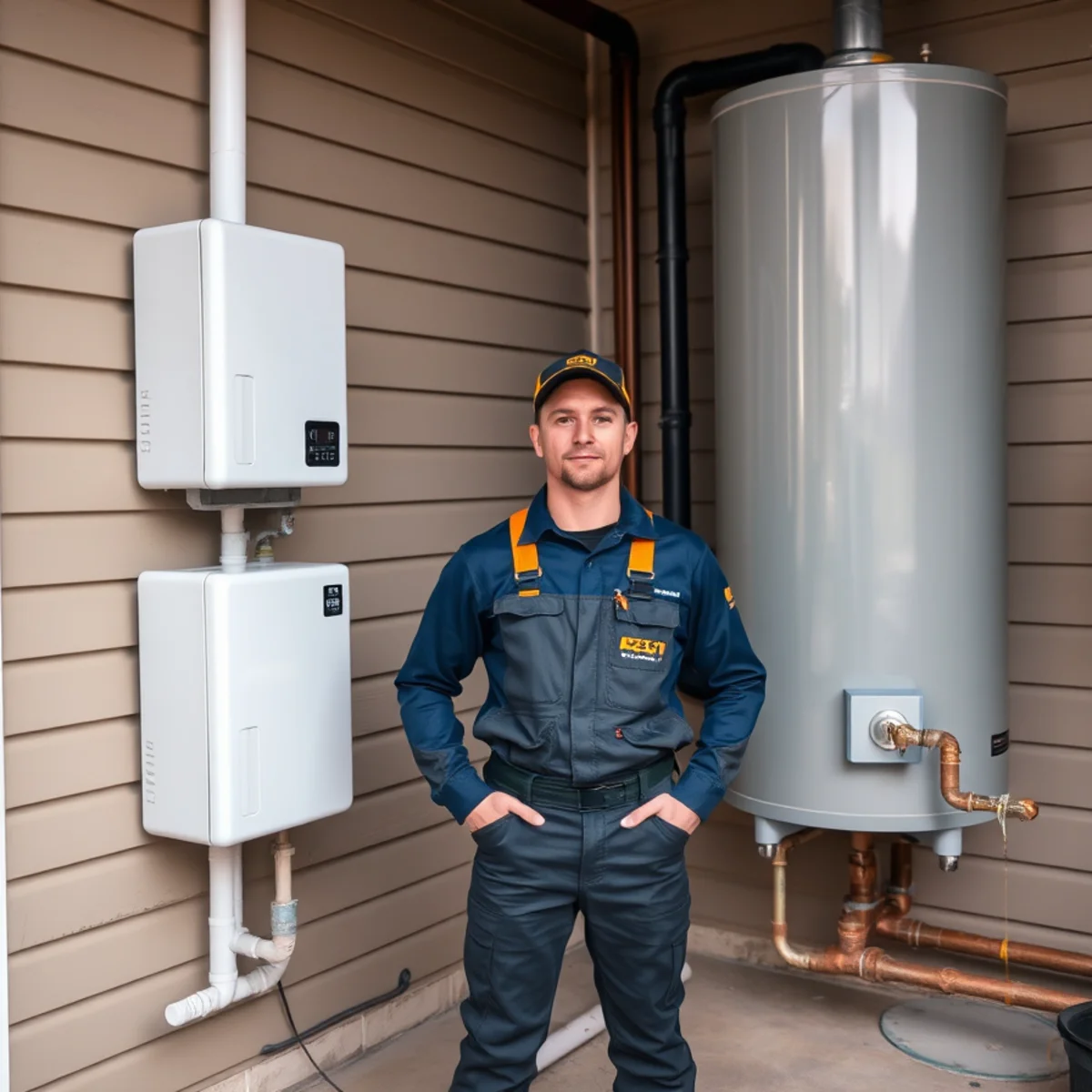
Tankless water heaters get a mixed reputation in Maryland, and it is not the equipment's fault. They are genuinely excellent — twenty-plus years of service, endless hot water, a fraction of the floor space. What they are not is maintenance-free, and in water this hard that distinction decides whether an owner ends up delighted or disappointed.
Here is what actually happens inside one, and what the annual service is really doing.
The one structural difference that matters
A tank heater deals with hard water by letting sediment fall to the bottom, where it sits and insulates and slowly cooks the steel. That is bad, but it is slow and forgiving, and the tank has a large reservoir of space to fill before anything critical happens.
A tankless unit has no reservoir. Water passes through a heat exchanger with narrow passages, and it passes through hot. Scale plates directly onto the heat transfer surfaces and inside the passages, and there is nowhere else for it to go.
What scale does, in order
- Heat transfer drops, so the burner fires longer and harder for the same outlet temperature.
- Flow through the exchanger narrows, so delivered gallons per minute fall — the shower that used to be strong becomes adequate.
- Temperature becomes inconsistent, particularly when a second fixture opens. The classic complaint is a shower that goes cool mid-wash.
- The unit starts throwing error codes. Most manufacturers have specific codes for flow and temperature faults that are, in practice, scale reporting itself.
- The exchanger eventually fails. That is the expensive component, and on some models it approaches the cost of the unit.
What annual service involves
Descaling the heat exchanger
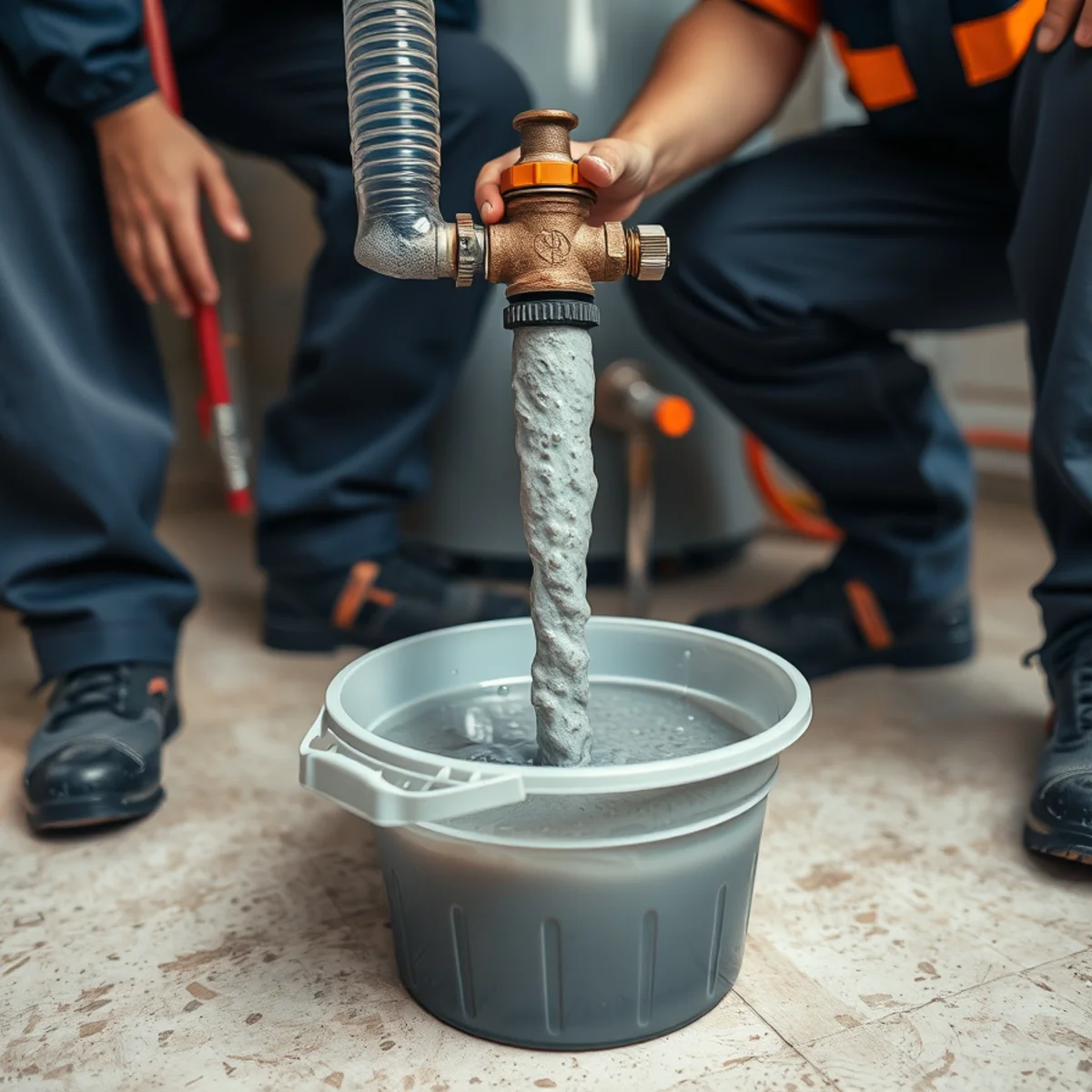
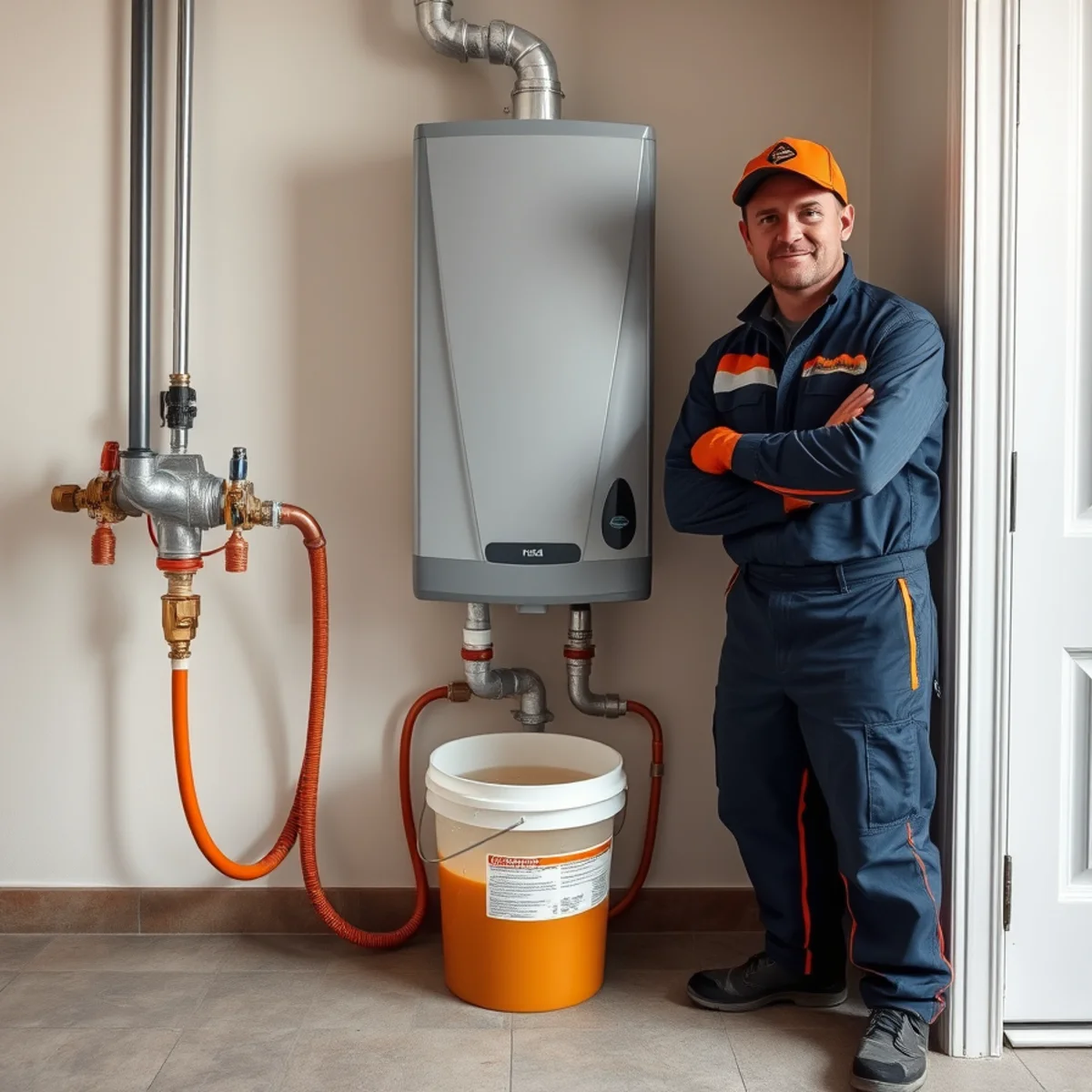
A small circulating pump and a bucket of descaling solution are connected to the isolation valves either side of the unit, and the solution is circulated through the exchanger for around forty-five minutes. It dissolves the mineral deposit and it comes out looking like it has been working.
This is the core of the job and it is why the isolation valves matter — a unit installed without them cannot be serviced without cutting pipe.
Cleaning the inlet filter
There is a small screen on the cold inlet that catches grit and scale fragments. It clogs, and when it does the unit sees reduced flow and behaves as though there is a demand problem. Cleaning it takes two minutes and is skipped constantly.
Checking venting, condensate and combustion
Condensing units produce acidic condensate that drains away, and that drain blocks. Venting needs to be sound and clear. Combustion should be verified rather than assumed. None of it is dramatic and all of it is part of a proper service.
How to reduce how much scale forms in the first place
Descaling removes scale. Treatment stops it forming. If you want a tankless unit to give its full life in this region, feed it softened or scale-conditioned water.
A whole-house softener is the thorough answer and brings benefits everywhere else in the house too. Where salt is not an option — a septic system, for instance — a dedicated scale-prevention cartridge on the inlet is a reasonable compromise, though it protects the heater rather than the whole house. Either way, water treatment sized from an actual hardness test is what makes the difference.
Signs yours is overdue
- Hot water arrives, then goes lukewarm partway through a shower.
- Flow at the tap is noticeably weaker than it was a year ago.
- The unit cycles or "hunts" rather than holding a steady temperature.
- Error codes relating to flow, ignition or temperature.
- You cannot remember when it was last serviced, or it never has been.
Is it still worth having one here?
Yes, if you will maintain it. Twenty years of service against a tank's ten, endless hot water, and no possibility of fifty gallons ending up on your floor — those are real advantages, and they matter especially when the unit lives inside finished space.
If you will not book an annual service, a good tank heater with a softener will make you happier and cost less. We say that to customers considering the switch across Owings Mills, Columbia and the newer developments where tankless is most common — and it is the single best predictor of whether somebody ends up pleased with the decision. Either way, we install and service both.
Frequently asked questions
How much does annual tankless service cost relative to the unit?
A small fraction of it, and a very small fraction of a heat exchanger replacement. It is the clearest case in residential plumbing where scheduled maintenance is cheaper than the alternative.
Can I descale it myself?
If the unit has isolation valves fitted and you are comfortable with a small pump and a descaling solution, yes — kits are readily available. What people typically miss is the inlet filter, the condensate drain and the venting check, which is most of the rest of the value.
My tankless unit was installed without isolation valves. What now?
It cannot be descaled without cutting into the pipe, which means it almost certainly never has been. Adding a pair of service valves is a straightforward job and it should be done before the next service rather than after another year of scale.
Who wrote this
Collins & Sons LLC — Daniel Collins and family
We are a family plumbing business working out of 209 Westowne Rd in Catonsville, and we have been under Maryland houses for over 40 years — three generations of it. Most of what is on this page comes from doing the same jobs repeatedly on the same housing stock: pre-1950 homes off Frederick Road, galvanized supply, cast iron drainage, and water that runs 7–8.2 grains per gallon.
Licensed MHIC #117712 with the Maryland Home Improvement Commission and fully insured. We pull the Baltimore County permits on water heaters, sewer work and gas piping, and we meet the inspector ourselves.