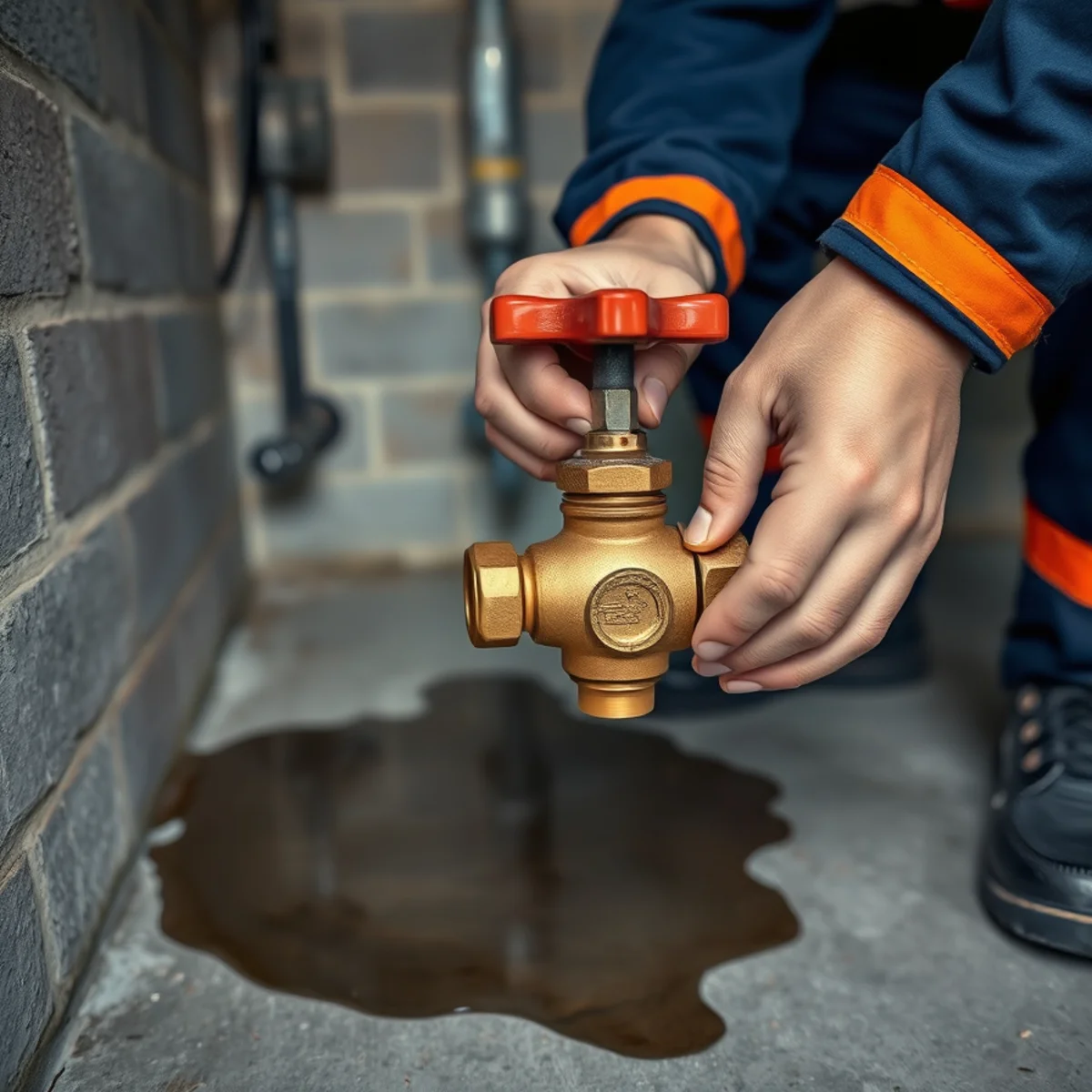
How much damage a burst pipe does is decided almost entirely in the first ten minutes, and specifically by how fast somebody reaches the shutoff valve.
This is a ten-minute job you can do today. It is the highest-value ten minutes in home maintenance and almost nobody does it until they need it.
Where it is in a Maryland house
In most Catonsville and Baltimore County homes, the main shutoff is in the basement on the wall facing the street, within a few feet of the water meter. Follow the pipe from the meter — the valve is usually right there, on the house side.
In houses without a full basement it may be in a crawl space, a utility closet, a garage, or occasionally behind an access panel. In older properties it is sometimes tucked behind decades of accumulated storage, which is worth resolving now rather than at 2 a.m.
There is also a curb stop at the property line, in a small covered box in the ground. That belongs to the utility and generally needs a long key to operate. It is not your first move.
What you are looking at
Gate valve
A round wheel handle. Turn clockwise, and keep turning — it takes many rotations to close fully. These are common in older homes and they are the ones that seize.
Ball valve
A lever handle. A quarter turn so the lever sits across the pipe rather than along it. Far more reliable and what any modern installation uses.
Test it — this is the part that matters
Knowing where it is does not help if it does not work. In older Maryland houses these valves seize from disuse, and Catonsville water at 7 to 8.2 grains per gallon calcifies them faster than most.
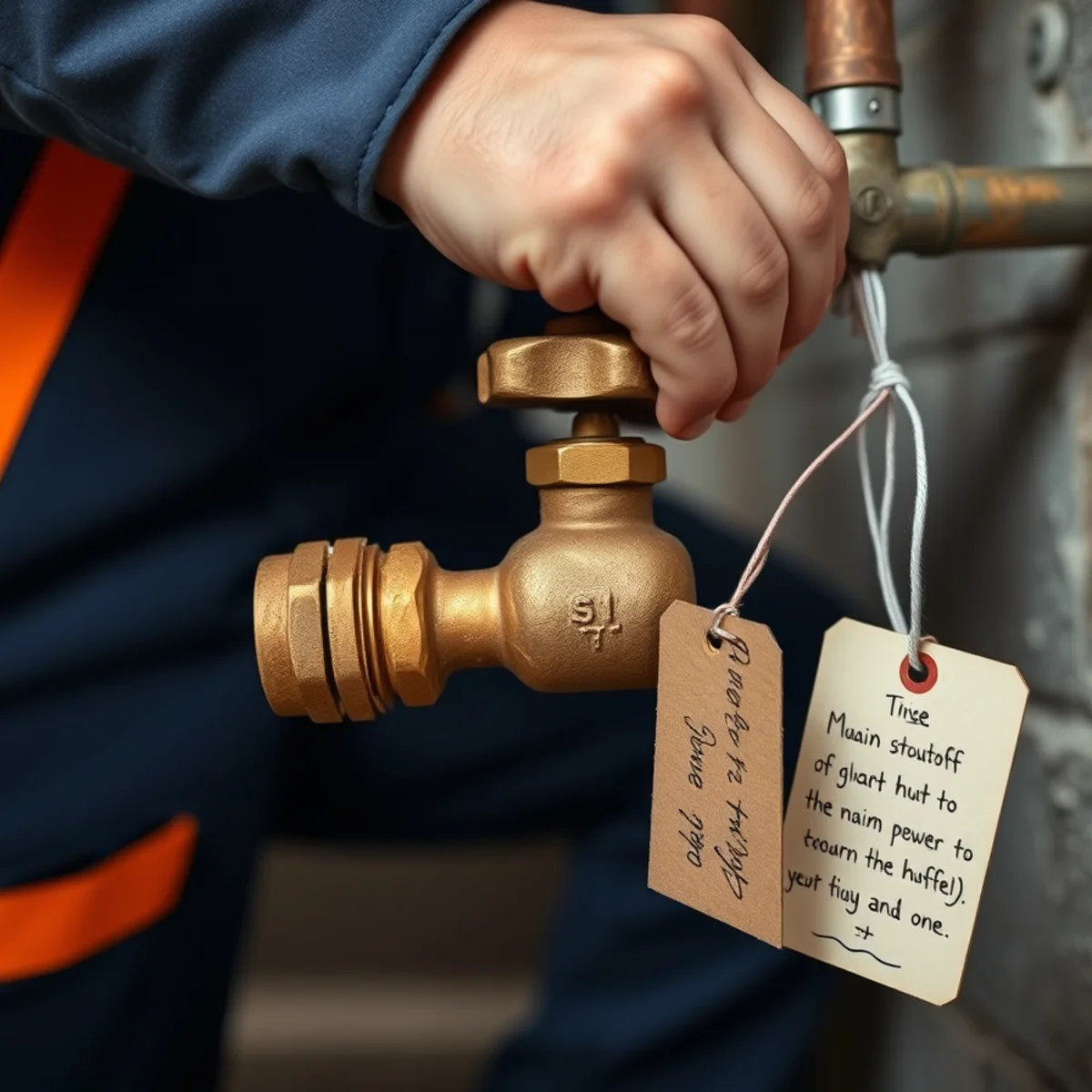
Close it fully, run a tap to confirm the water actually stops, then open it fully again. Do this twice a year — pick the same weekend you test smoke alarms.
If it will not turn, do not force it. An old gate valve can snap, and then you have no water and a genuine emergency in the middle of a routine test.
While you are down there, find the rest
- Fixture shutoffs under every sink and toilet. Turn each one. In hard water these calcify open and then snap when finally forced — replacing them with quarter-turn valves is inexpensive and matters enormously.
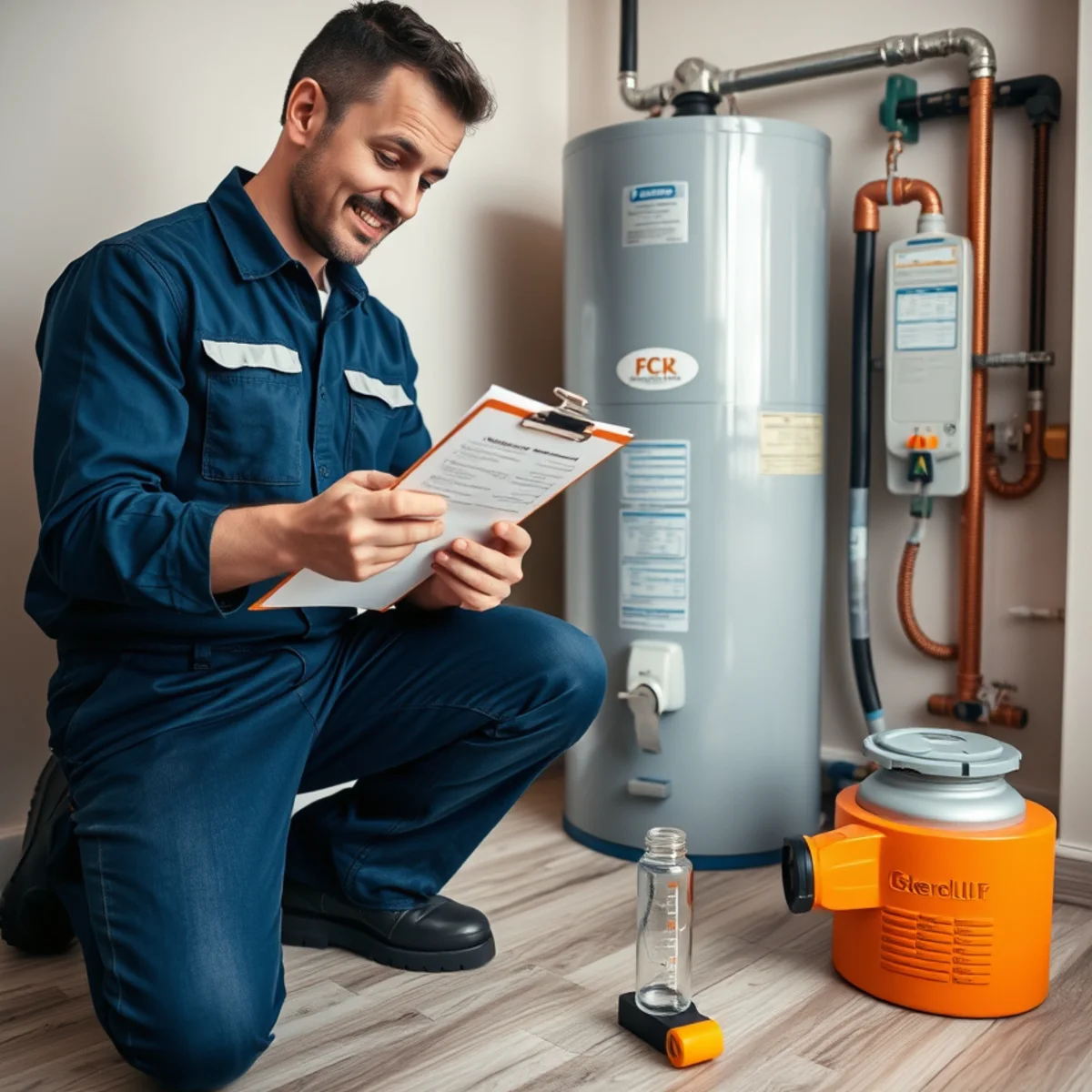
- The water heater cold inlet, on top of the tank. This isolates the heater without shutting the house down, which is what you want for a leaking heater.
- The main gas shutoff, at the meter and at each appliance.
- Outdoor hose bibs and any interior valve that isolates them for winter.
- The electrical panel, and which breaker feeds the water heater and the sump pump.
What to do when a pipe actually bursts
Our 24/7 emergency line is answered by a plumber rather than a service, and we will talk you through the next step while a truck is on the way.
- Shut off the main. If it will not turn, look for a shutoff closer to the leak — an angle stop or a branch isolation valve. Any valve that stops the flow is the right valve.
- Kill power at the breaker if water is reaching outlets, the panel, or a furnace — but only if you can reach the panel without standing in water. If you cannot, leave and call from outside.
- Open several faucets, lowest in the house first, to drain residual water and relieve pressure.
- Call. Tell us where the water is coming from, whether it is still running, the age of the house, and whether the main is off. That is enough for a real ETA and the right parts on the truck.
- Move what you can out of the water, photograph everything before cleanup, and get air moving.
Worth considering: automatic shutoff
Whole-house leak detection with an automatic shutoff valve monitors flow and closes the main when it sees a pattern that looks like a leak rather than normal use.
It is genuinely worth it for a property that sits empty for stretches — a second home, a rental between tenancies, or a household that travels. A burst supply line discovered after two weeks is a completely different event from one discovered in ten minutes. Households across Catonsville and Annapolis with waterfront or seasonal properties ask about these most often, and for those situations we recommend them.
Frequently asked questions
My main shutoff will not turn. What now?
Do not force it — an old gate valve can snap and make a bad situation far worse. Use a downstream isolation valve or fixture shutoff in the immediate term, and have the main valve replaced with a quarter-turn ball valve when there is no emergency. It is an hour of work.
Should I turn the water off when I go on holiday?
For anything longer than a weekend, yes, it is a sensible habit — provided you are not leaving anything that needs water, and provided you are confident the valve will reopen. Leave the heat on in winter regardless.
Can I use the curb stop at the property line?
It generally needs a long utility key and it belongs to the water utility. It is not the homeowner's first move, and forcing it without the right tool can damage it. Use the interior main.

Who wrote this
Collins & Sons LLC — Daniel Collins and family
We are a family plumbing business working out of 209 Westowne Rd in Catonsville, and we have been under Maryland houses for over 40 years — three generations of it. Most of what is on this page comes from doing the same jobs repeatedly on the same housing stock: pre-1950 homes off Frederick Road, galvanized supply, cast iron drainage, and water that runs 7–8.2 grains per gallon.
Licensed MHIC #117712 with the Maryland Home Improvement Commission and fully insured. We pull the Baltimore County permits on water heaters, sewer work and gas piping, and we meet the inspector ourselves.