A wet basement floor looks the same regardless of what caused it, and the three main causes need three completely different fixes. Getting the diagnosis right is what decides whether you spend a few hundred dollars or several thousand.
Here is how to tell them apart, and what actually works for each.
Why this is such a Catonsville problem
Three local factors stack up. The terrain rolls and drops toward the Patapsco Valley, so a great many houses — particularly through Woodbridge Valley, along the Johnnycake Road corridor and near Wilkens Avenue — have basements sitting at or below the grade of the surrounding ground.
The soil is Piedmont clay, which does not absorb a summer downpour. Water moves laterally through it instead and arrives at foundation walls under pressure.
And Mid-Atlantic storms deliver very high rainfall rates in short bursts — two inches in ninety minutes is not unusual. A system that copes with steady spring rain can be overwhelmed in twenty minutes.
Cause one: storm water
Water appears during or shortly after heavy rain, often at the base of a wall or where the wall meets the floor, and it dries out between events.
This is surface and near-surface water arriving faster than the ground can take it. The good news is that the cheapest fixes are outside and above ground:
- Gutters and downspouts. A blocked gutter dumps roof water straight down the foundation wall. This is the single most common cause and the cheapest to fix.
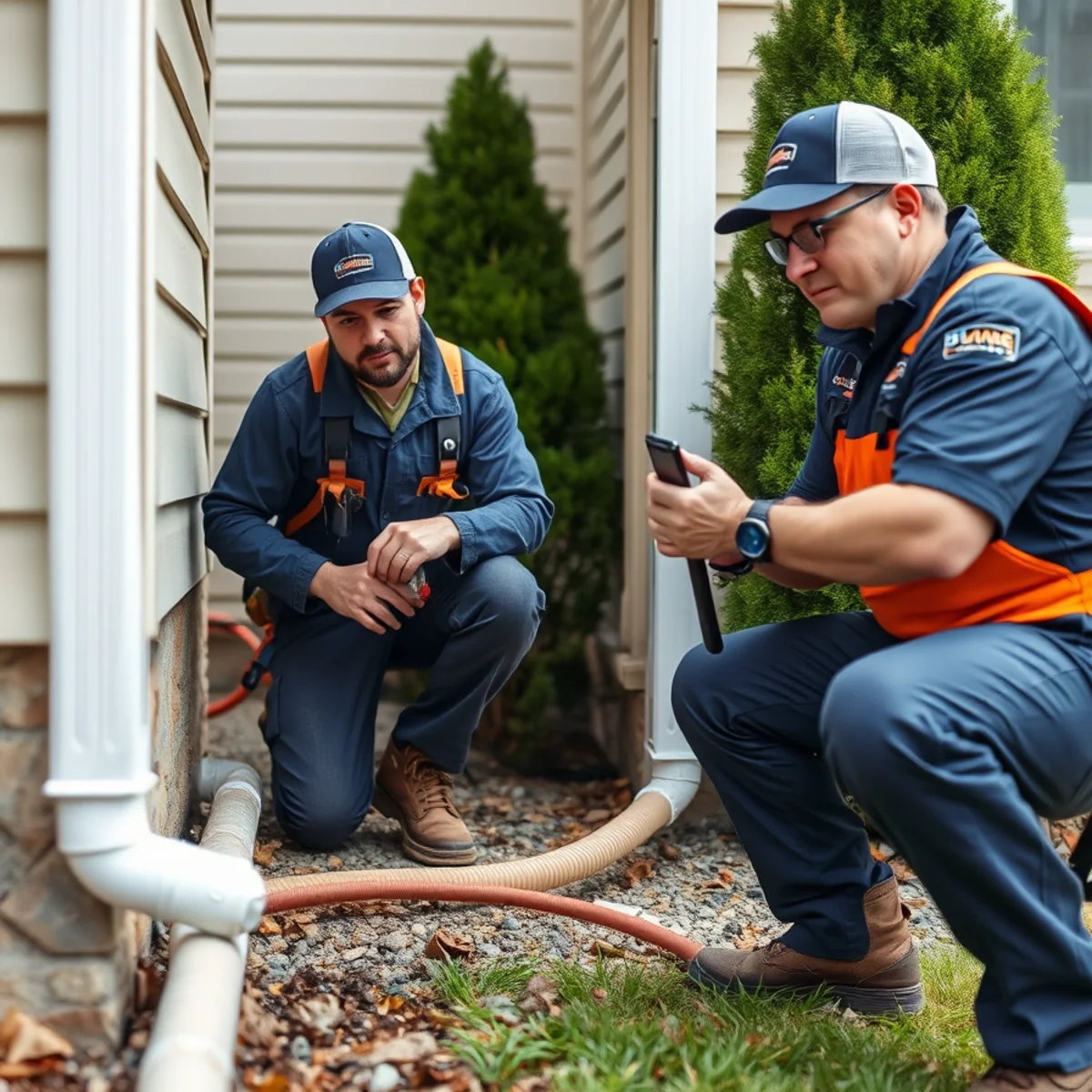
- Downspout discharge. Extensions should carry water at least several feet from the foundation. A downspout letting out at the wall is delivering the roof to your basement.
- Grading. The ground should slope away from the house. Settled soil against a foundation creates a channel that runs toward it.
- Window wells. Covers, and a drain that actually drains.
Cause two: groundwater
Water seeps through the floor slab, at the floor-wall joint, or through the wall itself. It appears in wet seasons rather than only after storms, and the basement may feel persistently damp rather than intermittently wet.
This is the water table sitting high against the structure, and it is where a sump system earns its keep. The pump does not stop water arriving — it manages it, continuously.
- A correctly sized pump, in a pit deep enough that it does not short-cycle.
- A working check valve. When it fails, the discharge column falls back into the pit and the pump runs roughly twice as much as it needs to.
- A float with clearance on all sides. A pump that has shifted so the float rests against the pit wall will never trigger.
- A discharge line terminating well away from the foundation, at proper pitch, with freeze protection.
- Battery backup. More on that below, because it is the one that matters most here.
Cause three: plumbing failure
Clean water with no rain, or sewage coming up through a floor drain, basement shower or laundry standpipe.
A burst supply line, a failed water heater or a split washing machine hose produces clean water and needs the main shut off immediately. Sewage backing up is a blocked main line or a failing lateral, and clearing it is the immediate job while the camera tells you whether it will happen again.
These are emergency calls rather than prevention projects, and they are the reason knowing where your main shutoff is matters so much.
The local fact that decides the backup question
In Maryland, the storm that fills your pit and the outage that kills your pump are the same weather system. That is not bad luck, it is cause and effect — heavy wind and rain bring the lines down.
Every plumber in Baltimore County has the same story: the homeowner did everything right, the pump was new, and the transformer went at eight in the evening with four hours of rain still to come.
A battery backup is a second pump on a deep-cycle battery that takes over when power fails or when inflow exceeds what the primary can move. In a finished basement, or any basement holding things you would be sorry to lose, it is not an upsell. Batteries need replacing every three to five years, and a backup with a dead battery is decoration — test it under load as part of your spring check.
The spring checklist
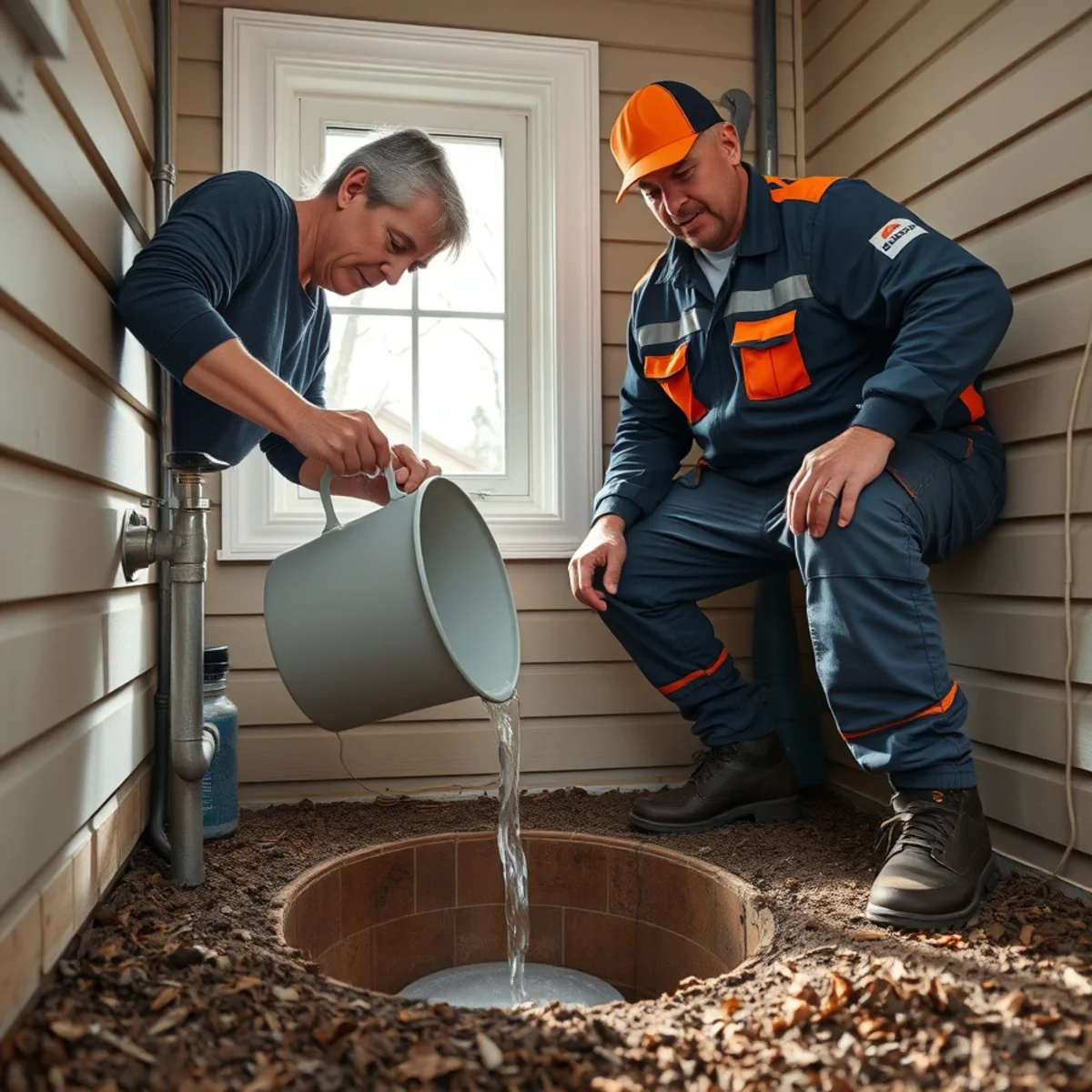
- Pour five gallons into the sump pit. The pump should start, clear the pit promptly, and shut off cleanly.
- Clean silt, gravel and rust flakes out of the pit — the most common cause of a jammed impeller.
- Listen for a back-flow gurgle after shutdown. That is the check valve.
- Walk the discharge line outside. Clear the outlet, confirm it terminates well away from the foundation, check for crushed or kinked sections.
- Test the backup system under load and check the battery date.
- Clear the gutters and check every downspout extension.
- Pour water into the basement floor drain and confirm it takes it. A floor drain that has never been cleared will not help you when you need it.
And the honest limit of what we do
We are plumbers. We size, install, repair and back up sump systems, correct discharge routing, clear floor drains, and deal with the plumbing failures and sewer backups.
Structural waterproofing — exterior excavation and membrane, interior French drains, foundation crack injection — is a specialist trade, and we will say so rather than pretend otherwise. Where a basement needs that, the honest advice is to get a waterproofing contractor rather than a bigger pump.
What we can do is tell you which of the three causes you actually have, which is the part that decides everything else. We do that work throughout Catonsville, Elkridge and the low-lying parts of Baltimore and Howard County. See sump pump installation and repair for what that involves.
Frequently asked questions
How do I know if it is groundwater or storm water?
Timing and location. Storm water appears during or right after heavy rain, usually at the wall-floor joint, and dries between events. Groundwater appears in wet seasons regardless of a specific storm, often through the slab, and the basement feels persistently damp.
Will a bigger sump pump solve my problem?
Only if the problem is genuinely pumping capacity. If the cause is a downspout discharging at the foundation, or a failed check valve, or a discharge line recirculating water back into the ground beside the basement, a bigger pump just runs harder against the same problem.
Is basement flooding covered by insurance?
It depends entirely on cause and policy. Sudden plumbing failures are frequently covered; groundwater and surface flooding usually need separate flood coverage; sewer backup often needs a specific endorsement. Photograph everything before cleanup and call your carrier early.

Who wrote this
Collins & Sons LLC — Daniel Collins and family
We are a family plumbing business working out of 209 Westowne Rd in Catonsville, and we have been under Maryland houses for over 40 years — three generations of it. Most of what is on this page comes from doing the same jobs repeatedly on the same housing stock: pre-1950 homes off Frederick Road, galvanized supply, cast iron drainage, and water that runs 7–8.2 grains per gallon.
Licensed MHIC #117712 with the Maryland Home Improvement Commission and fully insured. We pull the Baltimore County permits on water heaters, sewer work and gas piping, and we meet the inspector ourselves.