A slab leak is a supply line failing underneath a concrete floor. Because the water has nowhere obvious to go, it soaks into the ground beneath the slab, and the first sign is usually indirect — a warm patch underfoot, a water bill that doubled, or the sound of running water when nothing is on.
Catonsville is luckier than most of the country here. So much of the housing stock has full basements that true slab leaks are less common than they are in slab-on-grade regions. Where we do find them is mid-century ranchers, additions and sunrooms built on slab, converted garages and enclosed porches.
The important part is not breaking concrete to find out. Acoustic listening equipment and thermal imaging locate the leak within a small area, and then there is a genuine choice to make: open the slab at that spot, or abandon the under-slab section and re-route the line overhead. We price both, because which one is cheaper depends entirely on your house.
Signs you need slab leak repair
- A warm or unusually hot patch on a floor slab
- The sound of running water when every fixture is off
- A water bill that jumped with no change in usage
- Unexplained damp on a slab floor or at the base of a wall
- Buckling flooring, lifting tile or a persistent musty smell
- Reduced hot water pressure throughout the house
- New cracks in a slab floor, driveway or patio
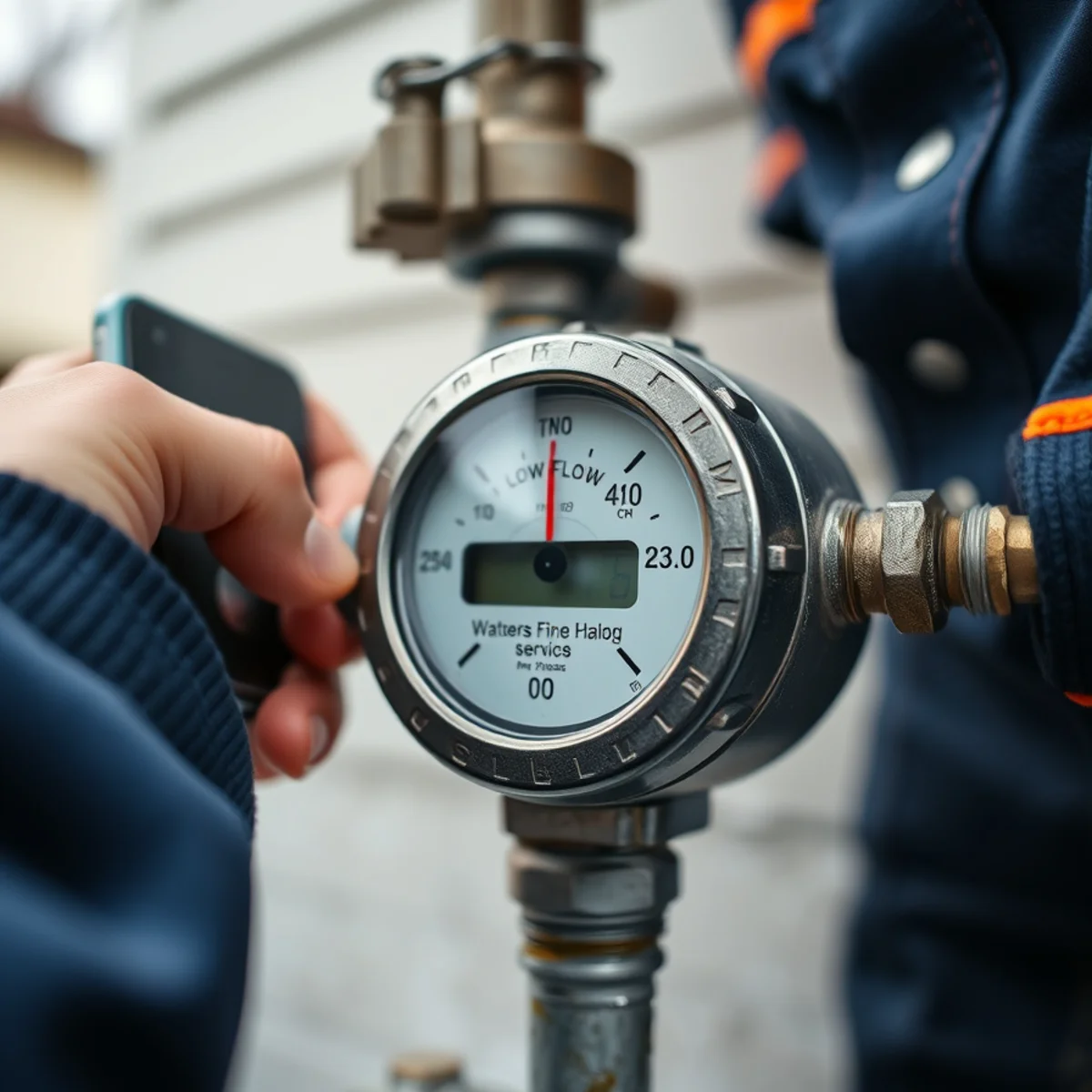
- The water meter moving with the main house valve open but all fixtures closed
A warm floor patch almost always means the hot water line, because hot water leaks announce themselves thermally. A cold line leak under a slab can run far longer before anyone notices.
What the job includes
Electronic and acoustic leak location
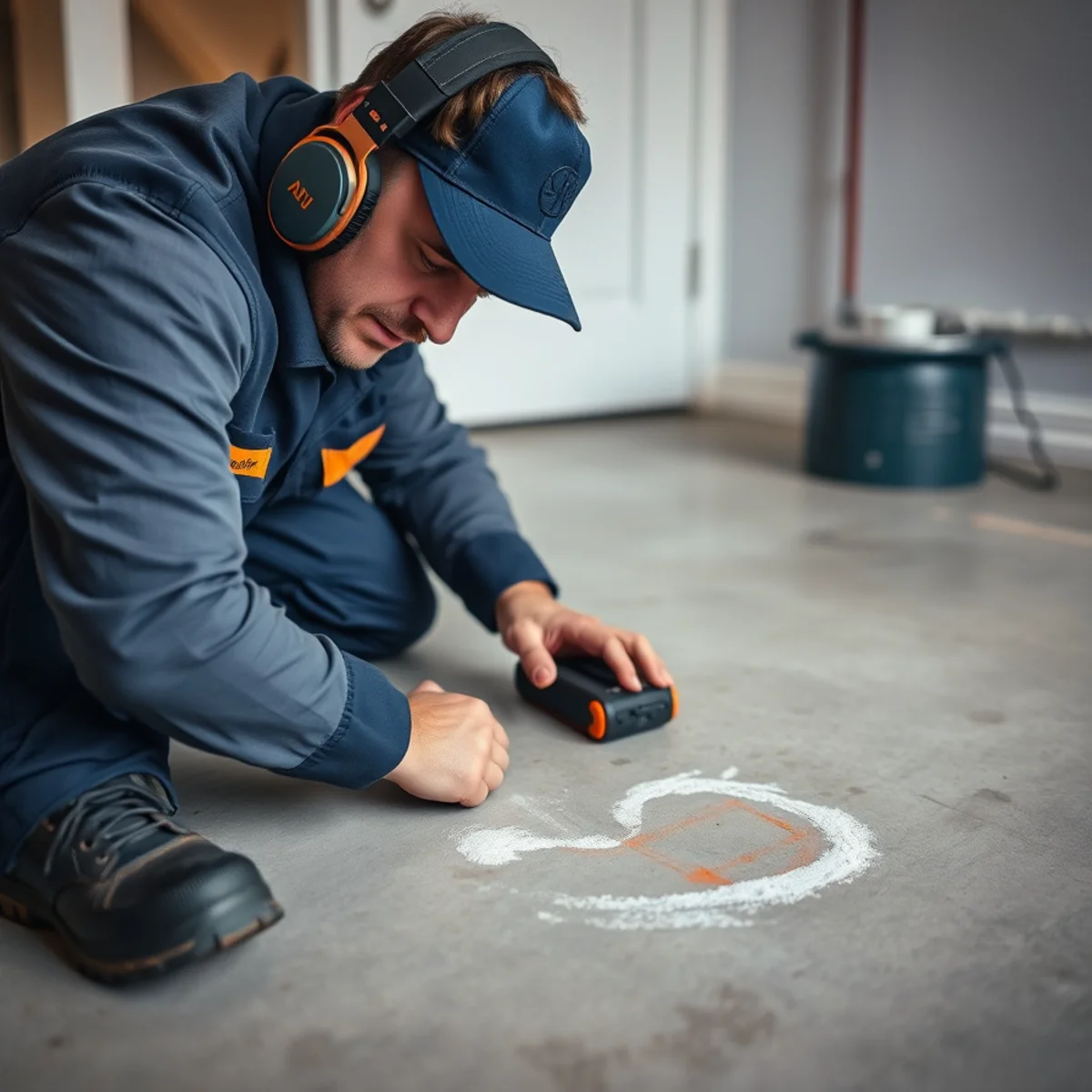
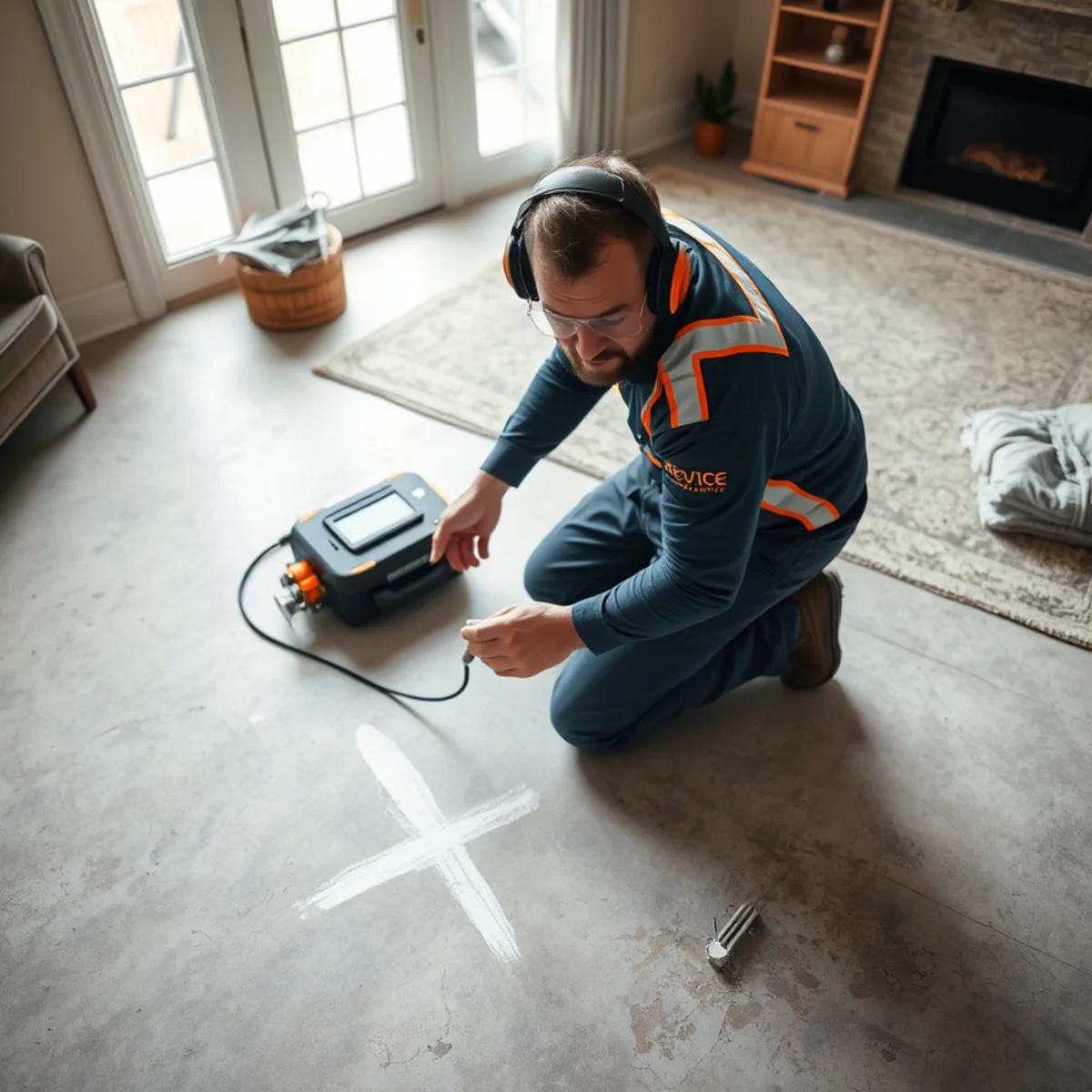
Sensitive listening equipment picks up the sound signature of pressurized water escaping under concrete, letting us mark a spot rather than guess at a zone.
Thermal imaging
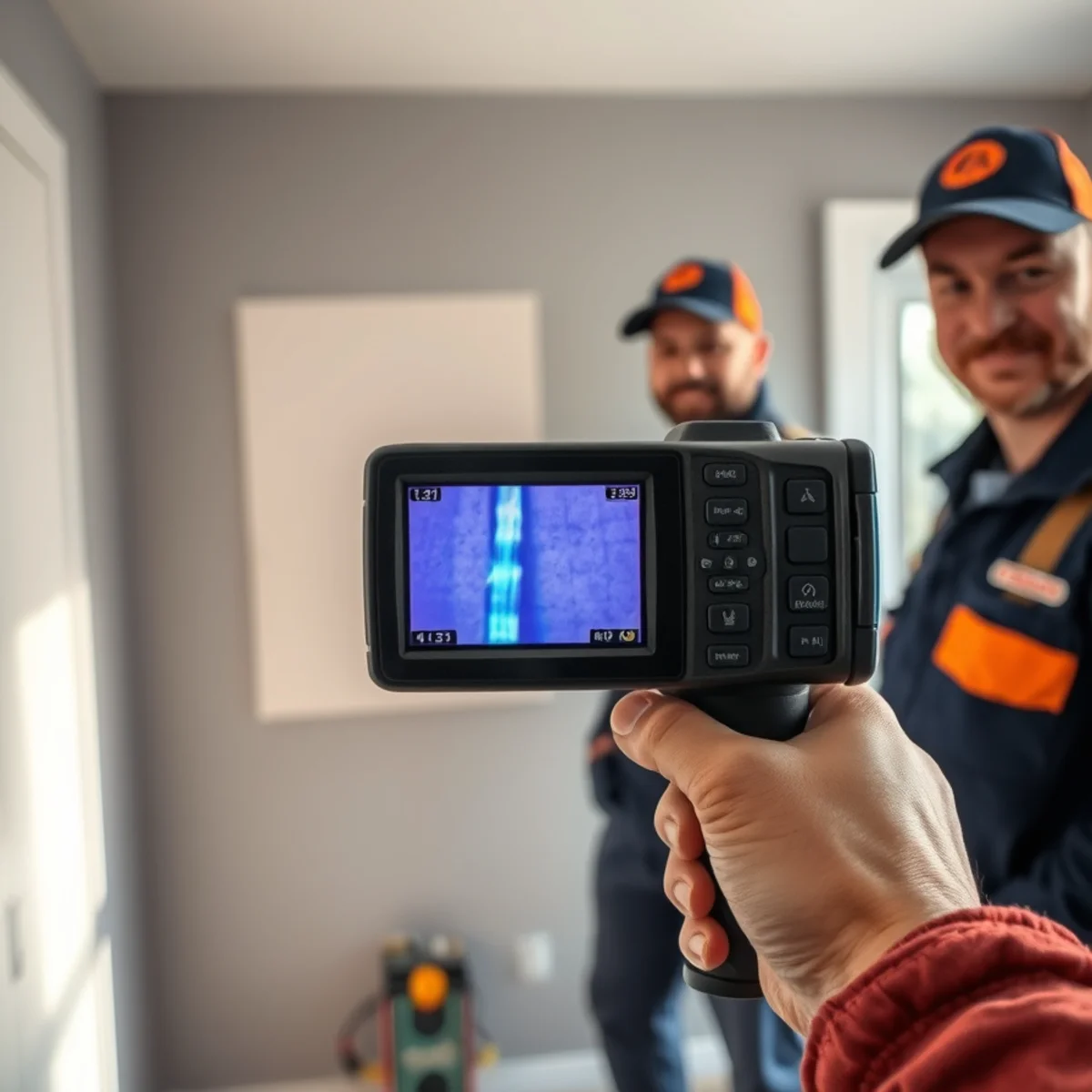
Infrared shows the temperature differential a hot water leak creates through a slab. Combined with acoustic work it narrows the location to a small area.
Pressure isolation testing
Isolating hot from cold and section from section while watching the meter, so we know which line is leaking before any equipment comes out.
Spot repair through the slab
Cutting a targeted opening, repairing the failed section, and restoring the concrete. Right when the leak is accessible and the rest of the line is sound.
Overhead re-route
Abandoning the under-slab section entirely and running new line through walls or ceiling. Frequently less disruptive and sometimes cheaper — and it means that section can never leak again.
Post-repair verification
Pressure test and a fresh meter reading before we call it done. You get evidence, not reassurance.
How we work
1. Confirm there is a slab leak at all
Meter test first, then isolate the house from the service line. Occasionally what looks like a slab leak is a running toilet or a leaking irrigation valve, and finding that out costs fifteen minutes.
2. Determine hot or cold
Shutting the water heater outlet and re-testing tells us which line. That halves the search area immediately.
3. Pinpoint before breaking anything
Acoustic and thermal work until we can mark the floor. We show you the mark and tell you honestly how confident we are before a saw comes out.
4. Price both approaches
Spot repair versus re-route, with the disruption, timeline and cost of each. On a house with an accessible attic or ceiling cavity, re-routing often wins.
5. Repair, test and restore
Repair made, system pressurized, meter re-checked, concrete patched and the area cleaned. Flooring restoration is a separate trade and we say so before you sign.
What drives the price
We do not publish fake prices, because a number that does not match your house is worse than no number at all. What we can do is tell you exactly what moves the figure, so nothing on the estimate is a surprise.
Detection difficulty
A hot line leak under bare concrete is comparatively quick to find. A cold line under tile with in-floor heating nearby takes longer, and detection time is real work.
Spot repair versus re-route
Breaking and restoring concrete versus running new pipe overhead. Whichever is cheaper depends on the slab, the flooring above it and whether there is a route through the ceiling.
What is on top of the slab
Bare concrete in a garage is one thing. Tile, hardwood or a finished floor in a living space is another, and restoration cost can exceed the plumbing cost.
Condition of the rest of the line
If the under-slab pipe is failing generally rather than at one point, repeated spot repairs are a losing game and a full re-route is the honest recommendation.
Restoration scope
We patch concrete. Flooring, tile and finish carpentry are specialist trades — we will tell you plainly what is in our scope and what is not.
What this looks like in Catonsville
The good news for Catonsville homeowners is that this is not a common problem here. The pre-war and post-war housing stock across most of 21228 and 21229 has full basements, which means supply lines run in accessible space rather than under concrete. When somebody calls us worried about a slab leak, the first thing we usually establish is that they do not have one.
Where we do find them is specific and predictable. Mid-century ranchers built on slab, particularly in the developments toward Rolling Road and Johnnycake Road. Additions, sunrooms and enclosed porches poured on slab against an older house. And converted garages, where the original concrete was never intended to have plumbing run beneath it.
Those additions are worth a specific mention. Plumbing run under a slab addition in the 1970s or 80s was frequently laid without proper sleeving or bedding, sitting directly against aggregate. Point loading and abrasion at those contact points is a common failure mechanism, and it tends to produce leaks in the same few feet.
One local advantage: because so many Catonsville houses have basements and accessible attic space, a re-route is more often practical here than in a region of single-story slab homes. When we price both options, the overhead re-route wins more often than homeowners expect.
Slab Leak Repair questions we get asked
How do I know if I have a slab leak or something else?
Run the meter test with every fixture off. If it moves, water is escaping. Then shut the valve on the water heater outlet and re-test — if the movement stops, it is the hot line. A warm patch on the floor is the classic confirming sign.
Do you have to break up my floor?
Not necessarily. Abandoning the under-slab section and re-routing overhead avoids breaking concrete entirely, and in a house with accessible ceiling or attic space it is frequently the cheaper and less disruptive option. We price both.
Will homeowners insurance cover it?
Many policies cover the cost of accessing the leak and the resulting water damage while excluding the pipe repair itself. Terms vary considerably. Document everything with photographs before repair and call your carrier early.
Can a slab leak damage my foundation?
Left long enough, yes. Continuous water under a slab erodes and softens the supporting soil, which can lead to settling and cracking. It is one of the reasons a suspected slab leak deserves attention rather than monitoring.