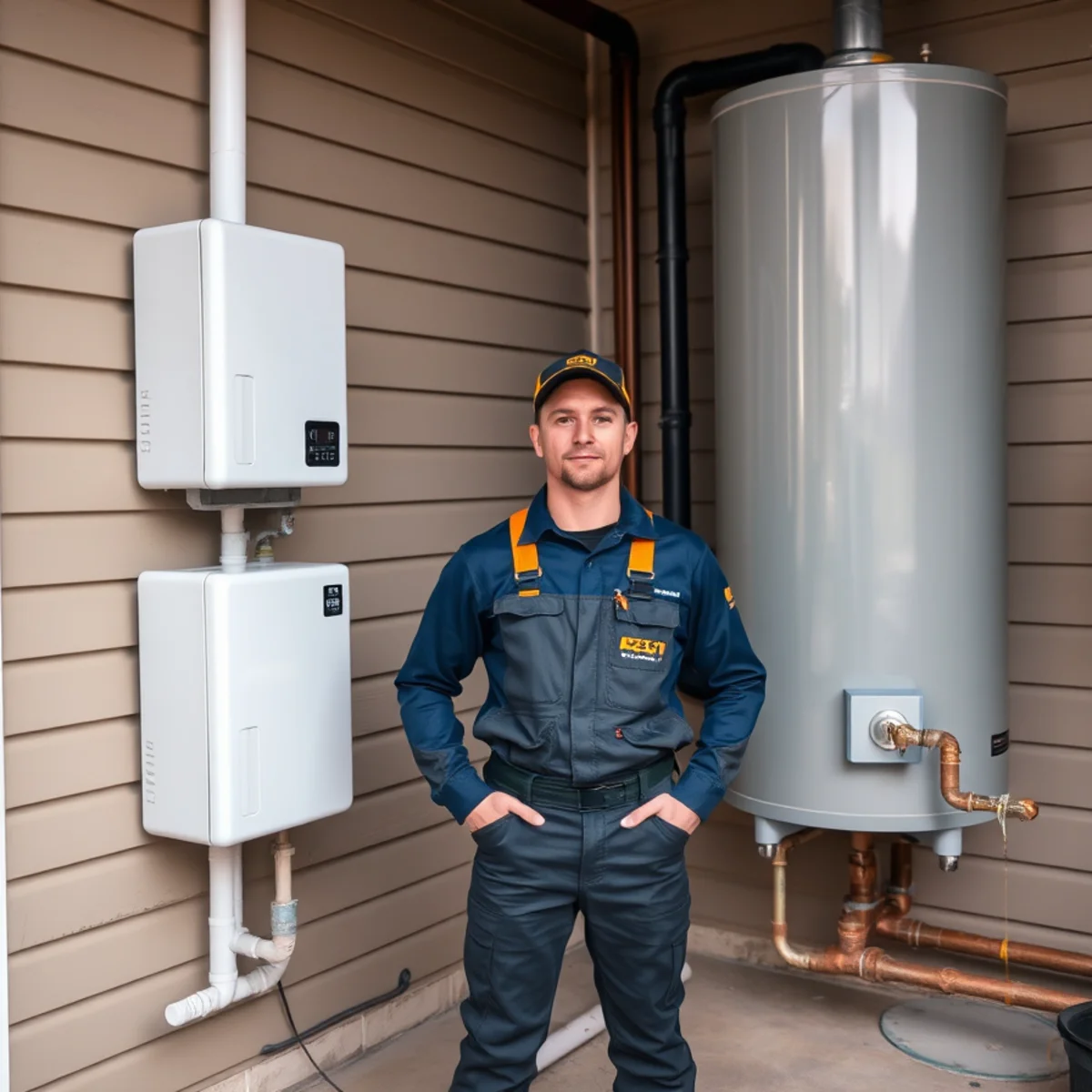
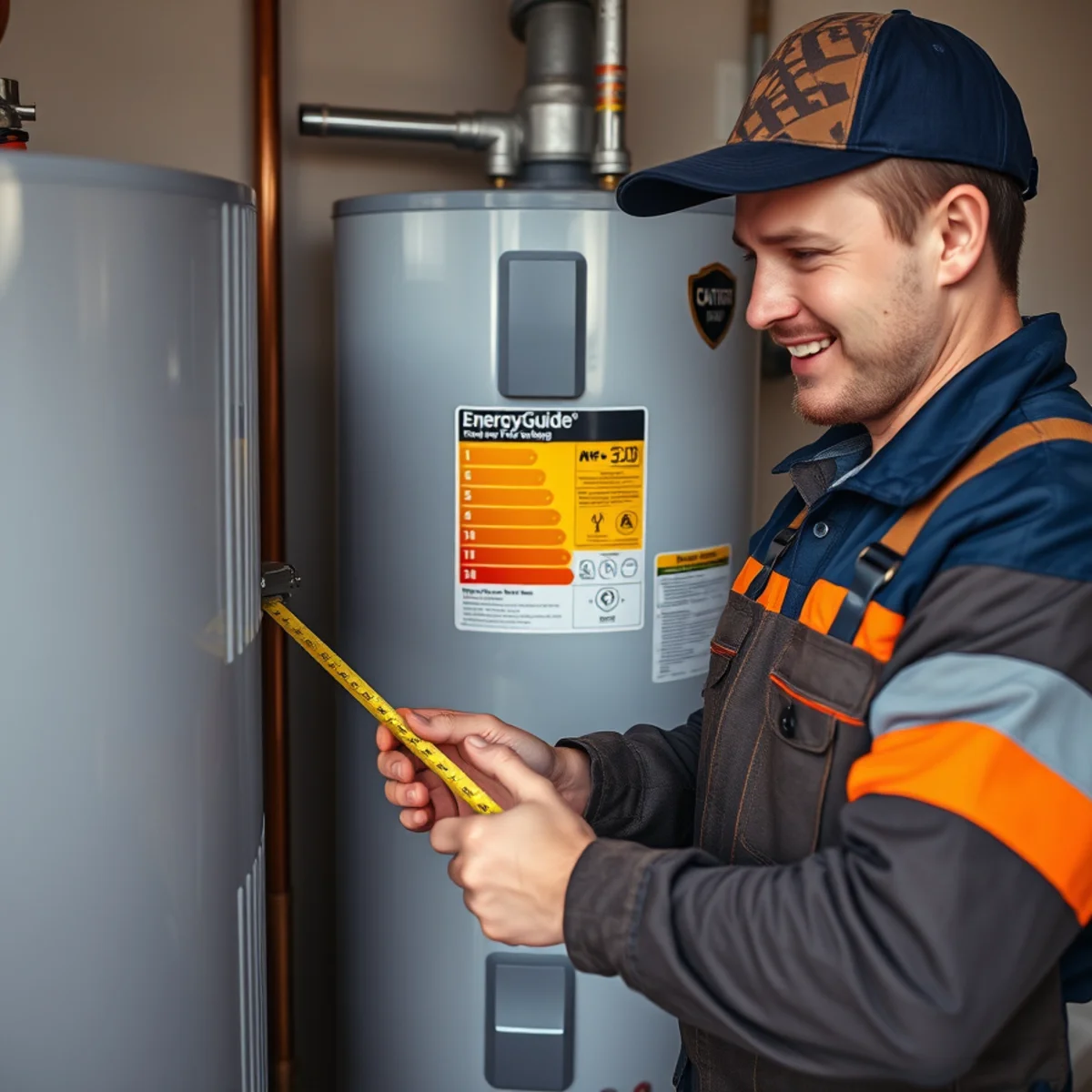
Almost everyone shops for a water heater on one number: gallons. It is printed largest on the box, it is easy to compare, and it is the least useful figure on the label.
The number that decides whether your household runs out of hot water is the first-hour rating, and the number that decides how quickly you recover afterward is the recovery rate. Here is how to use both.
First-hour rating: the number that matters
First-hour rating is how many gallons of hot water the unit can deliver in one hour starting from a full, hot tank. It combines the stored capacity with how fast the burner or elements can heat incoming cold water while you are drawing.
That combination is why a 40-gallon gas heater with a strong burner can out-deliver a 50-gallon electric with slow elements over a busy morning. The bigger tank runs out and cannot catch up; the smaller one keeps producing.
Work out your actual peak demand
Sizing is not about how much hot water you use in a day. It is about your worst hour — usually a weekday morning.
Add up what genuinely happens in that hour, using rough working figures:
- Shower: about 10 to 20 gallons each, depending on length and showerhead flow.
- Bath: about 20 gallons.
- Dishwasher: about 6 gallons per cycle.
- Washing machine on a warm cycle: about 7 gallons.
- Kitchen or bathroom sink use: 2 to 4 gallons.
Then adjust for Maryland
Two local factors push the requirement upward and both get ignored.
First, incoming water temperature. Manufacturers rate performance against an assumed inlet temperature, and Maryland winter groundwater arrives considerably colder than the summer figure. A unit sized on summer performance will disappoint you in January, because it has more work to do per gallon.
Second, sediment. In hard water an unmaintained tank loses effective capacity to the sediment layer occupying the bottom of it. A 50-gallon tank that has never been flushed is not a 50-gallon tank any more. That is one of the arguments for annual maintenance rather than buying a bigger unit to compensate.
Gas or electric changes the answer
Gas
Faster recovery, higher first-hour rating for a given tank size, cheaper to run in most Maryland households. Costs more to install, needs adequate gas supply and correct venting. For a family of four or more, gas is usually the easier recommendation.
Electric
Cheaper to install, simpler, no venting or combustion air requirements, and viable anywhere. Slower recovery, which means you generally need more stored gallons to achieve the same first-hour rating.
Heat pump water heaters change this equation considerably — far more efficient, though they need adequate space and air volume around them and they cool the room they sit in, which is fine in a basement and less fine in a closet.
Rough starting points
Treat these as starting points, not answers. A household of two who both take long showers back to back needs more than a household of four who stagger them.
- 1 to 2 people, one bathroom: 30 to 40 gallons gas, or 40 to 50 electric.
- 2 to 3 people, one to two bathrooms: 40 gallons gas, or 50 electric.
- 3 to 5 people, two to three bathrooms: 50 gallons gas, or 66 to 80 electric.
- 5+ people, or three-plus bathrooms with simultaneous use: 75 gallons gas, or a tankless unit sized properly, or two units.
The two mistakes we see most
Oversizing to be safe. A tank far larger than the household needs costs more to buy, more to run through standby losses, and takes up floor space for nothing. It also does not fix a recovery problem, which is what most "we run out of hot water" complaints actually are.
Undersizing on the incoming gas line. If you upsize a gas heater without checking whether the existing supply can carry the additional load, the new unit will underperform and so may everything else on the line. That is a calculation, not a guess, and it belongs in the gas line assessment before the heater is ordered.
And the boring but important part
Whatever you choose, get the permit. Water heater replacement requires one in Baltimore County and in every jurisdiction we work in, and an un-permitted heater is exactly the kind of thing that surfaces during a home sale.
Check the expansion control too. Many older installations became closed systems when a check valve went in at the meter and never got the expansion tank that requires. We fit that as standard on water heater installations across Catonsville and Towson.
Frequently asked questions
Should I just buy the biggest one that fits?
No. Oversizing costs more to buy and to run, and it does not solve a recovery problem — which is what most complaints turn out to be. Size on first-hour rating against your genuine peak hour.
We run out of hot water. Do we need a bigger tank?
Maybe, but check two cheaper things first. An unflushed tank has lost effective capacity to sediment, and a failed dip tube lets cold water short-circuit straight to the outlet. Both produce exactly this symptom and both cost far less than a new heater.
Is a heat pump water heater worth considering?
For the right space, genuinely yes — running costs are substantially lower. They need adequate air volume around them and they cool the surrounding room, so a basement suits them and a small closet does not.

Who wrote this
Collins & Sons LLC — Daniel Collins and family
We are a family plumbing business working out of 209 Westowne Rd in Catonsville, and we have been under Maryland houses for over 40 years — three generations of it. Most of what is on this page comes from doing the same jobs repeatedly on the same housing stock: pre-1950 homes off Frederick Road, galvanized supply, cast iron drainage, and water that runs 7–8.2 grains per gallon.
Licensed MHIC #117712 with the Maryland Home Improvement Commission and fully insured. We pull the Baltimore County permits on water heaters, sewer work and gas piping, and we meet the inspector ourselves.