
Pasadena is not on one water system. Parts of the peninsula are served by Anne Arundel County public water; plenty of other properties, particularly the older waterfront and the lots set back off Mountain Road, are on private wells. Those are two different jobs, and the treatment that suits one is wasted on the other.
That split is the reason so much of the water-treatment work here starts with a disagreement about what the problem even is. County supply arrives treated and tends to raise hardness and taste questions. A private well arrives untreated and raises iron, sulfur, sediment and pH questions. Same symptoms described over the phone, completely different equipment.
We are about forty minutes up the road in Catonsville and we have been doing this across Anne Arundel County for years. What follows is how we approach a Pasadena house, and what we test before anyone is asked to spend anything.
Signs you need water treatment pasadena
- Orange staining in the toilet tank, tub or on laundry
- A rotten-egg or sulfur smell, often stronger on the hot side
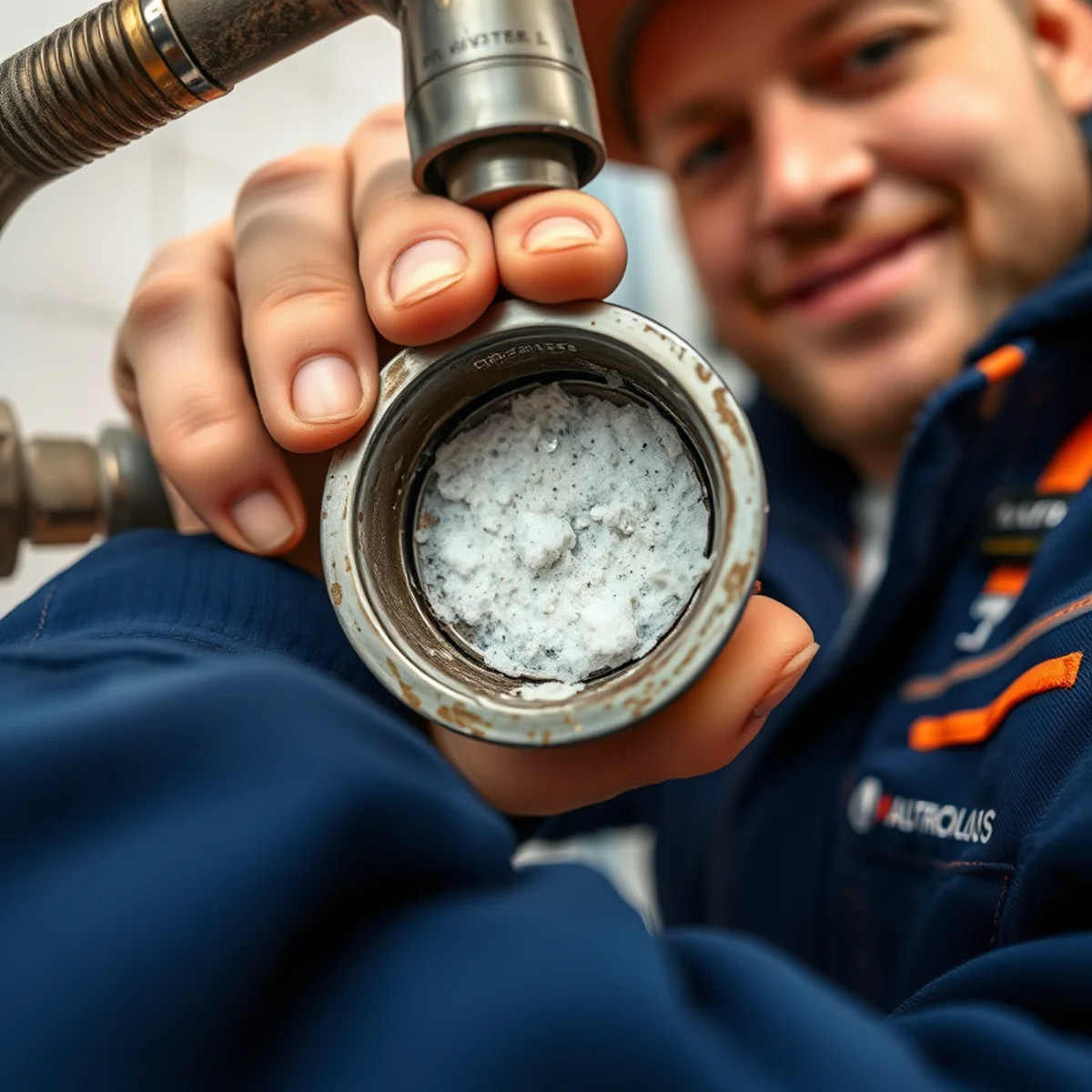
- Scale on fixtures and glassware, or soap that will not lather
- Sand or grit collecting in aerators and shower heads
- Water that tastes metallic, salty or just different to what it used to
- A water heater that has needed replacing sooner than it should have
- You are on a private well and have never had it tested
- You have just bought the house and do not know what you inherited
The one Pasadena-specific thing worth saying: if your water has turned noticeably salty or brackish and you are on a well near the water, that is not a treatment question first. It is a well question, and it needs looking at before anybody sells you a softener.
What the job includes
Establishing which supply you are actually on
It sounds obvious and it is routinely wrong. Some Pasadena properties were switched to county water years ago with the well still in the ground; some were never switched. What we test and what we recommend both depend on the answer.
Free on-site hardness testing
Included with any service call here, same as everywhere else we work. Five minutes and you have a real number for your address rather than a county average that may not describe your street.
Well water treatment — iron, sulfur, sediment, pH
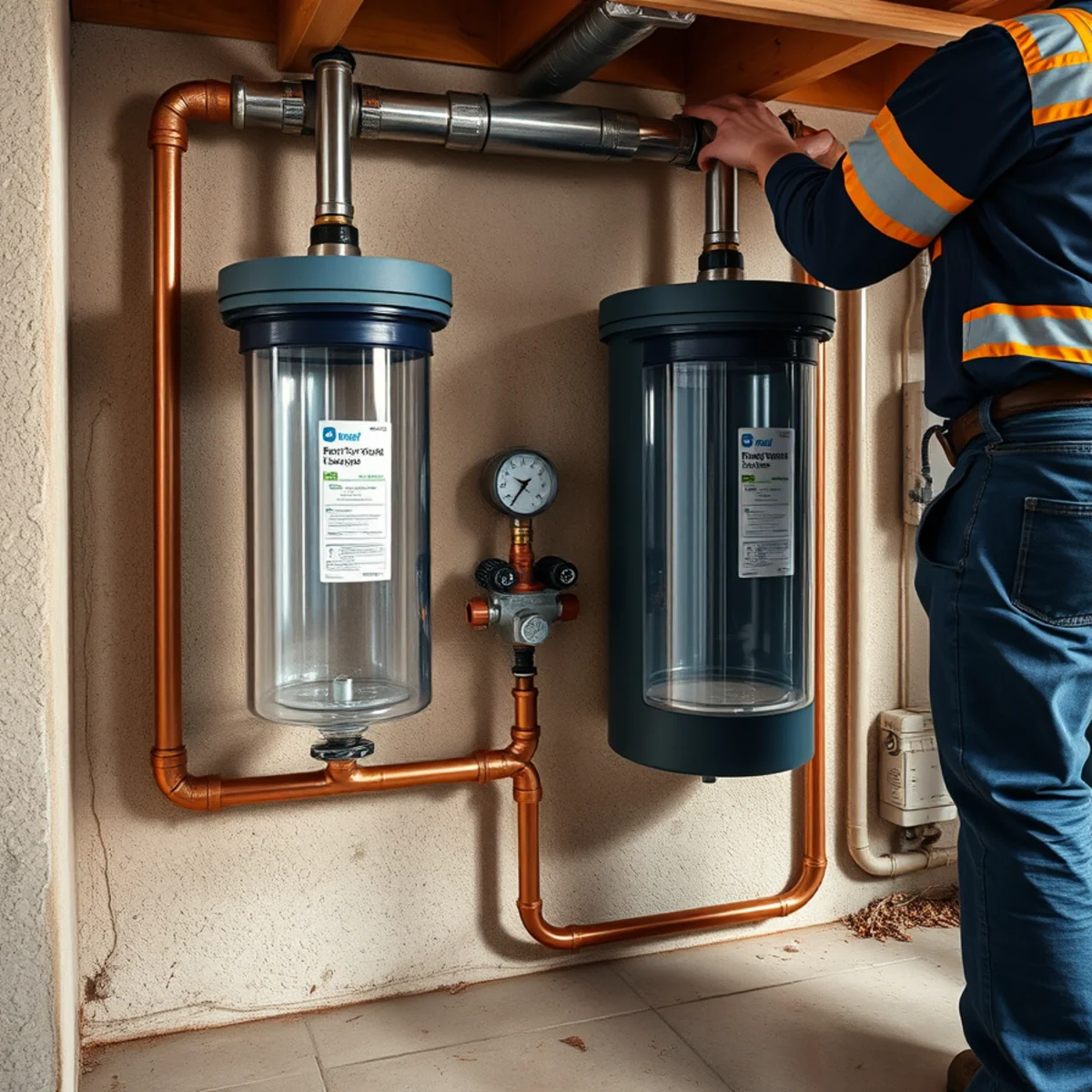
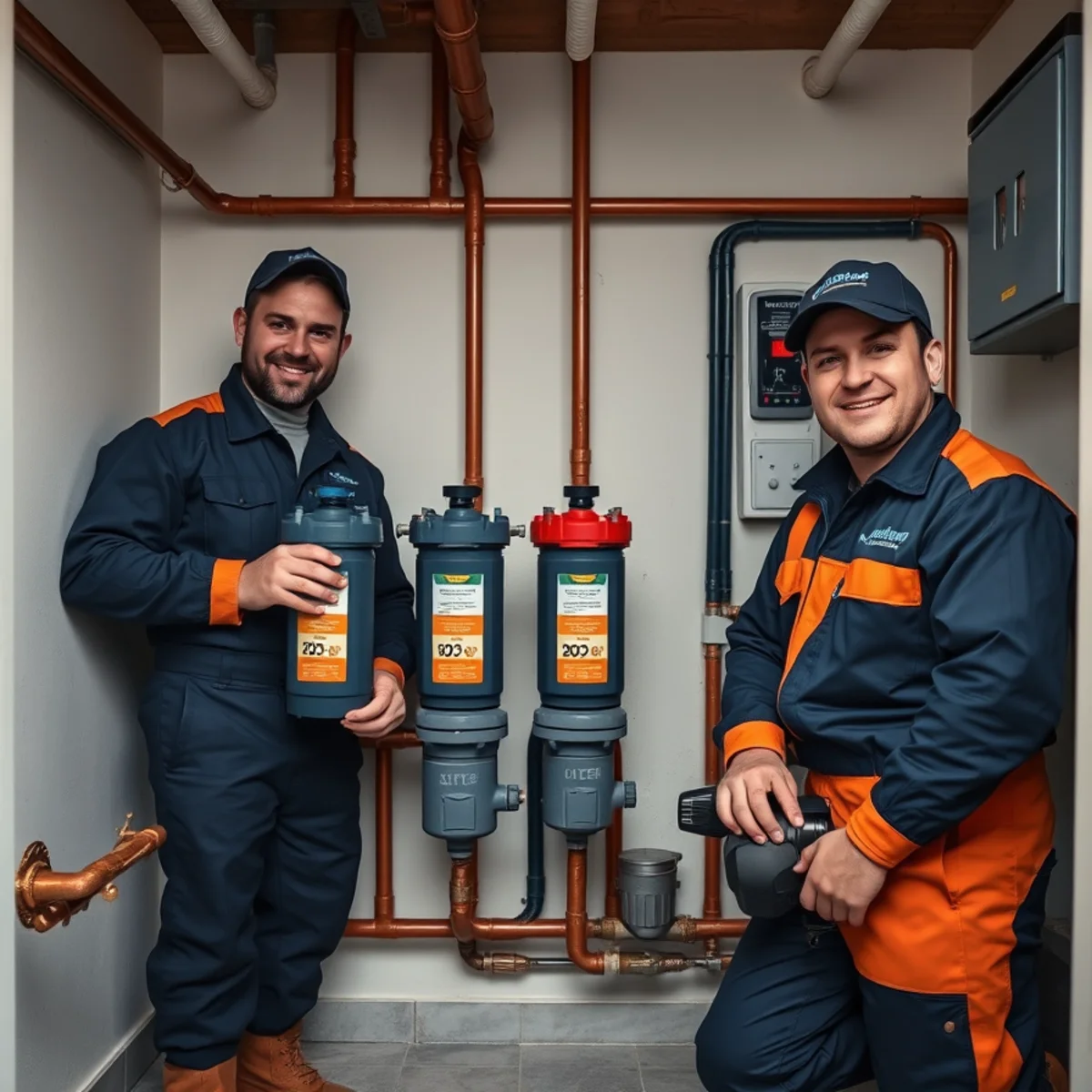
For the Pasadena properties still on private wells. Each of those is a separate problem needing separate media, installed in the right order, and sized from a test rather than from a package tier.
Softening and conditioning for county supply
Where the supply is treated already and the remaining complaint is hardness, scale or taste. Sized to the household, with an honest answer about whether the number actually justifies the equipment.
Drinking water filtration
Under-sink and whole-house carbon where the complaint is taste and odor rather than minerals. Often the cheapest thing that fixes what the household actually cares about.
Lab testing for bacteria and nitrate
On a private well these are the tests that matter for safety and neither can be read off a strip. They go to a state-certified lab, and we tell you what the results mean rather than attaching equipment to them.
How we work
Find out what you are on
County supply or private well, and whether the well is still connected. This decides everything downstream and it takes one visit to establish properly.
Test before specifying
Hardness and visible iron evidence on site. Bacteria, nitrate and a mineral panel to a lab where a well is involved. No equipment is quoted against an assumption.
Deal with the problems in order
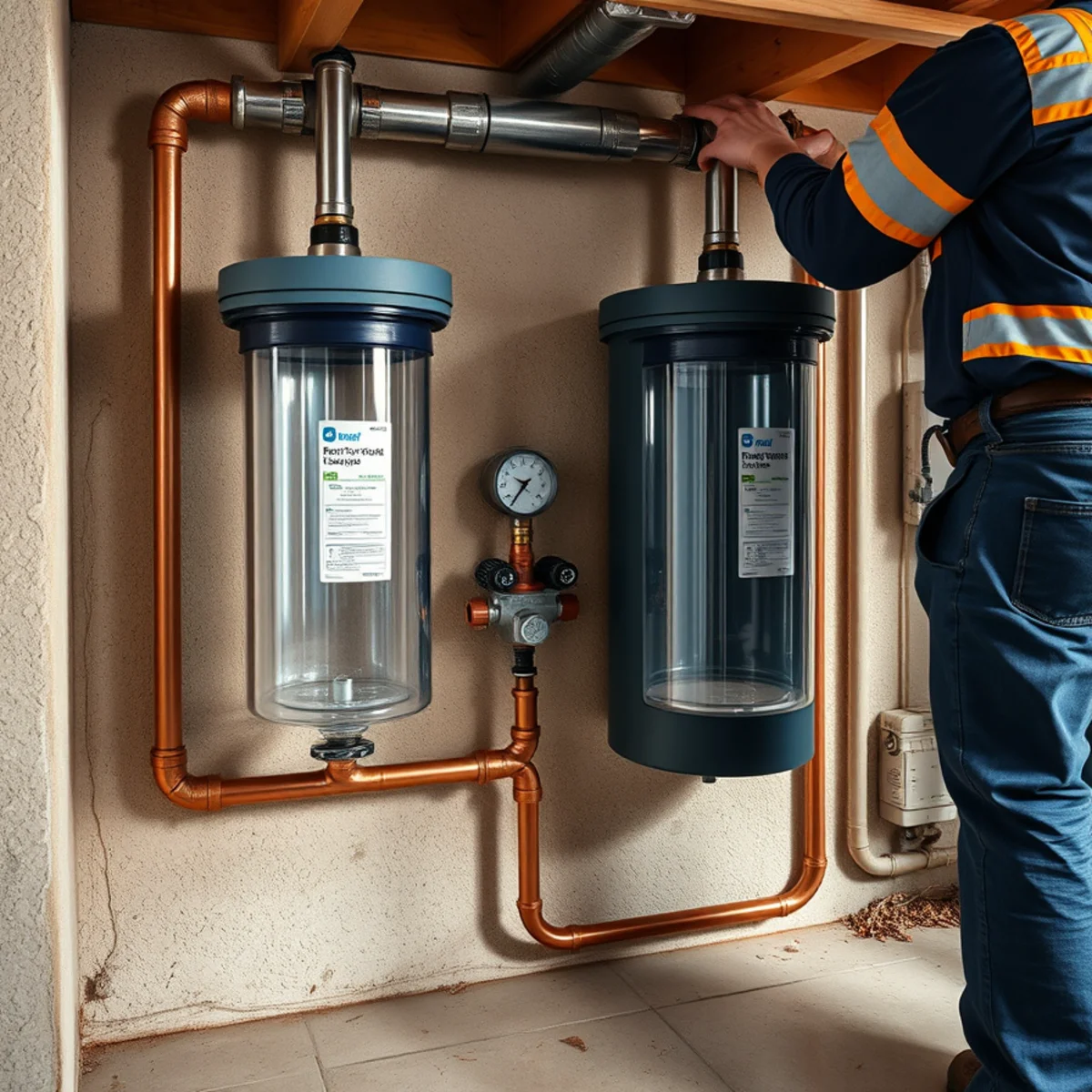
Sediment, then iron or odor, then softening, then pH. Getting that order wrong is the most common reason a system underperforms — a softener ahead of an iron filter fouls its own resin.
Install with service access
Bypass, unions and room to change media. Treatment gear needs maintenance, and a system you cannot reach is a system that gets neglected.
Hand over the maintenance schedule
Salt, media life, what to watch for, and what a change in the water would look like. On a well especially, the water can shift and you want to notice early.
What drives the price
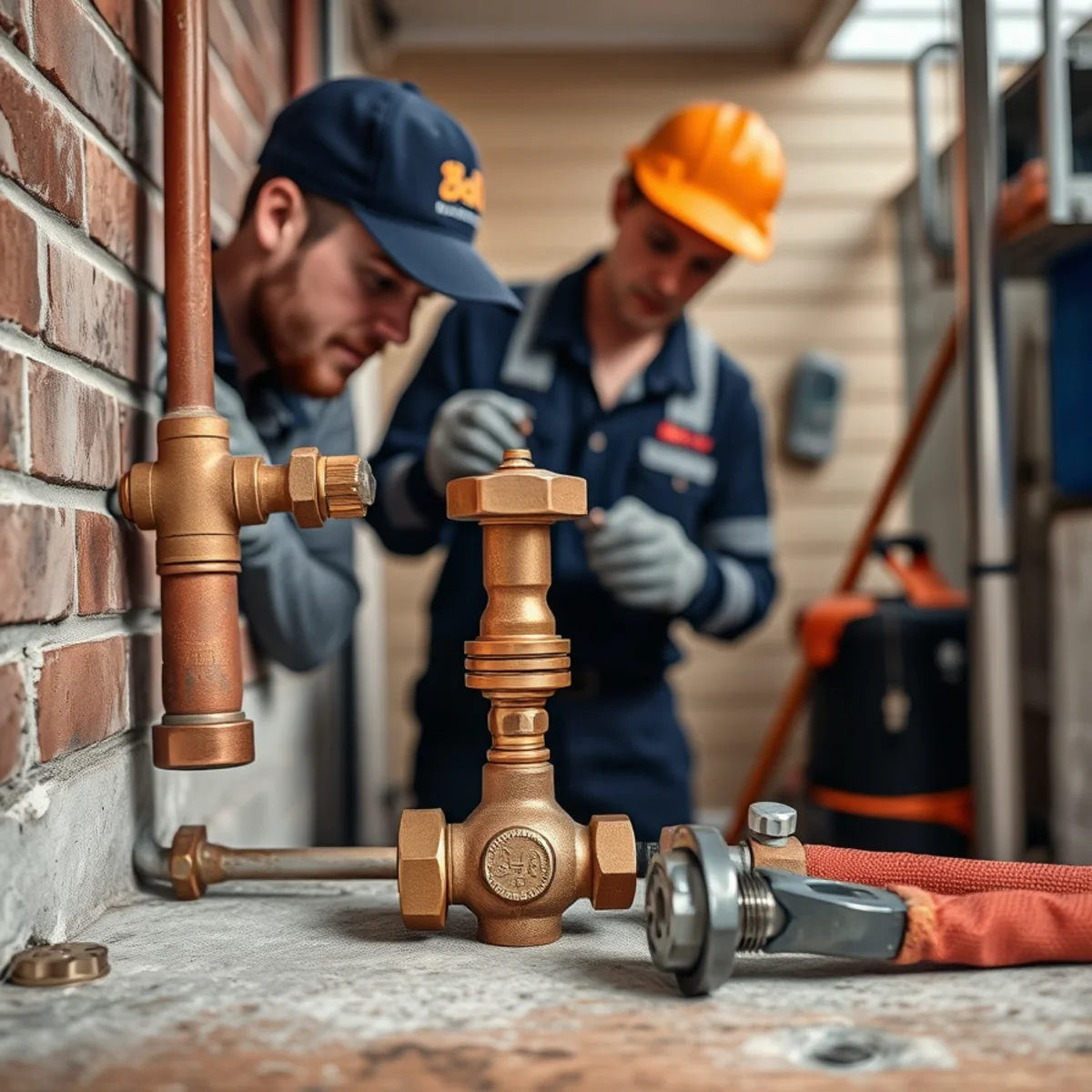
We do not publish fake prices, because a number that does not match your house is worse than no number at all. What we can do is tell you exactly what moves the figure, so nothing on the estimate is a surprise.
Well or county supply
The single biggest factor. A county-supply softener is a contained job. A well needing sediment, iron, odor and pH treatment is four pieces of equipment and a different conversation entirely.
What the testing finds
We do not price treatment before we know the numbers. Any quote given without a test is a guess, and on a well it is usually a guess in the installer's favour.
Where the equipment goes
A utility area with a drain nearby is straightforward. A crawl space on an older waterfront property with no drain and low headroom adds real time.
The drive
Pasadena is around forty minutes from our Catonsville shop. We are straight with you about that — for a scheduled install it is irrelevant, for a small same-day call there may be somebody closer and we will say so.
What this looks like in Pasadena
Pasadena sits on the coastal plain between the Magothy and the Patapsco, which is different ground to the Piedmont rock under most of our Baltimore County work. Coastal plain wells tend to produce iron and sometimes sulfur, and they draw from sandier formations that can carry sediment into the house.
The housing stock is mixed in a way that matters here. There are post-war waterfront cottages that were winterised decades later, large stretches of 1980s and 1990s development, and newer infill. The older properties are the ones most likely to still be on a well, and most likely to have plumbing that has already been affected by whatever the water has been doing to it.
Proximity to the water raises one question the inland parts of our area never ask: saltwater intrusion. If a well near the shoreline starts producing noticeably salty water, treatment is the wrong first answer — the well and its depth need assessing. We will tell you that rather than sell you equipment that cannot fix it.
We work across the Anne Arundel side regularly, including Glen Burnie, Severna Park, Arnold, Crofton and Annapolis, and we also cover Pasadena neighbourhoods off Mountain Road, Riviera Beach, Lake Shore and the Magothy side.
Water Treatment Pasadena questions we get asked
Is Pasadena on well water or county water?
Both, depending on the property. Much of the developed area is on Anne Arundel County public supply, while plenty of older and set-back properties are still on private wells. Establishing which you are on is the first thing we do, because the treatment is completely different.
My well water has turned salty. Can treatment fix it?
Not as a first step, and anyone who tells you otherwise is selling. Salty or brackish water on a well near the shoreline is a well and aquifer question before it is a treatment question. It needs assessing properly, and treatment only enters the conversation afterwards.
What causes the orange staining in my toilet tank?
Iron, which is common in coastal plain wells around Pasadena. How you treat it depends on the concentration and on whether it is dissolved or already oxidised, which is why we test rather than guess. A softener alone will not deal with it and will foul its own resin trying.
Do you charge for the water test?
Hardness and a look at the staining evidence are free on any service call. Lab work for bacteria, nitrate or a full mineral panel has a cost, and we tell you what it is before sending anything off.
How far is Pasadena from your shop?
About forty minutes from Catonsville. For scheduled treatment work that makes no difference. For an urgent same-day call there may be somebody closer to you, and we would rather say so than have you wait on a truck that is too far away.
Do you install treatment for new construction in Pasadena?
Yes, and on a new well it is worth doing the baseline testing before the house is finished rather than after. It is far easier to plumb treatment in while the utility area is still open than to retrofit around finished walls.