On a public supply we already know roughly what the water will do. On a well, we know nothing until it is tested — and that is the single most important thing to understand about well water treatment.
Iron, manganese, hardness, sulfur, sediment, tannins and bacteria are separate problems needing separate equipment. Neighbouring parcels in Carroll or western Howard County can have genuinely different water. Buying a softener because a neighbour has one is how people end up with expensive equipment that does not solve their problem.
Start with a proper test
A basic on-site test tells us hardness, pH and iron, which covers most treatment decisions. A certified laboratory panel goes further — bacteria, nitrates, arsenic and the rest — and is worth doing periodically on any private well, and always after a flood, a nearby construction project, or if anything about the water changes.
Maryland health departments generally recommend testing wells annually for bacteria and nitrates. Almost nobody does. It is not expensive.
Matching the problem to the equipment
Hardness — scale, poor lather, spotted glassware
An ion-exchange softener. Sized from measured grains per gallon and household use, exactly as it would be on public supply. Well hardness in this region frequently runs higher than the city supply, particularly where groundwater passes through limestone.
Iron — orange or brown staining on fixtures and laundry
This is the one most often got wrong. A softener removes a limited amount of dissolved (clear-water) iron as a side effect. Above a modest level, or where the iron is already oxidised into visible particles, you need dedicated iron filtration — typically an oxidising filter.
Asking a softener to handle significant iron fouls the resin bed and shortens its life dramatically. If your water stains and somebody sold you a softener alone, that is why it is not working.
Manganese — black staining
Behaves similarly to iron and often occurs alongside it. Black specks or staining in toilet tanks and on laundry are the giveaway. Needs oxidation and filtration rather than softening.
Sulfur smell — rotten eggs
Hydrogen sulfide, or sulfur bacteria. The important diagnostic step is whether the smell is on hot water only or on both hot and cold.
Hot only usually means a reaction between the water heater anode rod and sulfur bacteria in the tank — swapping the magnesium anode for aluminium-zinc or a powered anode normally solves it, and that is a cheap fix.
Both hot and cold means it is in the well itself, and that needs oxidation and filtration, sometimes preceded by shock chlorination of the well.
Sediment and turbidity — grit, cloudiness, clogged aerators
A sediment pre-filter, sized to the particle load. It goes first in the treatment train, because it protects everything downstream. Filters need changing on a schedule — a neglected sediment filter becomes a flow restriction.
Bacteria — a lab result, not a symptom
You cannot taste or smell coliform bacteria. This is why annual testing matters. Where present, the response is shock chlorination of the well followed by re-testing, and where the problem recurs, continuous disinfection — ultraviolet treatment is the usual choice because it adds nothing to the water.
The order matters
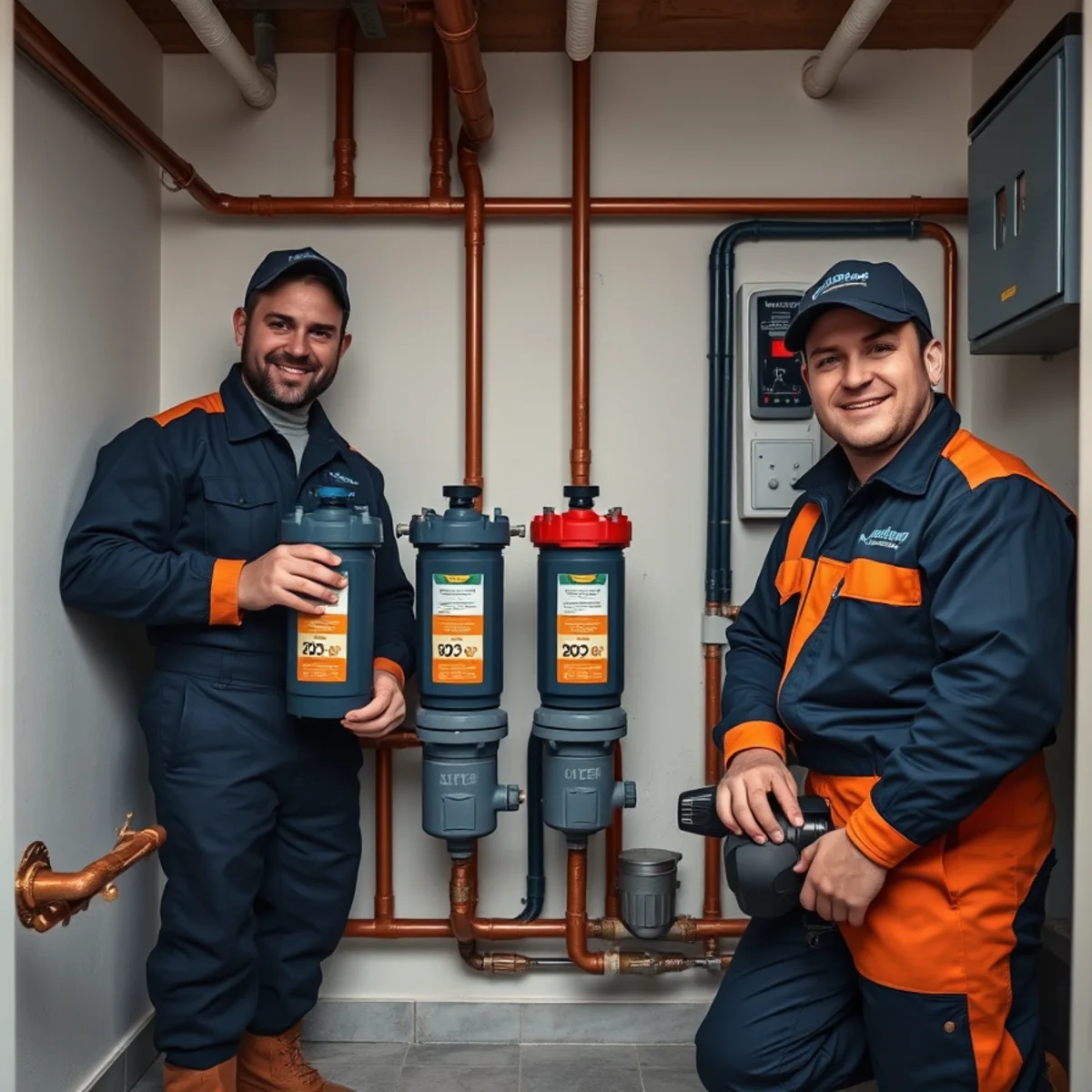
Treatment components go in a specific sequence and getting it wrong wastes equipment. Broadly: sediment filtration first, then iron and manganese removal, then softening, then carbon for taste and odour, then any point-of-use system such as reverse osmosis at the kitchen tap.
Putting a softener ahead of an iron filter fouls the softener. Putting carbon ahead of sediment filtration clogs the carbon. These are not subtle mistakes and we see the results of them regularly on whole-system assessments.
Septic systems and softener discharge
Most Maryland well properties are also on septic. Regeneration discharge adds both volume and salt to the system, and a badly programmed timer-based softener regenerating far more often than needed is a genuine load.
A properly sized metered unit regenerating only on demand is a very different proposition. It is worth configuring rather than accepting factory defaults, and for households that would rather avoid salt entirely there are potassium chloride alternatives and salt-free scale conditioners — with the honest caveat that conditioners prevent scale adhering without removing hardness, so you do not get the lather and laundry benefits.
Do not overlook the pressure system
A surprising share of "water quality" complaints on wells turn out to be pressure system faults. Air spitting from taps, pressure that swings from strong to weak, and rapid pump cycling are usually a waterlogged pressure tank that has lost its air charge, or a failing pressure switch.
Both cost a small fraction of a pump replacement and both get misdiagnosed as pump failures regularly. We check them first on every well call across Westminster, Glenelg and the rural parts of our service area.
Frequently asked questions
How often should I test a private well?
Annually for bacteria and nitrates as a baseline, and additionally any time the taste, smell or appearance changes, after flooding, or after nearby construction or drilling. It is inexpensive relative to what it protects.
Why does my water stain fixtures orange even with a softener?
Because the iron level exceeds what a softener can handle as a side effect, or the iron is already oxidised. That needs dedicated iron filtration ahead of the softener. It is the single most common well-water misdiagnosis we are called out to correct.
Can I put a whole-house system in myself?
The plumbing is within reach for a competent DIYer. The part that goes wrong is specification and sequence — choosing the wrong category of equipment for the actual water, or installing components in an order that fouls them. Get the test interpreted properly before you buy anything.
Who wrote this
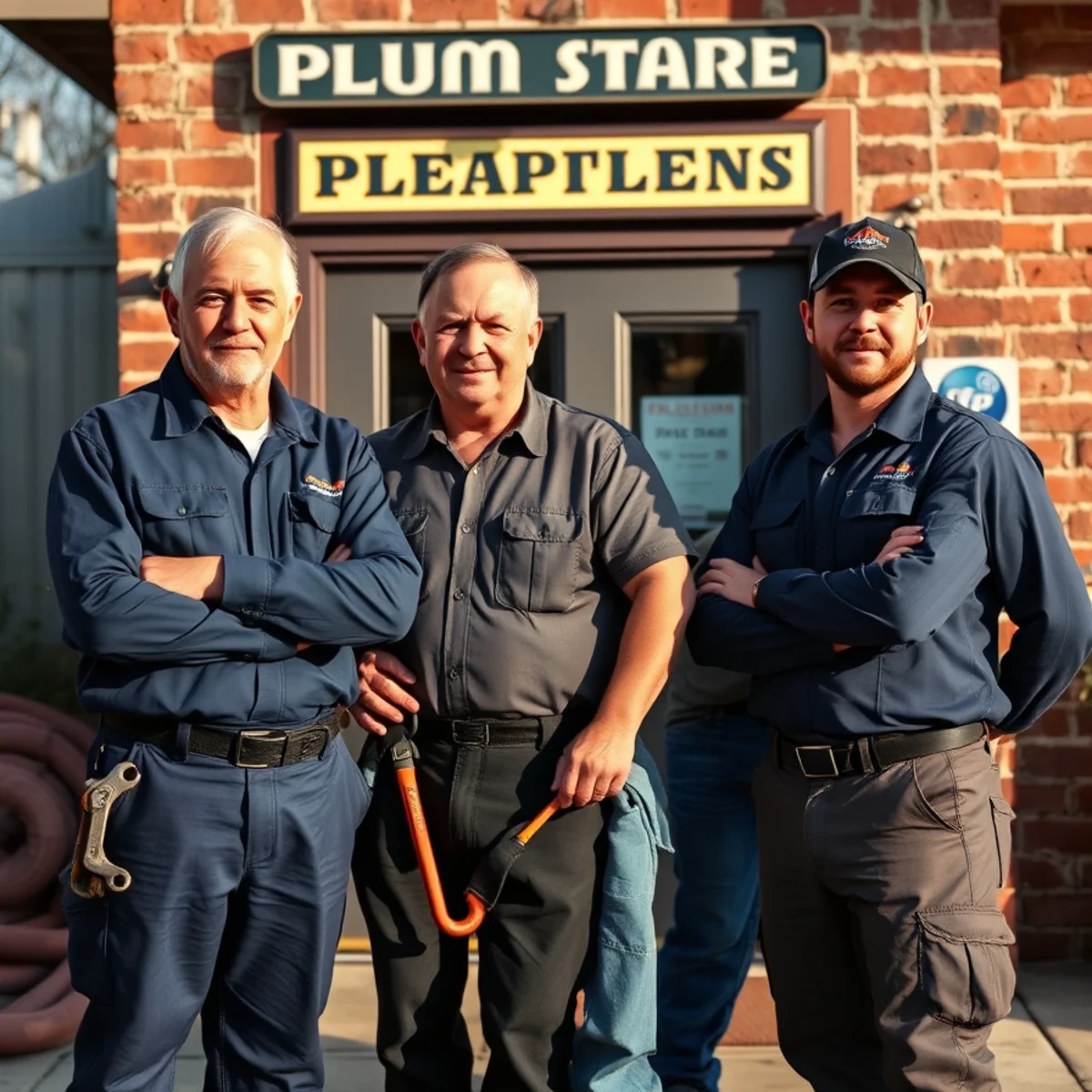
Collins & Sons LLC — Daniel Collins and family
We are a family plumbing business working out of 209 Westowne Rd in Catonsville, and we have been under Maryland houses for over 40 years — three generations of it. Most of what is on this page comes from doing the same jobs repeatedly on the same housing stock: pre-1950 homes off Frederick Road, galvanized supply, cast iron drainage, and water that runs 7–8.2 grains per gallon.
Licensed MHIC #117712 with the Maryland Home Improvement Commission and fully insured. We pull the Baltimore County permits on water heaters, sewer work and gas piping, and we meet the inspector ourselves.