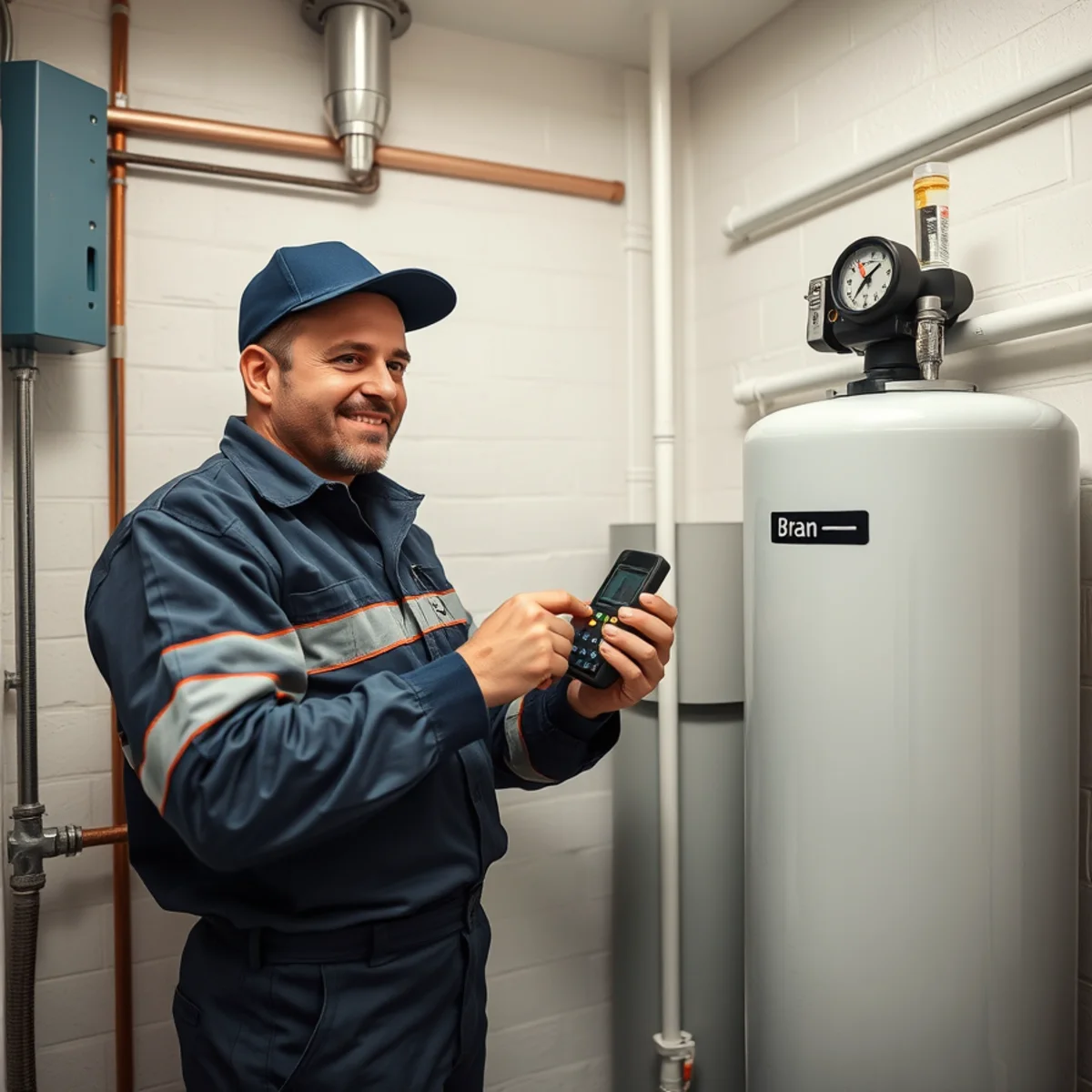
On city water somebody else is running the treatment plant. On a private well you are the treatment plant, and whatever the aquifer and the well casing hand you is what comes out of the tap. That is the whole difference, and it is why equipment chosen off a shelf so often disappoints on a well.
A good part of the area we cover runs on wells — Carroll County, Frederick County, western Howard, and the northern edge of Baltimore County. The water out there is genuinely variable. Two houses on the same road can need different equipment, because they are drawing from different depths through different rock.
So we test first. Not as a sales step — because without numbers, specifying treatment is guesswork, and the wrong media on a well is money spent to fix nothing. What follows is what we actually look for and what each result changes.
Signs you need well water treatment
- Orange or rust-coloured staining in the toilet tank, tub or laundry
- Black specks or grey staining on fixtures and in the dishwasher
- A rotten-egg smell, often worse on the hot side
- Grit or sand collecting in faucet aerators and shower heads
- Repeated pinhole leaks in copper with no obvious cause
- Water that tastes metallic, or leaves a film on glassware
- Laundry coming out dingy or stiff despite more detergent
- A new well, or a well that has not been tested in several years
Iron, manganese, sulfur, sediment and low pH all produce different symptoms and all need different equipment. A softener handles hardness. It does not handle any of the others, which is why "just put a softener on it" is the most common mistake we are called out to correct.
What the job includes
Water testing before anything is specified
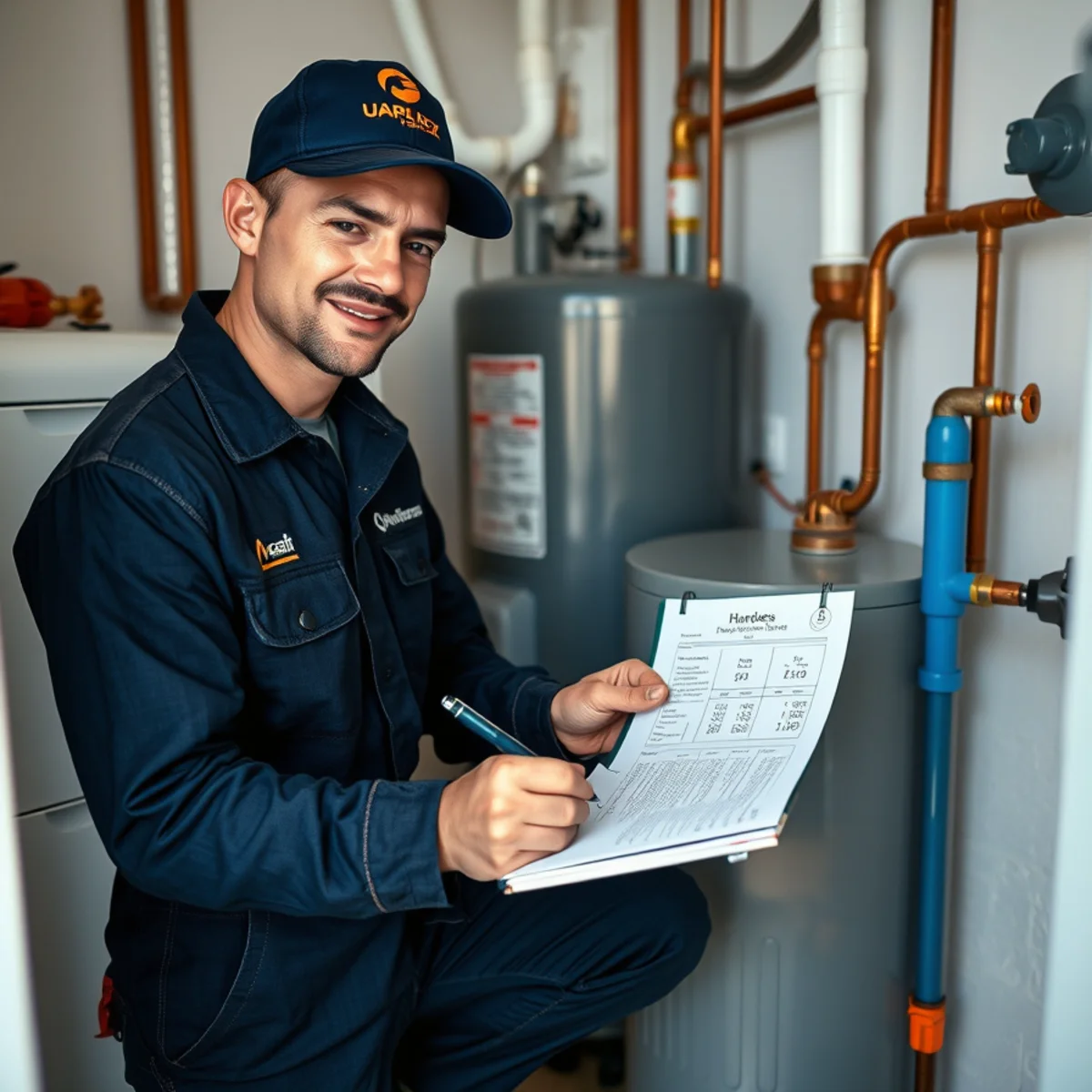
Hardness and visible iron evidence we check on site at no charge. Bacteria, nitrate and a full mineral panel go to a state-certified lab, because nobody can read those off a test strip honestly. The results decide the equipment — not the other way round.
Iron and manganese removal
Orange staining is iron, black specks are usually manganese, and the right answer depends on the concentration and on whether the iron is dissolved or already oxidised. Oxidising filters, greensand and air-injection systems all have a place; so does doing nothing if the number is low enough.
Sulfur and odor treatment
A rotten-egg smell is hydrogen sulfide, and it matters whether it is coming off the aquifer or being generated by bacteria in the water heater. Those have completely different fixes, and we establish which it is before quoting either.
Sediment and particulate filtration
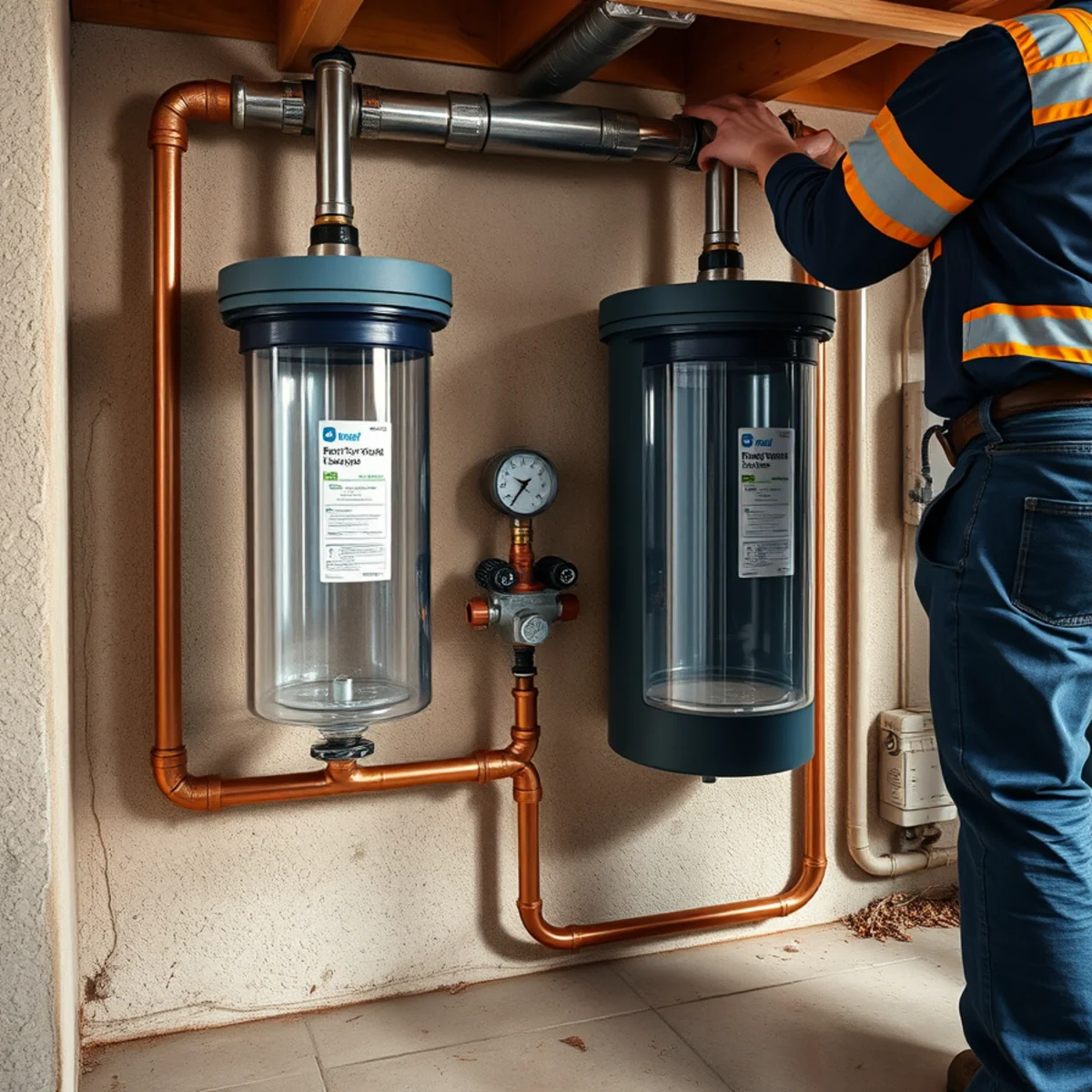
Grit in the aerators is usually sand or silt from the formation, sometimes a failing well screen. Staged sediment filtration ahead of everything else protects the equipment downstream, which is the part people skip and then replace a softener early.
Acidic water and pH correction
Low-pH well water is the quiet one. It does not stain and it does not smell — it just thins copper from the inside until a pinhole appears. Neutralising systems raise the pH and stop the process, and on an older copper system that is often the most valuable thing we do all year.
Softening sized from the test, not a tier
Well water is frequently harder than the city supply we deal with in Catonsville. Sizing comes from your hardness, your household use and your iron load, because iron fouls softener resin and a unit sized without accounting for it will not last.
How we work
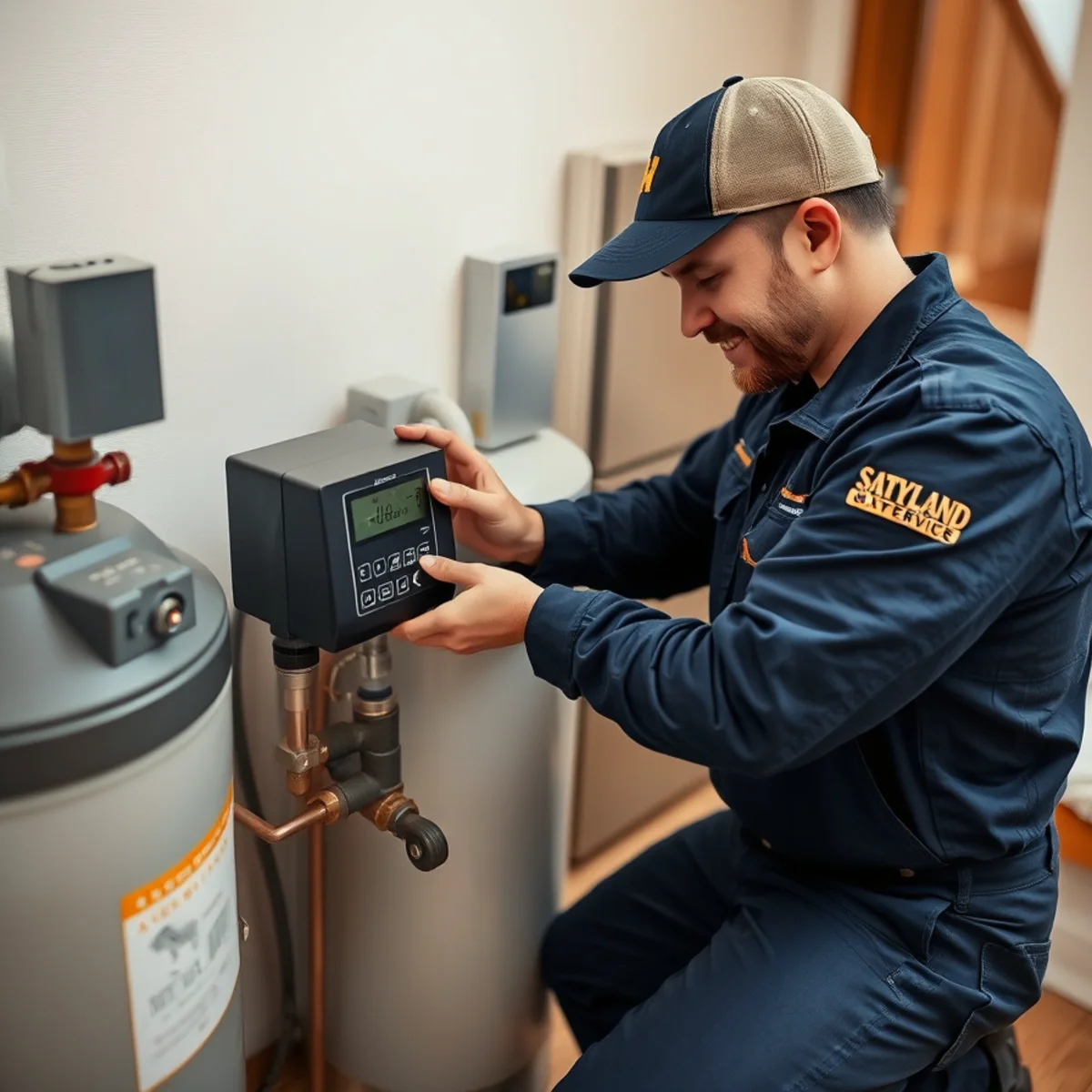
Test what can be tested on site
Hardness, and a look at the evidence — staining in the tank, deposits in the aerators, the state of the water heater. Five minutes, no charge, and often enough to tell you the problem is not what you assumed.
Send out what needs a lab
Bacteria, nitrate and a full panel where the situation warrants it. We tell you plainly what each test is for and what it costs, and we do not specify equipment against a guess.
Match equipment to the results
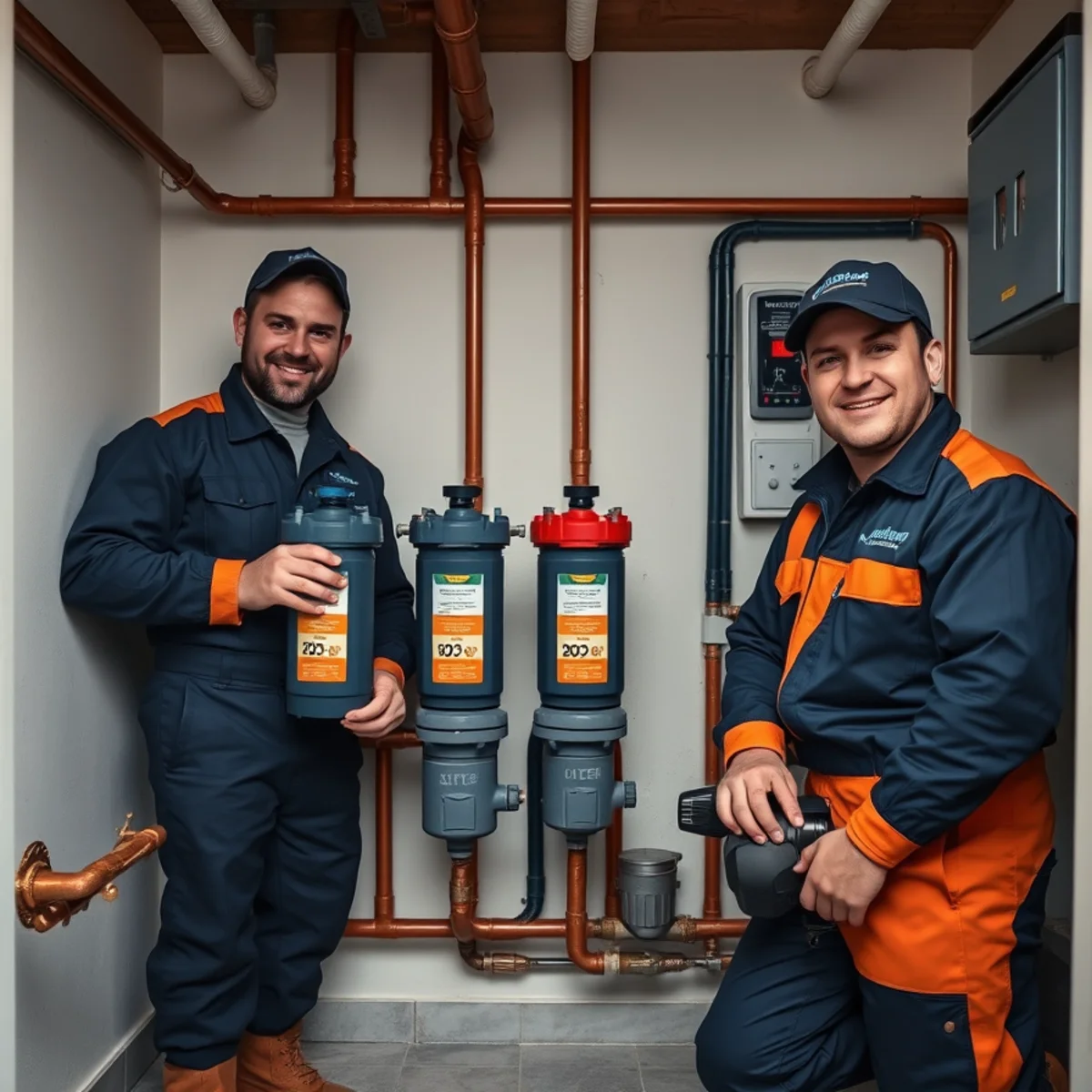
One problem at a time, in the right order — sediment first, then iron or odor, then softening, then pH if it is needed. Order matters: put a softener ahead of an iron filter and you will foul the resin.
Install it so it can be serviced
Bypass valves, unions and enough clearance to change media without cutting pipe. Treatment equipment is not install-and-forget, and a system plumbed into a corner you cannot reach costs more over its life.
Show you how to maintain it
What to check, how often, what the salt or media schedule actually is, and what a change in the water would look like. We would rather you spot a shift early than call us after the staining comes back.
What drives the price
We do not publish fake prices, because a number that does not match your house is worse than no number at all. What we can do is tell you exactly what moves the figure, so nothing on the estimate is a surprise.
What the test comes back with
This is the whole thing. A house needing sediment filtration and a softener is a different job to one needing iron removal, odor treatment and pH correction. We cannot price it honestly before we know.
How many problems need solving
Each stage is a separate piece of equipment. Most wells need one or two. Some need four, and when that is the case we will tell you which ones to do first if doing all of it at once is not realistic.
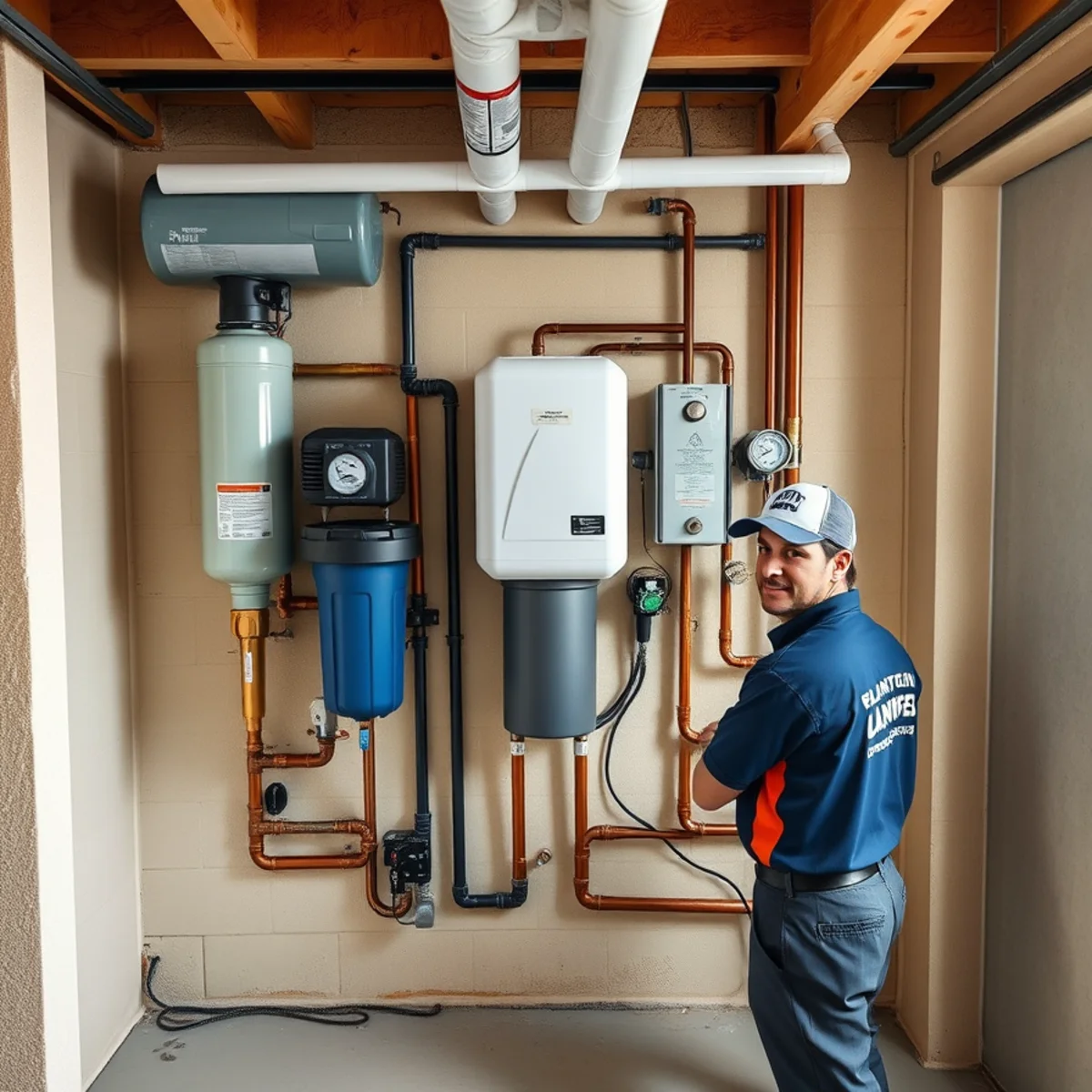
Where the equipment has to go
A pressure tank area with room and a nearby drain is straightforward. A crawl space with no drain and limited headroom is not, and the install time reflects that.
Ongoing media and salt
Media has a service life and salt is a running cost. We give you the real figure before you commit, because treatment that is too expensive to maintain gets switched off, and then you have paid for nothing.
What this looks like in Maryland
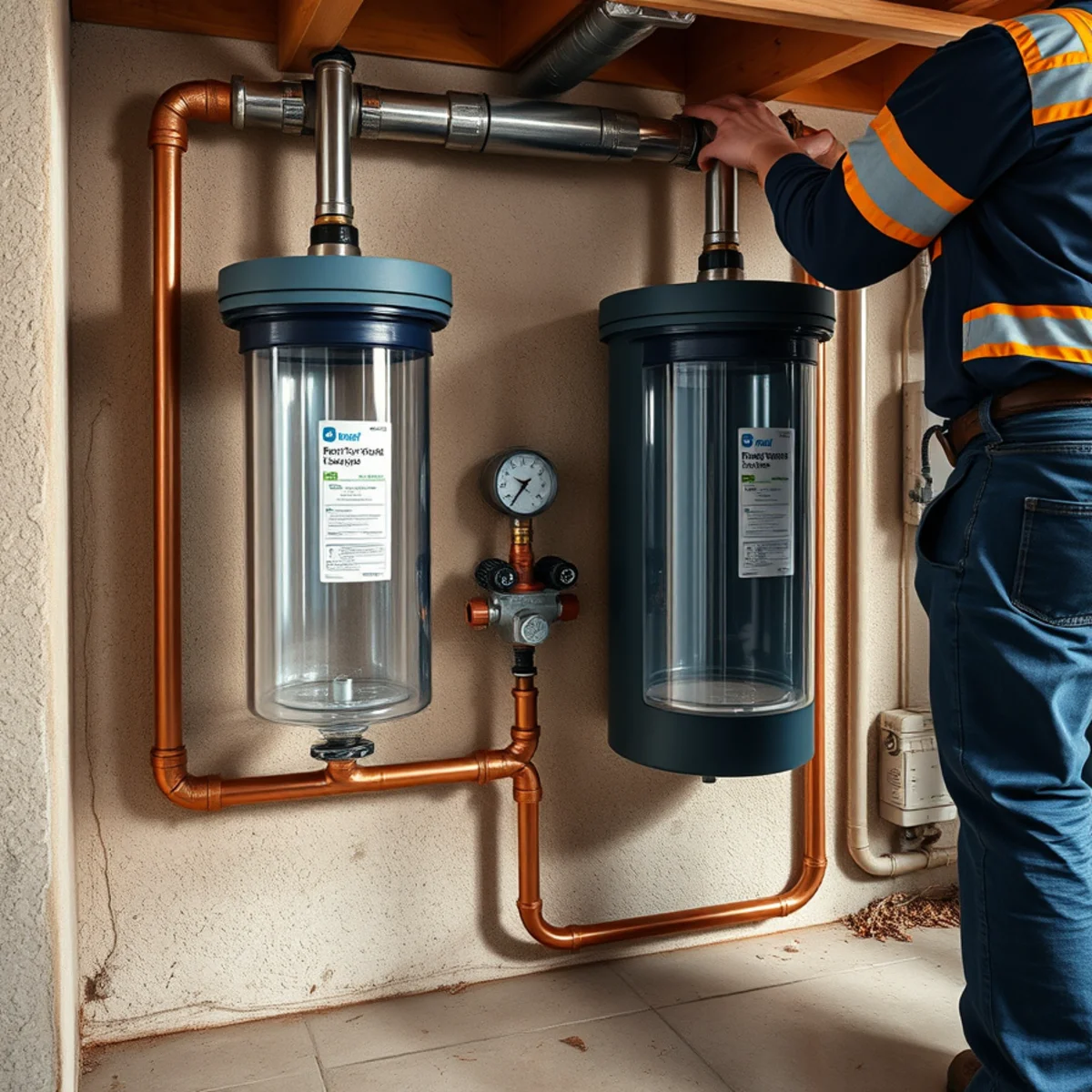
Maryland well water is not one thing. The Piedmont geology under Carroll, western Howard and much of Frederick County produces different water to the coastal plain out toward Anne Arundel, and the depth of the well matters as much as the county it is in.
Iron is the complaint we hear most, and it is usually mild enough to treat straightforwardly. Sulfur is the one people find hardest to live with. Low pH is the one that does real damage before anyone notices, and on houses with original copper it is worth testing for specifically.
If your house was built before 1986 there is a separate question about lead solder at the joints, and treatment does not address it. That is an inspection-and-replacement job on the specific components, and we would rather tell you that than sell you a filter that does not solve it.
Wells also need testing after work on the well itself, after flooding, and periodically regardless. Maryland health departments recommend routine bacteria testing for private wells, and a new well or a newly purchased house is the obvious moment to establish a baseline.
Well Water Treatment questions we get asked
How do I know what my well water actually needs?
Test it. Hardness and iron evidence we can check on site in a few minutes at no charge. Bacteria, nitrate and a full mineral panel go to a certified lab. Until those numbers exist, anyone specifying equipment is guessing — including us.
Will a water softener fix iron staining and the sulfur smell?
No, and this is the most common misunderstanding we run into. A softener exchanges hardness minerals. Iron, manganese, hydrogen sulfide and low pH each need their own treatment, and iron will actually foul softener resin if it is not removed upstream first.
How often should a private well be tested?
Annually for bacteria as a baseline, and again any time the water changes in taste, smell or appearance, after any work on the well, and after flooding. If you have just bought the house, test now so you know what you started with.
My water smells of rotten eggs only when it is hot. Why?
That usually points at the water heater rather than the well — a reaction between sulfate-reducing bacteria and the anode rod. It is a different fix to treating the incoming supply, and it is worth establishing which one you have before spending anything.
Do you serve wells outside Catonsville?
Yes. Most of the well work we do is in Carroll County, Frederick County, western Howard and northern Baltimore County, because that is where the private wells are. Call and tell us the town and we will give you an honest answer about response times.
Is treated well water safe to drink?
Treatment handles minerals, staining, odor and pH. It does not by itself make unsafe water safe — bacteria and nitrate are separate questions answered by a lab test, and if those come back positive the answer is disinfection and finding the cause, not a filter.